JLPT N3 - Grammar 🌟 たびに tabi ni
Have you ever noticed how some things happen every single time. Almost like a little personal rule in your life?
Maybe you open Instagram “just for a moment,” and before you know it… twenty minutes have vanished.
Or you watch that one movie again, and, no matter how many times, you still cry at the exact same scene.
Or whenever you meet a certain friend, you always walk away feeling lighter, happier, and more energized.
These patterns feel so consistent that they almost predict your next move, right?
In Japanese, there’s a perfect expression to describe these repeated, predictable reactions:
たびに (tabi ni)
It means “every time / whenever ~ happens.”
Every time A happens, B happens too without fail.
It’s one of the most natural and expressive ways to talk about repeated experiences in Japanese.
Are you ready to learn how to use it confidently in your own sentences?
Let’s dive in!


と (to) vs たら (tara) vs たびに (tabi ni)
These three expressions can all describe situations in which one event leads to another. But the nuance, timing, and repetition are very different.
と (to)
と is used for natural, automatic, or habitual results.
When A happens, B naturally follows as a rule, fact, or predictable outcome.
There is no intention, no decision, and no emotional nuance.
春になると暖かくなります。
はる に なる と あたたかく なります。
haru ni naru to atatakaku narimasu.
When spring comes, it becomes warm.
This is a natural, general truth. Not something the speaker controls.
たら (tara)
たら is flexible. It can mean “when”, “after”, and “if”.
It’s used for one-time events, future plans, or conditions.
There is no repetition implied.
雨がやんだら出かけます。
あめ が やんだら でかけます。
ame ga yandara dekakemasu.
When the rain stops, I’ll go out.
This expresses your intention or plan after a condition is met.
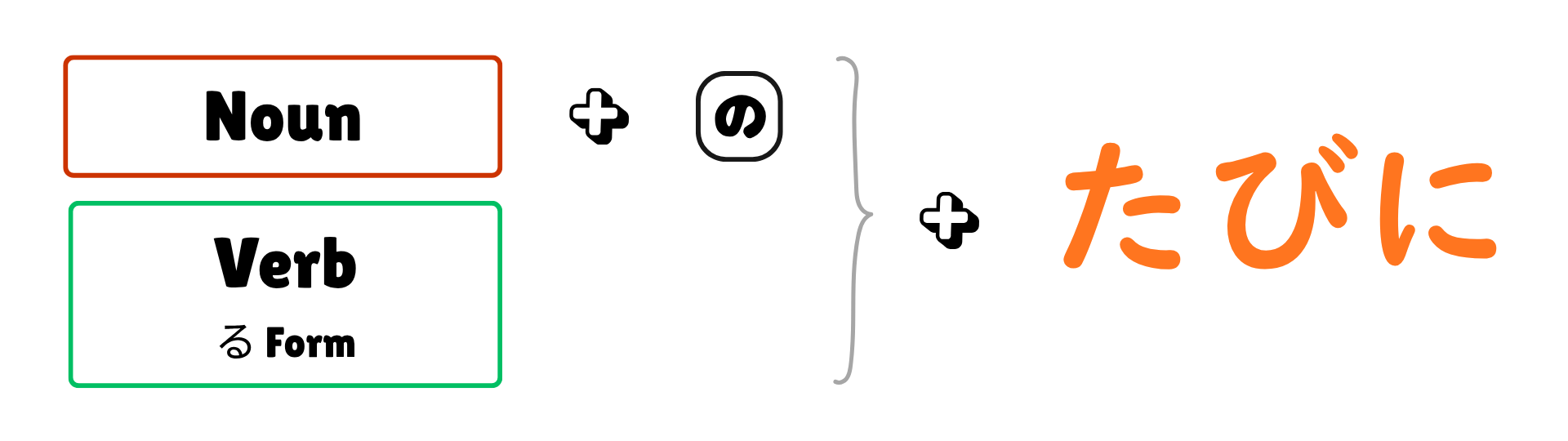
たびに (tabi ni)
たびに means every time A happens, B also happens without exception.
It strongly emphasizes repetition and consistency.
This is perfect for predictable emotional reactions, habits, or patterns.
この映画を見るたびに泣きます。
この えいが を みる たび に なきます。
kono eiga wo miru tabi ni nakimasu.
Every time I watch this movie, I cry.
Unlike と or たら, this expresses something that happens repeatedly.

この映画を見るたびに、同じシーンでいつも泣いてしまいます。
この えいが を みる たび に、おなじ シーン で いつも ないて しまいます。
kono eiga wo miru tabi ni, onaji shiin de itsumo naite shimaimasu.
Every time I watch this movie, I always end up crying at the same scene.
この曲を聞くたびに、学生時代を思い出します。
この きょく を きく たび に、がくせいじだい を おもいだします。
kono kyoku wo kiku tabi ni, gakusei jidai wo omoidasu.
Every time I listen to this song, it reminds me of my school days.
コンビニに行くたびに、何か買ってしまいます。
コンビニ に いく たび に、なにか かって しまいます。
konbini ni iku tabi ni, nanika katte shimaimasu.
Every time I go to a convenience store, I end up buying something.
私の父は給料日のたびに、ケーキを買ってきてくれます。
わたし の ちち は きゅうりょうび の たび に、ケーキ を かってきて くれます。
watashi no chichi wa kyuuryoubi no tabi ni, keeki wo katte kite kuremasu.
Every payday, my father brings home a cake.
日本旅行のたびに、好きな場所が増えます。
にほん りょこう の たび に、すき な ばしょ が ふえます。
nihon ryokou no tabi ni, suki na basho ga fuemasu.
Every time I travel to Japan, I find more places I love.

- Grammar Point: たびに (tabi ni)
- JLPT Level: N3
- Meaning: Whenever, every time, each time
- Quick Explanation: たびに is used to describe something that happens every single time another action occurs. It emphasizes repetition and consistency “Whenever A happens, B always follows.”
So that’s how we use たびに!
It’s one of the most natural ways to express habits, emotional reactions, or repeated experiences in Japanese.
間違うことを恐れないで。人は失敗するたびに、成長します。
まちがう こと を おそれないで。ひと は しっぱい する たびに、せいちょう します。
machigau koto wo osorenaide. hito wa shippai suru tabi ni, seichou shimasu.
Don’t be afraid of making mistakes. Every time we fail, we grow.
Now it’s your turn! Try making your own sentences with たびに and talk about things that always happen in your life!
Your Sensei,
Hikari 👩🏻🏫✨
Get Hikari's JLPT Mock Exams & Preparation Lessons!
Whether you are studying to pass the JLPT or looking for a challenge in your learning journey, these courses are perfect for you!
Join my ニュースレター Newsletter 📩
You can expect an email from me once a week about Japanese culture.
Don't worry, your information will not be shared.
We hate SPAM. We will never sell your information, for any reason.