JLPT N3 - Grammar 🌟 しかない shikanai
Sometimes in life, we just don’t have a choice.
Maybe your train is delayed and you have to walk.
Maybe the restaurant is full, so you can only wait in line.
Or maybe your teacher gave you homework, so… you just have to do it!
In Japanese, the perfect grammar for these “no choice but ~” moments is しかない (shikanai).
It literally means “there’s nothing but ~”, but it’s used to say “I have no choice but to ~” or “the only option is ~.”
You’ll also hear it in different forms like しかなかった (shika nakatta) (past tense: had no choice but ~) or しかありません (shika arimasen) (polite form).
Super useful for daily conversations, and also for expressing frustration in a very Japanese way!
Shall we dive in?


~ざるをえない (zaru wo enai) → “cannot avoid doing / have no choice but to ~”
A more formal expression, often used in writing or polite speech.
It carries a nuance of obligation, sometimes unwilling or unavoidable.
問題が大きすぎて、専門家に相談せざるをえない。
もんだいがおおきすぎて、せんもんかにそうだんせざるをえない。
mondai ga ookisugite, senmonka ni soudan sezaru wo enai.
The problem is too big, so I can’t avoid consulting an expert.
Other Common Forms
しかなかった (sika nakatta) → past tense (had no choice but ~)
しかありません (shika arimasen) → polite form (have no choice but ~)

勉強するしかない。
べんきょうするしかない。
benkyou suru shika nai.
I have no choice but to study.
終電を逃しちゃったから、歩くしかない。
しゅうでんをのがしちゃったから、あるくしかない。
shuuden wo nogashichatta kara, aruku shika nai.
I missed the last train, so I have no choice but to walk.
台風で飛行機が飛ばないので、旅行をキャンセルするしかなかった。
たいふうでひこうきがとばないので、りょこうをきゃんせるするしかなかった。
taifuu de hikouki ga tobanai node, ryokou wo kyanseru suru shika nakatta.
The plane couldn’t fly due to the typhoon, so we had no choice but to cancel the trip.
この問題は最終的には、多数決で決めるしかありません。
このもんだいはさいしゅうてきには、たすうけつできめるしかありません。
kono mondai ha saishuuteki ni ha, tasuuketsu de kimeru shika arimasen.
In the end, we have no choice but to decide this by majority vote.
ああ、宿題やだな...でもグチを言ってもしかたがない、やるしかない!
ああ、しゅくだいやだな...でもぐちをいってもしかたがない、やるしかない!
aa, shukudai yada na... demo guchi wo itte mo shikata ga nai, yaru shika nai!
Ugh, I hate homework… but complaining won’t help, I just have to do it!
独学で日本語の勉強が進まない?そしたら、私のオンラインコースを受けるしかないね!
どくがくでにほんごのべんきょうがすすまない?そしたら、わたしのおんらいんこーすをうけるしかないね!
dokugaku de Nihongo no benkyou ga susumanai? Soshitara, watashi no onrain koosu wo ukeru shika nai ne!
Struggling to study Japanese on your own? Then, you’ve got no choice but to join my online course!
💡 Note on Structure:
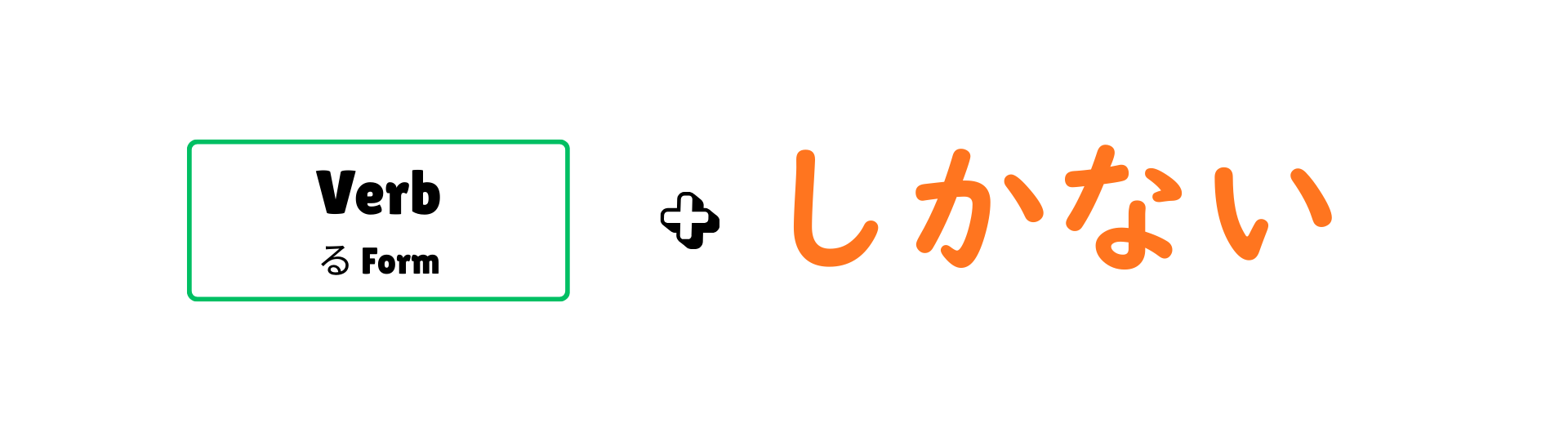
The phrase しかない is made of two parts:
しか (shika) → particle meaning “nothing but / only”
ない (nai) → negative form of ある, creating the meaning “there is nothing except ~”

- Grammar Point: しかない (shikanai)
- JLPT Level: N3
- Meaning: Have no choice but , the only option is
- Quick Explanation: しかない attaches to a verb in the dictionary form and is used when you want to say that something is the only possible choice or there is no other option.
It’s common in daily conversation, often used to express resignation, acceptance, or inevitability.
So that’s how we use しかない in Japanese!
It’s the go-to phrase for those moments when you really have no choice but to do something.
And here’s a fun note, Japanese people sometimes use しかない as a kind of excuse.
For example:
目の前に大好きなチョコレートがあったら…食べるしかないよね!
めのまえにだいすきなちょこれーとがあったら...たべるしかないよね!
me no mae ni daisuki na chokoreeto ga attara… taberu shika nai yo ne!
If your favorite chocolate is right in front of you… there’s no choice but to eat it!
Now it’s your turn, try making your own sentences with しかない.
What’s something in your life you “have no choice but to do”?
Your Sensei,
Hikari 👩🏻🏫✨
Get Hikari's JLPT Mock Exams & Preparation Lessons!
Whether you are studying to pass the JLPT or looking for a challenge in your learning journey, these courses are perfect for you!
Join my ニュースレター Newsletter 📩
You can expect an email from me once a week about Japanese culture.
Don't worry, your information will not be shared.
We hate SPAM. We will never sell your information, for any reason.