JLPT N3 - Grammar 🌟 っぽい ppoi
You’re strolling through a market in another country when you suddenly spot a notebook with a kimono-style pattern on the cover.
You stop and think,
“Hmm… this feels kind of Japanese-ish, or maybe Japanese-like!”
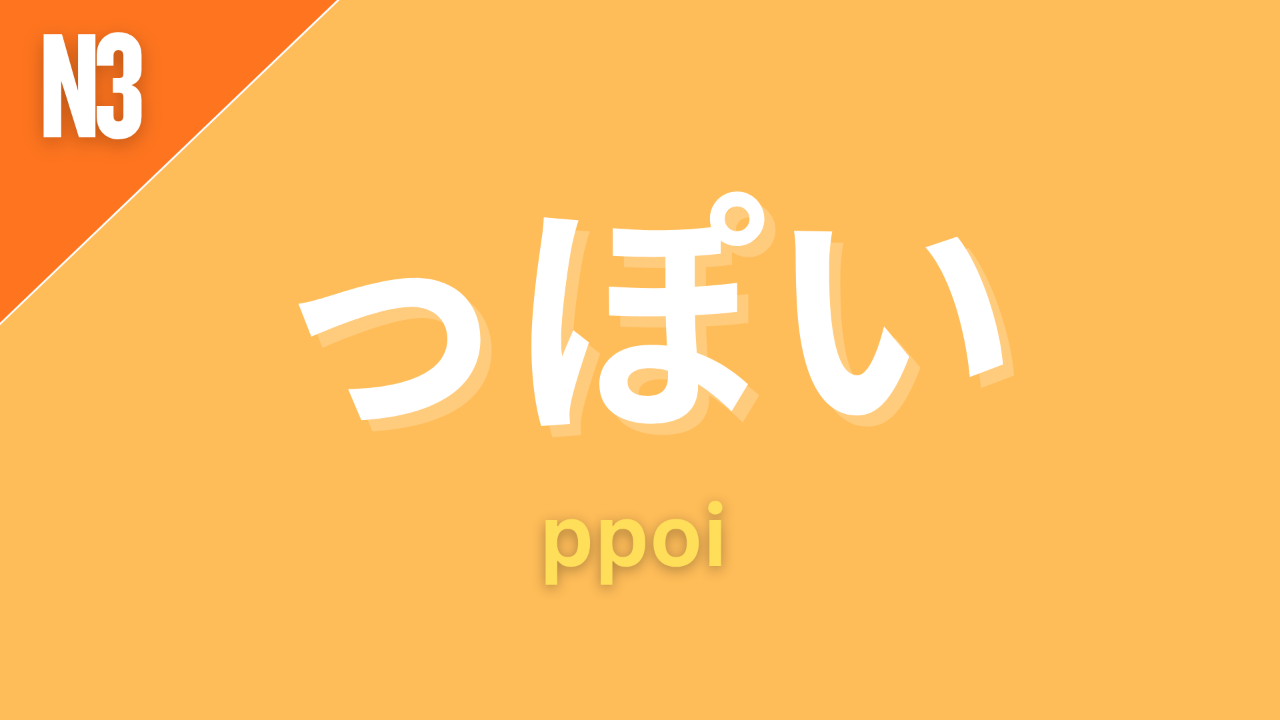
In Japanese, you can express that same soft, “sort of like / kind of” feeling with っぽい (ppoi)!
It’s perfect for describing something that has a certain vibe or feeling, even if it’s not exactly that thing.
You can also use it when talking about tendencies or habits, like someone who forgets things easily or tends to get emotional.
It’s casual, expressive, and adds warmth and nuance, a great way to make your Japanese sound more natural and full of feeling.
Let’s learn how to use っぽい naturally and start adding that perfect “-ish” touch to your Japanese!

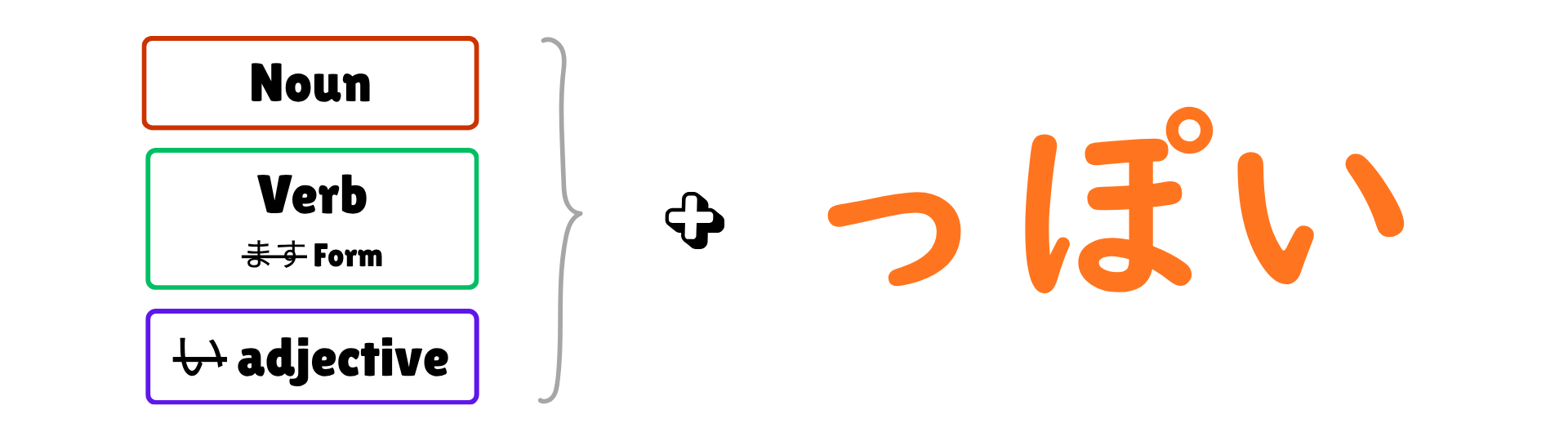

💡 Why can't we use な adjectives with っぽい(ppoi)?
な-adjectives behave grammatically like nouns, not true adjectives, while 〜っぽい (~ppoi) attaches to stems or nouns directly. With い-adjectives, you attach っぽい(~ppoi) to the stem (drop い), but な-adjectives don’t have the same stem structure.
So, historically, they don’t combine naturally and are almost never heard in everyday Japanese conversations. It is probably the only time in a grammar rule where only one type of adjective can be used!
ny
みたい (mitai) vs らしい (rashii) vs ような (you na) vs っぽい(ppoi)
All of these can mean “like” or “similar to,” but they carry different nuances depending on how objective, emotional, or casual the speaker wants to sound.
みたい(mitai):
Used to describe resemblance or appearance.
It’s casual and often based on what you see or think at the moment, like saying “looks like” or “seems like.”
あの雲、猫みたい。
あの くも、ねこ みたい。
ano kumo, neko mitai.
That cloud looks like a cat!
らしい(rashii):
Used when something matches the typical image or characteristics of something.
It sounds more objective, like confirming that something fits the usual pattern or expectation.
どこでも行列を作るのは、日本人らしいね。
どこでも ぎょうれつ を つくる の は、にほんじん らしい ね。
dokodemo gyouretsu o tsukuru no wa, nihonjin rashii ne.
Forming lines everywhere, that’s so Japanese!
ような(you na):
A bit more formal or descriptive, often used in writing or polite speech.
It describes something that is literally similar in nature or function.
夢のような話だった。
ゆめ の ような はなし だった。
yume no you na hanashi datta.
It was like a dream-like story.
っぽい(ppoi):
Casual and expressive.
Used for vibes, impressions, or tendencies, when something feels like, has the atmosphere of, or acts like something.
It’s often based on the speaker’s personal, emotional impression.
このテーブルクロス、日本っぽいね。
この てーぶるくろす、にほんっぽい ね。
kono teeburukurosu, nihon ppoi ne.
This tablecloth feels so Japanese-ish!
💡 Quick Feeling Summary:
みたい (mitai) : looks like / seems like (appearance-based)
らしい (rashii) : typical / characteristic (matches the image)
ような (you na) : similar to / like (neutral, descriptive)
っぽい (ppoi) : vibe / impression / -ish (casual, emotional)

あの新人の話し方は子供っぽい。
あの しんじん の はなしかた は こどもっぽい。
ano shinjin no hanashikata wa kodomo ppoi.
That new employee’s way of speaking is childish.
この料理は油っぽいね。
この りょうり は あぶらっぽい ね。
kono ryouri wa abura ppoi ne.
This dish is kind of oily.
その服は安っぽいデザインだ。
その ふく は やすっぽい でざいん だ。
sono fuku wa yasu ppoi dezain da.
That outfit has a cheap-looking design.
ちょっと熱っぽいから、早退するね。
ちょっと ねつっぽい から、そうたい する ね。
chotto netsu ppoi kara, soutai suru ne.
I feel a bit feverish, so I’ll leave early.
この服、湿っぽいね。ちゃんと乾いてないみたい。
この ふく、しめっぽい ね。ちゃんと かわいて ない みたい。
kono fuku, shime ppoi ne. chanto kawaite nai mitai.
These clothes feel damp, looks like they’re not fully dry.
姉は飽きっぽい性格です。
あね は あきっぽい せいかく です。
ane wa aki ppoi seikaku desu.
My older sister has a short attention span.
最近、忘れっぽい。
さいきん、わすれっぽい。
saikin, wasure ppoi.
I’m forgetful lately.
あの部長は怒りっぽいので気をつけてください。
あの ぶちょう は おこりっぽい ので き を つけて ください。
ano buchou wa okori ppoi no de ki o tsukete kudasai.
That manager gets angry easily, so please be careful.

- Grammar Point: っぽい (ppoi)
- JLPT Level: N3
- Meaning: -ish, -like, tends to, seems
- Quick Explanation: Use っぽい to describe something that resembles, feels like, or has the vibe of something else. It can also describe a tendency, like being forgetful or quick-tempered.
So that’s how we use っぽい!
It’s a fun and expressive pattern that adds color to your Japanese, perfect for describing impressions, moods, and personality traits in a natural, casual way.
あなたの周りに、「日本っぽい!」と思うものはありますか?
あなた の まわり に、「にほんっぽい!」と おもう もの は あります か?
anata no mawari ni, “nihon ppoi!” to omou mono wa arimasu ka?
Do you see anything around you that feels “so Japanese”?
Now it’s your turn! Try using っぽい to describe something around you or your own tendencies!
Your Sensei,
Hikari 👩🏻🏫
Get Hikari's JLPT Mock Exams & Preparation Lessons!
Whether you are studying to pass the JLPT or looking for a challenge in your learning journey, these courses are perfect for you!
Join my ニュースレター Newsletter 📩
You can expect an email from me once a week about Japanese culture.
Don't worry, your information will not be shared.
We hate SPAM. We will never sell your information, for any reason.