JLPT N3 - Grammar 🌟 につれて ni tsurete
Have you ever noticed how some things in life change together?
For example, as you practice Japanese more, your confidence grows.
Or as the sun goes down, the air slowly gets cooler.
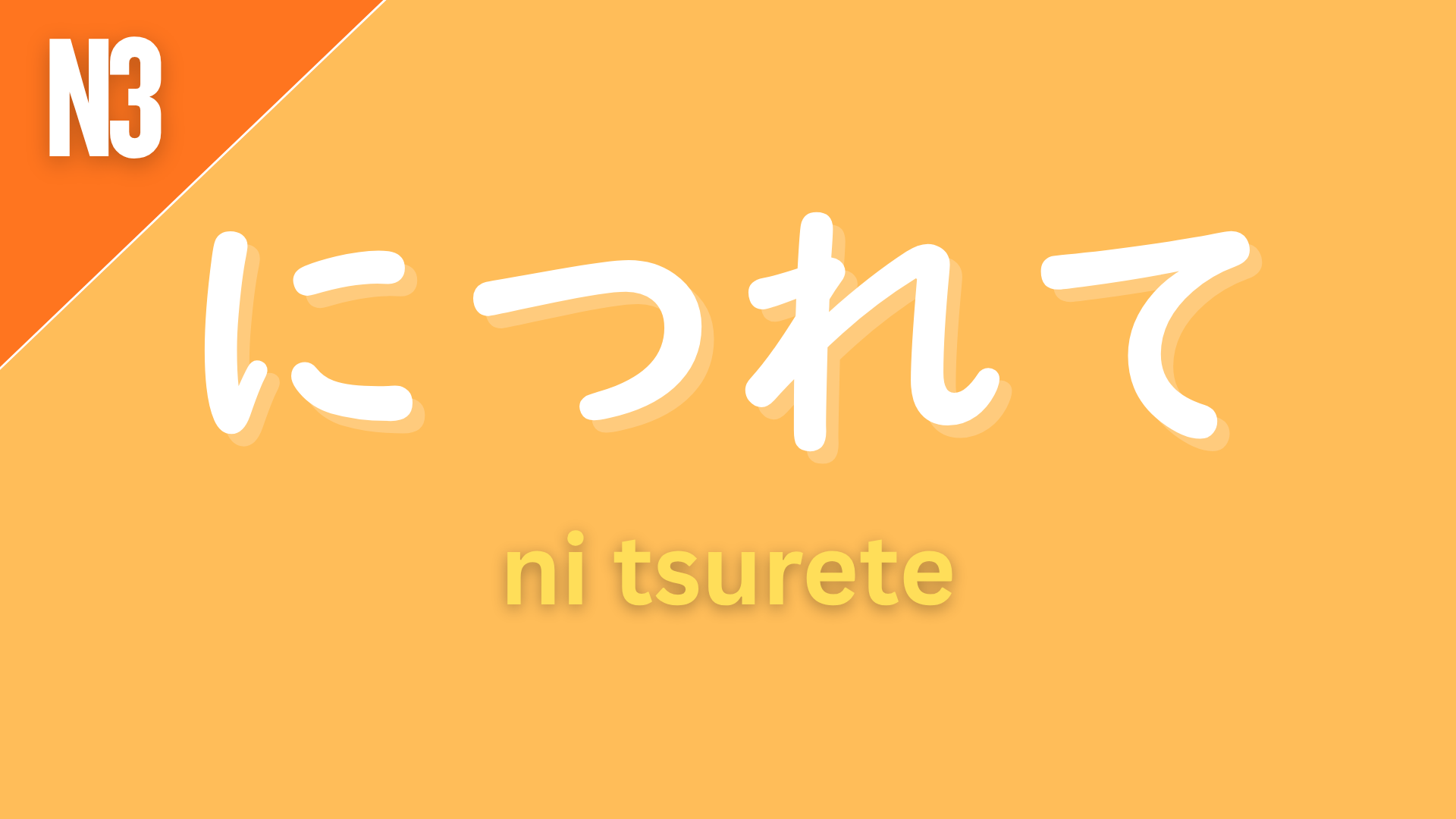
That feeling of “as one thing changes, another thing changes too” is exactly what we express with につれて (ni tsurete).
It’s an N3 grammar point used to describe gradual, natural changes that happen over time.
Whether you are talking about personal growth, social change, or the flow of everyday life, につれて helps you describe those shifts in a very natural way.
Let’s take a closer look at how it works.

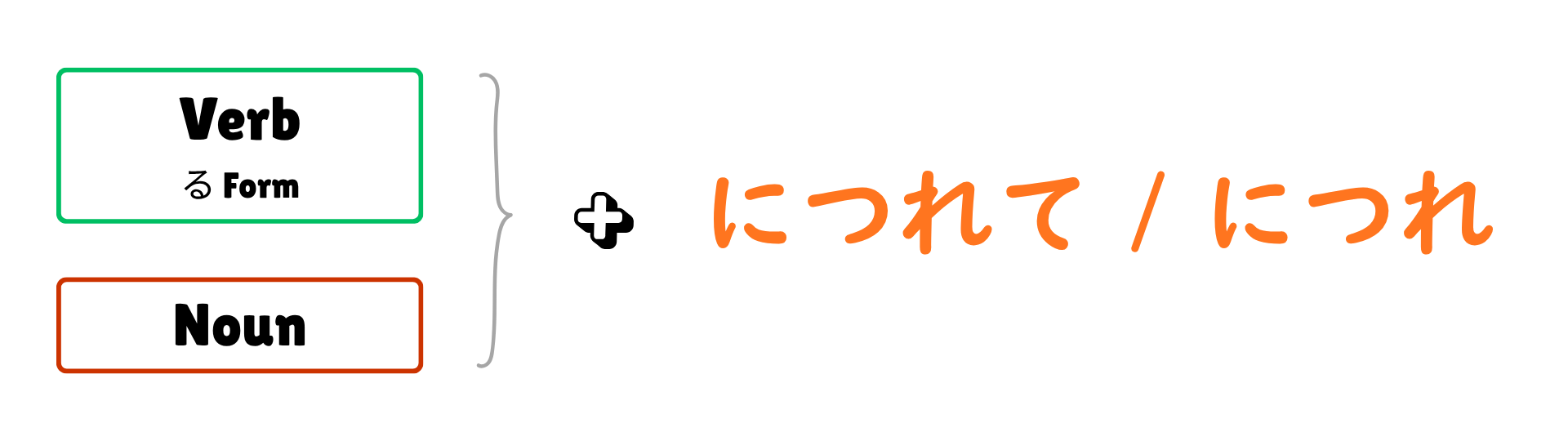

とともに(to tomo ni) vs にしたがって (ni shitagatte) vs につれて (ni tsurete)
Both expressions can be translated as “as” or “with,” but the nuance is different.
とともに (to tomo ni)
とともに is more formal and is often used when two things happen at the same time.
It does not always emphasize gradual change.
6月が近づくとともに、雨の日が増えてきた。
ろくがつがちかづくとともに、あめのひがふえてきた。
rokugatsu ga chikazuku totomo ni, ame no hi ga fuete kita.
As June approaches, the number of rainy days has increased.
Use とともに in formal writing or when emphasizing “together with” rather than change.
にしたがって (ni shitagatte)
にしたがって also shows that as A changes, B changes.
Compared to につれて, it sounds more logical and structured, and it often follows steps, data, levels, or rules. It can also mean “according to” or “following,” especially with instructions or rules.
change:
山を登るにしたがって、気温が下がる。
やまをのぼるにしたがって、きおんがさがる。
yama wo noboru ni shitagatte, kion ga sagaru.
As you climb the mountain, the temperature drops.(In this case, につれて can be used.)
rule or instruction:
指示にしたがって、避難してください。
しじにしたがって、ひなんしてください。
shiji ni shitagatte, hinan shite kudasai.
Please evacuate according to the instructions.(In this case, につれて cannot be used.)
Use にしたがって in explanations, manuals, news, or situations that feel rule based or systematic.
につれて (ni tsurete)
につれて is used for gradual, one direction changes that happen naturally over time.
As A changes, B changes along with it.
大人になるにつれて、昔あんなに大切だったおもちゃの存在を忘れていった。
おとなになるにつれて、むかしあんなにたいせつだったおもちゃのそんざいをわすれていった。
otona ni naru ni tsurete, mukashi anna ni taisetsu datta omocha no sonzai wo wasurete itta.
As I grew older, I gradually forgot about the toys that had once meant so much to me.
Use につれて when you want to describe growth, decline, or slow change.
Verbs You Cannot Use with につれて (ni tsurete)
につれて is used only when both A and B change gradually over time.
Because of this, につれて cannot be used with every verb.
If an action happens only once, happens suddenly, or does not show any change over time, using につれて sounds unnatural.
For example, verbs like 結婚する kekkon suru (get married), 死ぬ shinu (die), and 座る suwaru (sit) describe actions that happen at one specific moment.
They do not express gradual change or progression.
💡Tip
When you use につれて, ask yourself this simple question:
“Does this change little by little over time?”
If the answer is no, につれて is probably not the right choice.

理解できる単語が増えるにつれて、勉強が楽しくなってきた。
りかいできるたんごがふえるにつれて、べんきょうがたのしくなってきた。
rikai dekiru tango ga fueru ni tsurete, benkyou ga tanoshiku natte kita.
As the number of words I can understand increases, studying has become more fun.
時間がたつにつれ、私の悲しみもうすれていった。
じかんがたつにつれ、わたしのかなしみもうすれていった。
jikan ga tatsu ni tsure, watashi no kanashimi mo usurete itta.
As time passed, my sadness gradually faded.
お酒を飲むにつれて、彼の声はだんだん大きくなっていった。
おさけをのむにつれて、かれのこえはだんだんおおきくなっていった。
osake wo nomu ni tsurete, kare no koe ha dandan ookiku natte itta.
As he drank more alcohol, his voice gradually got louder.
時代の変化につれ、言葉の意味も変わっていく。
じだいのへんかにつれ、ことばのいみもかわっていく。
jidai no henka ni tsure, kotoba no imi mo kawatte iku.
As times change, the meanings of words also change.
景気の回復につれ、求人の数も増えている。
けいきのかいふくにつれ、きゅうじんのかずもふえている。
keiki no kaifuku ni tsure, kyuujin no kazu mo fuete iru.
As the economy recovers, the number of job openings is increasing.

- Grammar Point: につれて (ni tsurete)
- JLPT Level: N3
- Meaning: As, in proportion to, along with change
- Quick Explanation: Use につれて when you want to show that as one thing changes, another thing naturally changes with it over time.
So that’s how we use につれて.
It’s a useful expression for describing how one change naturally leads to another over time.
日本語が上手になるにつれて、あなたの世界はもっともっと広がっていきます。
にほんごがじょうずになるにつれて、あなたのせかいはもっともっとひろがっていきます。
nihongo ga jouzu ni naru ni tsurete, anata no sekai ha motto motto hirogatte ikimasu.
As your Japanese improves, your world will expand more and more.
Now it’s your turn!
Try making your own sentence using につれて and say it out loud or write it down for practice. Noticing small changes is part of your progress!
Your Sensei,
Hikari 👩🏻🏫✨
Get Hikari's JLPT Mock Exams & Preparation Lessons!
Whether you are studying to pass the JLPT or looking for a challenge in your learning journey, these courses are perfect for you!
Join my ニュースレター Newsletter 📩
You can expect an email from me once a week about Japanese culture.
Don't worry, your information will not be shared.
We hate SPAM. We will never sell your information, for any reason.