JLPT N3 - Grammar 🌟 なるべく narubeku
Have you ever told yourself something like this?
“I know I should be healthier… so I’ll try to take the stairs instead of the escalator.”
Or, “I’ll try not to eat snacks before dinner… even though they’re right there.”
You’re not saying you’ll do it perfectly.
You’re not making a 100% promise.
You’re saying, “I might not succeed every time. But I’ll make the effort.”
And sometimes, it’s not about your own effort, but about asking someone else gently.
You want a reply soon, but you don’t want to put pressure on them.
Not “You must reply today.”
But more like, “If possible… I’d really appreciate an early reply.”
In Japanese, this kind of gentle effort and soft request comes up all the time.
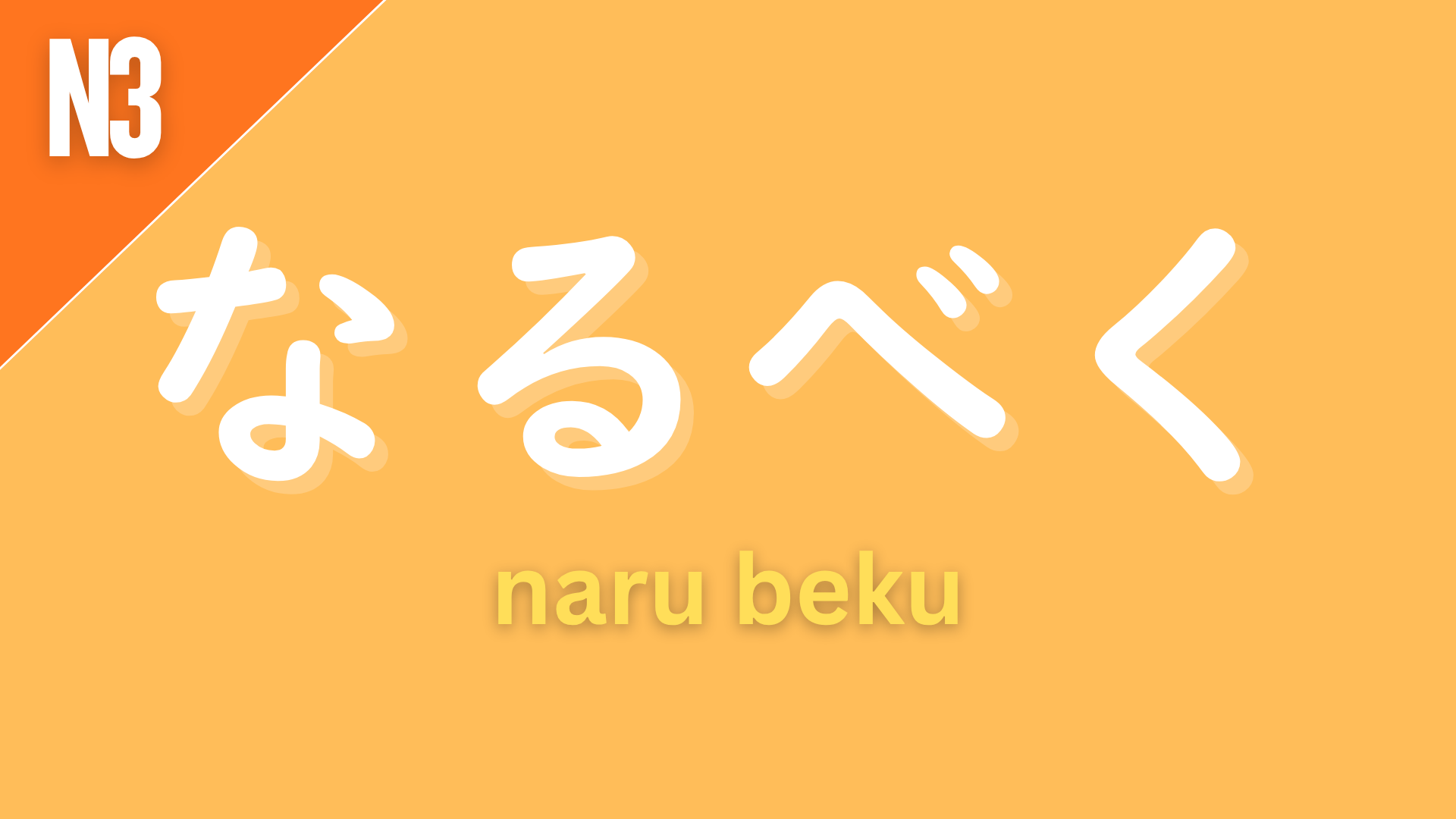
And that’s exactly where なるべく (naru beku) shines.
なるべく is used when you want to say, “I’ll do my best,” or, “Please do it if you can.”
It adds the meaning of “as much as possible” or “if you can,” without sounding strict or pushy.
It’s the perfect word for moments like when you’re trying your best, asking kindly,
or keeping things pressure-free.
Let’s see how to use なるべく in Japanese to sound polite, natural, and realistic.



できるだけ (dekiru dake) vs なるべく(narubeku)
Both できるだけ and なるべく mean “as much as possible,” but the nuance and level of pressure are slightly different.
できるだけ (dekiru dake) - As much as possible (with strong effort)
できるだけ is used when you want to express strong personal effort or determination. It sounds more subjective and intentional, as if you’re saying “I’ll do everything I can” or “I’ll push myself as far as possible.”
Because of this, it’s often used when talking about your own goals, habits, or decisions, rather than making requests to others.
できるだけ毎日、日本語を勉強しています。
できるだけ まいにち、にほんご を べんきょう して います。
dekiru dake mainichi, nihongo wo benkyou shite imasu.
I study Japanese every day as much as possible.
Use できるだけ (dekiru dake) when you want to emphasize your own effort or strong intention.
なるべく (narubeku) - As much as possible, if you can
なるべく is softer, calmer, and more flexible. It expresses effort, but without pressure, and often leaves room for the situation or the other person.
Because of this, it’s very common in gentle requests, advice, daily habits, and business communication. The nuance is “I’ll try” or “please do it if possible,” rather than a promise or command.
なるべく早く返事をしてください。
なるべく はやく へんじ を して ください。
naru beku hayaku henji wo shite kudasai.
Please reply as soon as possible, if you can.
Use なるべく (narubeku) when you want to sound considerate, polite, and realistic.

健康のために、なるべく階段を使うようにしています。
けんこう の ため に、なるべく かいだん を つかう ように して います。
kenkou no tame ni, naru beku kaidan wo tsukau you ni shite imasu.
For my health, I try to use the stairs as much as possible.
給料日前だから、なるべく安いレストランがいいな。
きゅうりょうび まえ だ から、なるべく やすい れすとらん が いい な。
kyuuryoubi mae da kara, naru beku yasui resutoran ga ii na.
It’s before payday, so I’d prefer a cheaper restaurant if possible.
夕飯の前は、お菓子をなるべく食べないように気をつけています。
ゆうはん の まえ は、おかし を なるべく たべない ように き を つけて います。
yuuhan no mae ha, okashi wo naru beku tabenai you ni ki wo tsukete imasu.
Before dinner, I try not to eat snacks as much as possible.
忘れるといけないので、なるべく早く返事をください。
わすれる と いけない の で、なるべく はやく へんじ を ください。
wasureru to ikenai no de, naru beku hayaku henji wo kudasai.
Please reply as soon as possible, so it doesn’t get forgotten.
部長はとても忙しいので、用件はなるべく簡潔にお願いします。
ぶちょう は とても いそがしい の で、ようけん は なるべく かんけつ に おねがい します。
buchou ha totemo isogashii no de, youken ha naru beku kanketsu ni onegai shimasu.
The manager is very busy, so please keep the details as brief as possible.

- Grammar Point: なるべく(narubeku)
- JLPT Level: N3
- Meaning: As much as possible, if possible
- Quick Explanation: なるべく is used to express effort or preference without making a strong promise or command. It adds the nuance of “as much as possible” or “if you can,” and is often used for gentle requests, advice, and personal habits. The key idea is effort without pressure.
So that’s how we use なるべく!
It’s a very Japanese way to express effort without pressure, not a promise, not a command, just a sincere “I’ll try” or “if you can.”
私はなるべく野菜を食べるようにしています。
わたしはなるべくやさいをたべるようにしています。
Watashi wa narubeku yasai o taberu you ni shiteimasu.
I try to eat vegetables as much as possible.
Your Japanese will sound more natural, more polite, and much more human, just like real Japanese.
Your Sensei,
Hikari 👩🏻🏫✨
Get Hikari's JLPT Mock Exams & Preparation Lessons!
Whether you are studying to pass the JLPT or looking for a challenge in your learning journey, these courses are perfect for you!
Join my ニュースレター Newsletter 📩
You can expect an email from me once a week about Japanese culture.
Don't worry, your information will not be shared.
We hate SPAM. We will never sell your information, for any reason.