JLPT N3 - Grammar 🌟 なかなか nakanaka
Have you ever tried something and thought, “Wow, this is actually better than I expected”?
That’s when Japanese speakers often use なかなか (nakanaka), a little word that expresses pleasant surprise or admiration.
It’s often translated as “quite,” “pretty,” or “rather,” and it adds a warm, natural nuance when you’re impressed by something.
Ready to discover how なかなか can make your Japanese sound more natural and expressive? Let’s dive in!

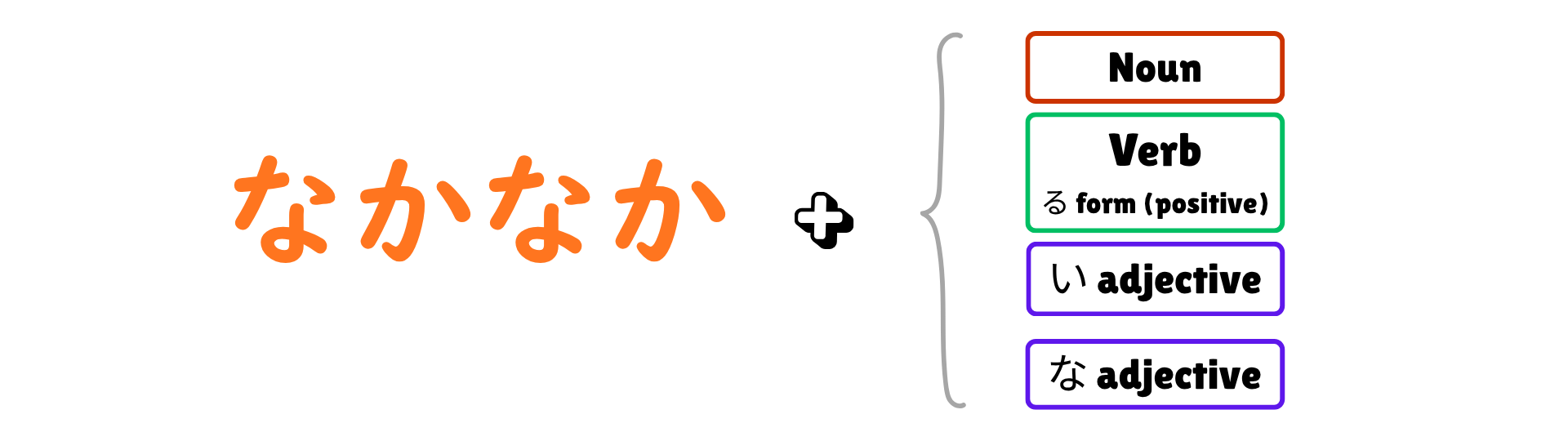

なかなか + Verb(negative form)+ ない
This structure means “not easily / not quite / hardly,” expressing that something doesn’t happen as expected, or takes effort or time.
It often shows frustration or difficulty, the speaker expected it to happen sooner or more easily, but it hasn’t.
(This pattern is covered in more detail in the N4 article on なかなか〜ない (naka naka ~ nai)!)
バスがなかなか来ない。
ばす が なかなか こない。
basu ga nakanaka konai.
The bus just won’t come.
かなり (kanari) vs なかなか (nakanaka)
Both can mean “quite / rather,” but the nuance differs.
かなり (kanari) sounds more factual or objective, while なかなか (naka naka) carries a touch of emotion or pleasant surprise.
Both mean “This movie is quite popular,” but かなり (kanari) sounds like a report, while なかなか (naka naka) sounds like you’re personally impressed.
この映画はかなり人気です。
この えいが は かなり にんき です。
kono eiga ha kanari ninki desu.
This movie is quite popular.
この映画はなかなか人気です。
この えいが は なかなか にんき です。
kono eiga ha nakanaka ninki desu.
This movie is quite popular.

彼の日本語はなかなか上手だ。
かれ の にほんご は なかなか じょうず だ。
kare no nihongo ha nakanaka jouzu da.
His Japanese is quite good.
彼女はなかなか有名な歌手です。
かのじょ は なかなか ゆうめい な かしゅ です。
kanojo ha nakanaka yuumei na kashu desu.
She’s quite a famous singer.
この本は社会人1年目には、なかなか役に立つよ。
この ほん は しゃかいじん いちねんめ に は、なかなか やく に たつ よ。
kono hon ha shakaijin ichinenme ni ha, nakanaka yaku ni tatsu yo.
This book is pretty useful for first-year professionals.
あの先生、見た目は優しいのになかなか厳しいんだよね。
あの せんせい、みため は やさしい の に なかなか きびしい ん だ よ ね。
ano sensei, mitame ha yasashii no ni nakanaka kibishii n da yo ne.
That teacher looks kind, but is actually quite strict.
初めて食べるけど、この料理なかなか美味しいね。
はじめて たべる けど、この りょうり なかなか おいしい ね。
hajimete taberu kedo, kono ryouri nakanaka oishii ne.
It’s my first time eating this, but this dish is quite tasty!
この機械は古いけど、なかなかよく動くよ。
この きかい は ふるい けど、なかなか よく うごく よ。
kono kikai ha furui kedo, nakanaka yoku ugoku yo.
This machine is old, but it still works pretty well.
この赤ちゃんはなかなか寝ない。
このあかちゃんはなかなかねない。
kono akachan wa nakanaka nenai.
This baby just won't go to sleep.
電車がなかなか来ない。
でんしゃがなかなかこない。
densha ga nakanaka konai.
The train is taking a long time to arrive.
これはなかなかの名作だ。
これはなかなかのめいさくだ。
kore wa nakanaka no meisaku da.
This is quite a masterpiece.
彼女はなかなかの美人だ。
かのじょはなかなかのびじんだ。
kanojo ha nakanaka no bijin da.
She is quite beautiful.

- Grammar Point: なかなか (nakanaka)
- JLPT Level: N3
- Meaning: Very, quite, just not
- Quick Explanation: Use なかなか to describe when something is better or stronger than expected (“quite / pretty”), often in a positive sentence.
When used with a negative verb (なかなか〜ない), it means “just not / hardly” and expresses that something isn’t going as smoothly as you’d like or takes longer than expected.
So that’s how we use なかなか!
It’s a fun and expressive word, perfect for showing when something is better than expected, or when things just won’t go your way (with なかなか〜ない).
この記事、楽しく読めた?あなたの日本語、なかなか上達してきたんじゃない?
この記事、たのしく よめた?あなた の にほんご、なかなか じょうたつ してきた ん じゃない?
kono kiji, tanoshiku yometa? anata no nihongo, nakanaka joutatsu shite kita n janai?
Did you enjoy reading this article? Your Japanese is getting quite good, isn’t it?
Now it’s your turn! Try making your own sentences with なかなか and share your “better than expected” or “just won’t happen” moments in Japanese!
Your Sensei,
Hikari 👩🏻🏫
Get Hikari's JLPT Mock Exams & Preparation Lessons!
Whether you are studying to pass the JLPT or looking for a challenge in your learning journey, these courses are perfect for you!
Join my ニュースレター Newsletter 📩
You can expect an email from me once a week about Japanese culture.
Don't worry, your information will not be shared.
We hate SPAM. We will never sell your information, for any reason.