JLPT N3 - Grammar 🌟 くせに kuseni

Have you ever had a moment where someone says one thing… but does the complete opposite?
Like a coworker who never contributes to the team but always complains,
or someone who pretends to know everything even though it’s obvious they don’t.
In Japanese, when you feel like saying, “You say that, but look what you’re doing!”,
the perfect phrase is くせに (kuse ni).
It’s an N3 grammar point that means “even though,” “and yet,” or “despite.”
But be careful, くせに isn’t neutral. It often carries a tone of criticism, sarcasm, or mild irritation.
You can use it when you want to call out contradictions, sometimes teasingly, sometimes seriously.
Let’s explore this expressive and slightly spicy grammar together!

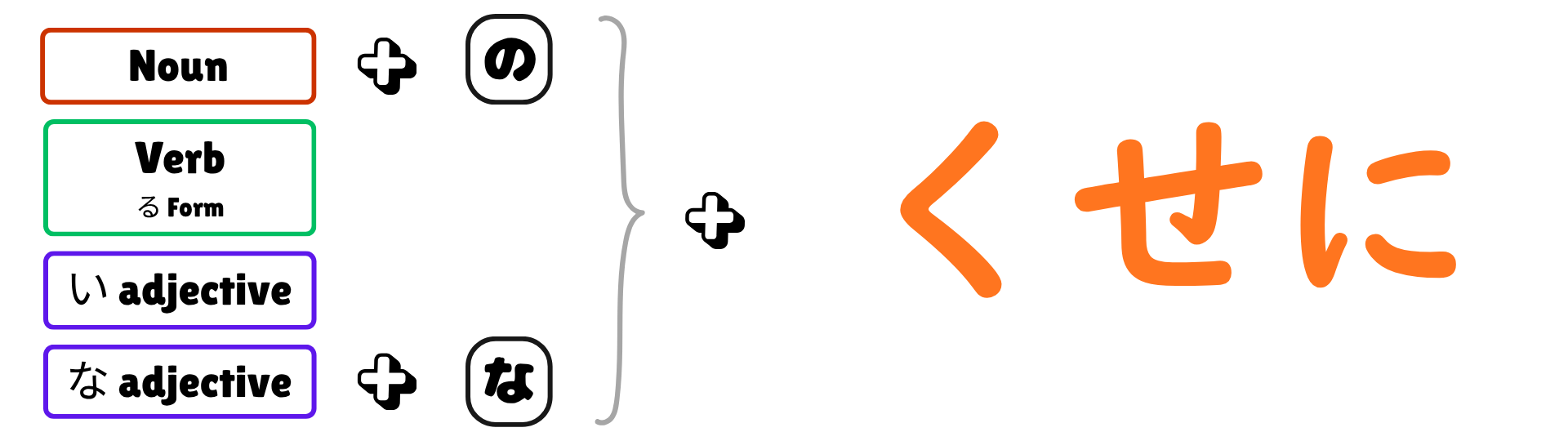

のに (noni) vs くせに (kuse ni)
Both くせに (kuse ni) and のに (noni) can be translated as “even though” or “despite,”
but their tone is quite different.
のに (noni) is neutral and often expresses surprise or disappointment.
くせに (kuse ni) carries emotion, often criticism, sarcasm, or frustration.
彼女は忙しいのに、みんなのために手伝ってくれる。
かのじょ は いそがしい のに、みんな の ため に てつだって くれる。
kanojo ha isogashii noni, minna no tame ni tetsudatte kureru.
Even though she’s busy, she still helps everyone. (neutral / positive tone)
彼女は忙しいくせに、SNSばかり見てる。
かのじょ は いそがしい くせに、SNS ばかり みてる。
kanojo ha isogashii kuse ni, SNS bakari miteru.
Even though she says she’s busy, she’s always on social media. (sarcastic / critical tone)

彼は全然練習しないくせに、試合に出たがる。
かれ は ぜんぜん れんしゅう しない くせに、しあい に でたがる。
kare ha zenzen renshuu shinai kuse ni, shiai ni detagaru.
Even though he never practices, he always wants to play in the game.
何も知らないくせに、首を突っ込まないで!
なにも しらない くせに、くび を つっこまないで!
nanimo shiranai kuse ni, kubi wo tsukkomanaide!
Don’t stick your nose in when you don’t even know anything!
彼は新人のくせに、偉そうな態度をとっている。
かれは しんじん の くせに、えらそう な たいど を とっている。
kare ha shinjin no kuse ni, erasou na taido wo totteiru.
Even though he’s new, he acts all high and mighty.
寂しいくせに、人に素直に頼れないんだね。
さびしい くせに、ひと に すなお に たよれない ん だ ね。
sabishii kuse ni, hito ni sunao ni tayorenai n da ne.
Even though you’re lonely, you can’t honestly rely on others, huh?
本当は好きなくせに、気づかないふりしてる。
ほんとう は すき な くせに、きづかない ふり してる。
hontou ha suki na kuse ni, kidzukanai furi shiteru.
Even though you really like them, you pretend not to notice.

- Grammar Point: くせに (kuse ni)
- JLPT Level: N3
- Meaning: Even though, and yet, despite
- Quick Explanation: Used when someone’s behavior or situation contradicts their words, position, or status, often with a critical, sarcastic, or teasing tone. It expresses irritation, irony, or disbelief.
So that’s how we use くせに!
Since it carries a critical, sarcastic, or teasing tone, be careful, using it with superiors or people you’re not close to can sound harsh or even offensive.
Do you know the famous Japanese anime Doraemon? In the story, the main character Nobita is always bullied by the big, strong Gian.
Whenever Nobita manages to succeed at something, Gian says,
のび太のくせに!
Nobita no kuse ni !
Even though it is you (who always fails, he succeeds, no way!).
Every time I use “kuse ni”, I end up thinking of Gian. haha
Now it’s your turn! Try making your own sentences with くせに, and add a little spice (and maybe some heart) to your Japanese conversations!
Your Sensei,
Hikari 👩🏻🏫
Get Hikari's JLPT Mock Exams & Preparation Lessons!
Whether you are studying to pass the JLPT or looking for a challenge in your learning journey, these courses are perfect for you!

Join my ニュースレター Newsletter 📩
You can expect an email from me once a week about Japanese culture.
Don't worry, your information will not be shared.
We hate SPAM. We will never sell your information, for any reason.