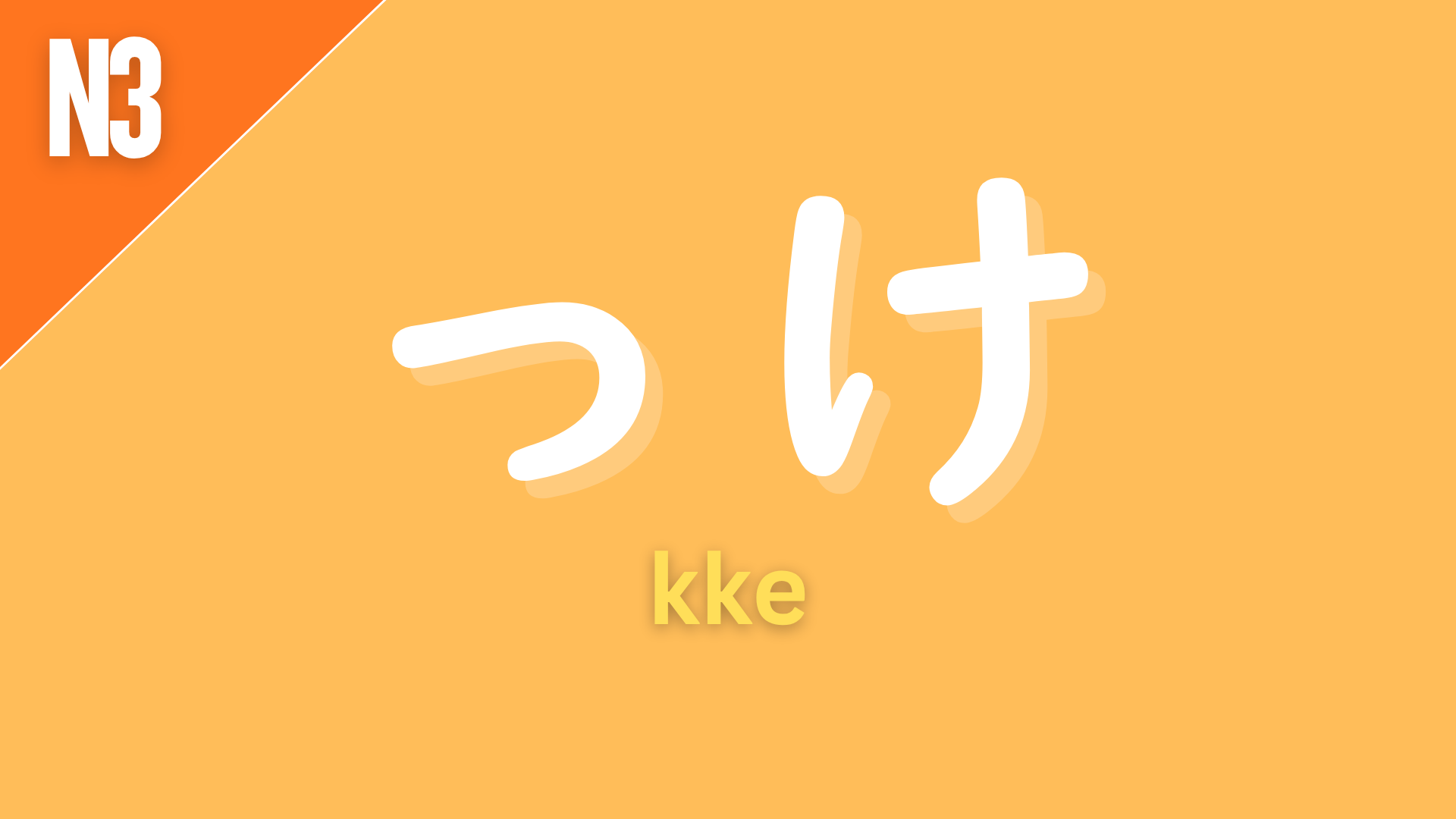
JLPT N3 - Grammar 🌟 っけ kke
Have you ever had one of those moments where you know you heard something before… but your memory just won’t cooperate?
You’re talking with a friend, nodding along, and suddenly you think,
“Wait… what time was the meeting again?”
Or you’re standing at the door, keys in hand, and your brain hits pause:
“Uh… did I lock the door…?”
It’s not that you never knew. You did know this once.
It’s just… gone for a second.
You don’t want to sound serious or formal.
You’re not asking a big question. You’re just gently checking your memory, sometimes even talking to yourself.
In English, we say things like, “Wait, was it…?” or “Did I already…?”.
Japanese has a very natural, casual way to express this too, and it’s っけ (kke) .
You’ll hear it all the time in daily conversations, especially among friends and family.
It sounds relaxed, thoughtful, and very human.
Let’s learn how っけ works, and how to use it to sound more natural in everyday Japanese.

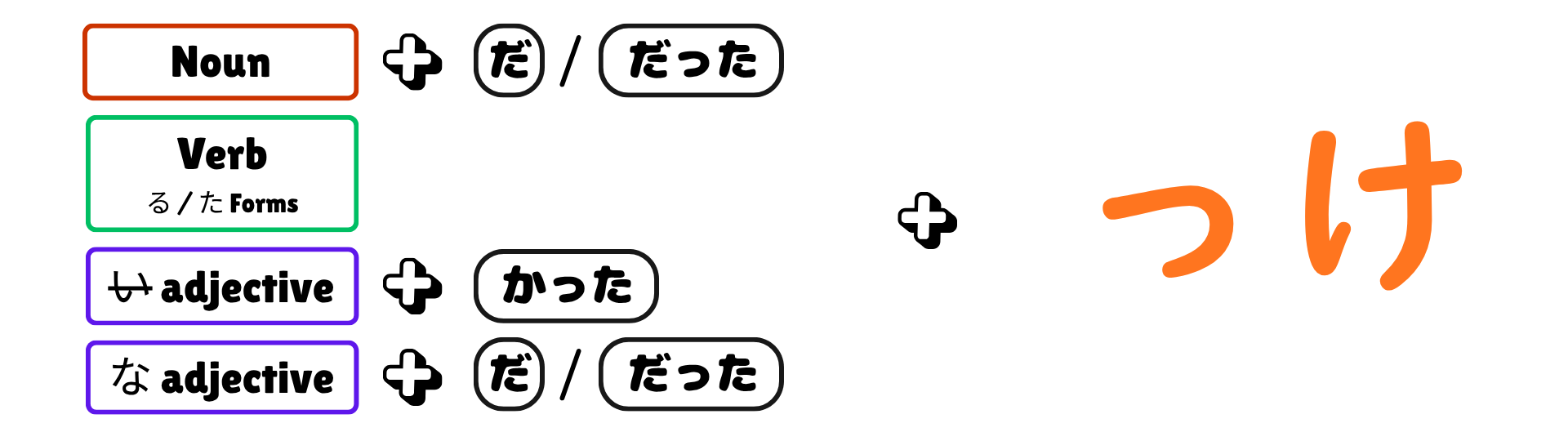

〜か (~ka) vs 〜っけ (~kke)
Both か and っけ are used to ask questions in Japanese, but they are used in very different situations.
か (ka) - Asking for new information
か is used when you genuinely don’t know something and are asking for information for the first time. It sounds neutral and can be polite or casual depending on the sentence.
明日は休みですか?
あした は やすみ です か?
ashita ha yasumi desu ka?
Is tomorrow a holiday?
Use 〜か when the information is new to you.
っけ (kke) - Confirming forgotten information
っけ is used when you knew the information before, but can’t clearly remember it now.
It often sounds thoughtful, casual, and very conversational. Like thinking out loud.
明日って休みだったっけ?
あした って やすみ だったっけ?
ashita tte yasumi datta kke?
Tomorrow was a holiday, right? (I can’t quite remember.)
Use 〜っけ when you’re checking your memory, not learning something new.

今日のミーティング、何時だったっけ?
きょう の みーてぃんぐ、なんじだったっけ?
kyou no miitingu, nanji datta kke?
What time will be today’s meeting again?
あの映画のタイトル、何だっけ?
あの えいが の たいとる、なん だっけ?
ano eiga no taitoru, nan da kke?
What was the title of that movie again?
私たち、前にどこかで会ったことあったっけ?
わたしたち、まえ に どこか で あった こと あったっけ?
watashitachi, mae ni dokoka de atta koto atta kke?
Have we met somewhere before?
何時に出発するんだっけ?
なんじにしゅっぱつするんだっけ?
Nanji ni shuppatsu suru nda kke?
What time are we leaving again?
林さん、どこに住んでるんだったっけ?
はやしさん、どこにすんでるんだったっけ?
Hayashi-san, doko ni sunderun datta kke?
Where does Hayashi-san live again?
このレストランのタイカレー、どれくらい辛かったっけ?
この れすとらん の たいかれー、どれくらい からかったっけ?
kono resutoran no tai karee, dorekurai karakatta kke?
How spicy is this restaurant’s Thai curry again?
彼って有名だっけ?
かれってゆうめいだっけ?
kare tte yuumei dakke?
Is he famous?
あの先生、親切だったっけ?
あのせんせい、しんせつだっけ?
ano sensei, shinsetsu dakke?
Is that teacher kind?
あれ、家の鍵かけたっけ?
あれ、いえ の かぎ かけたっけ?
are, ie no kagi kaketa kke?
Wait… did I lock the door?
冷蔵庫にまだ卵残ってたっけ?
れいぞうこ に まだ たまご のこってたっけ?
reizouko ni mada tamago nokotteta kke?
Were there still eggs left in the fridge?

- Grammar Point: っけ (kke)
- JLPT Level: N3
- Meaning: Casual suffix to confirm memory, “was it… again?”
- Quick Explanation: 〜っけ is a casual spoken expression used when you’re trying to recall something you knew before but can’t remember clearly now.
So that’s how we use っけ!
It’s a very natural, very human way to express uncertainty, forgetfulness, and those little “wait a second…” moments in daily conversation.
勉強していると、「これ、前に習ったっけ?」って思うこと、あるよね.
べんきょう して いる と、「これ、まえ に ならったっけ?」って おもう こと、ある よね。
benkyou shite iru to, “kore, mae ni naratta kke?” tte omou koto, aru yo ne.
When you’re studying, you sometimes think, “Wait… did we learn this before?”
Now, it’s your turn!
Try using っけ the next time you forget something small.I t’ll make your Japanese sound more relaxed, more natural, and much more like real-life Japanese.
Your Sensei,
Hikari 👩🏻🏫✨
Get Hikari's JLPT Mock Exams & Preparation Lessons!
Whether you are studying to pass the JLPT or looking for a challenge in your learning journey, these courses are perfect for you!
Join my ニュースレター Newsletter 📩
You can expect an email from me once a week about Japanese culture.
Don't worry, your information will not be shared.
We hate SPAM. We will never sell your information, for any reason.