JLPT N3 - Grammar 🌟 かける kakeru
Have you ever started doing something… and then just stopped halfway?
Maybe you were reading a book but fell asleep, started cleaning your room and got distracted, or began writing a message and thought “Hmm… maybe I won’t send this after all.”
Yep. We’ve all been there.
In Japanese, there’s a super useful expression for exactly these moments: かける (kakeru)
This grammar pattern is used when you started an action, but didn’t finish it yet. Something is left unfinished, still in progress, or stopped right in the middle.
Think about everyday situations like a half-eaten snack sitting on your desk, a book you started reading but haven’t finished yet, or that sentence you almost said out loud… but decided to stop halfway.
Japanese loves describing these “in-between” states, and かける does it perfectly.
It’s one of those N3 grammar points that shows up everywhere, in daily conversation, stories, and even anime scenes.
So if you’ve ever thought “I started it… but I didn’t finish it,” you’re already thinking in 〜かける.
Ready to learn how to talk about things that are halfway done in natural Japanese?
Let’s go together!


始める (はじめる hajimeru) vs かける (kakeru)
Both 始める and かける are used when an action is not fully complete yet, but they focus on very different moments of the action.
Using the right one helps your Japanese sound much more precise and natural.
始める (hajimeru) - To start doing
始める focuses on the starting point of an action.
It tells us that something has just begun,and usually implies that it will continue.
This pattern is often used for changes, habits, or ongoing actions.
雨が降り始めた。
あめ が ふりはじめた。
ame ga furihajimeta.
It started to rain.
Use 始める when you want to emphasize the moment something begins.
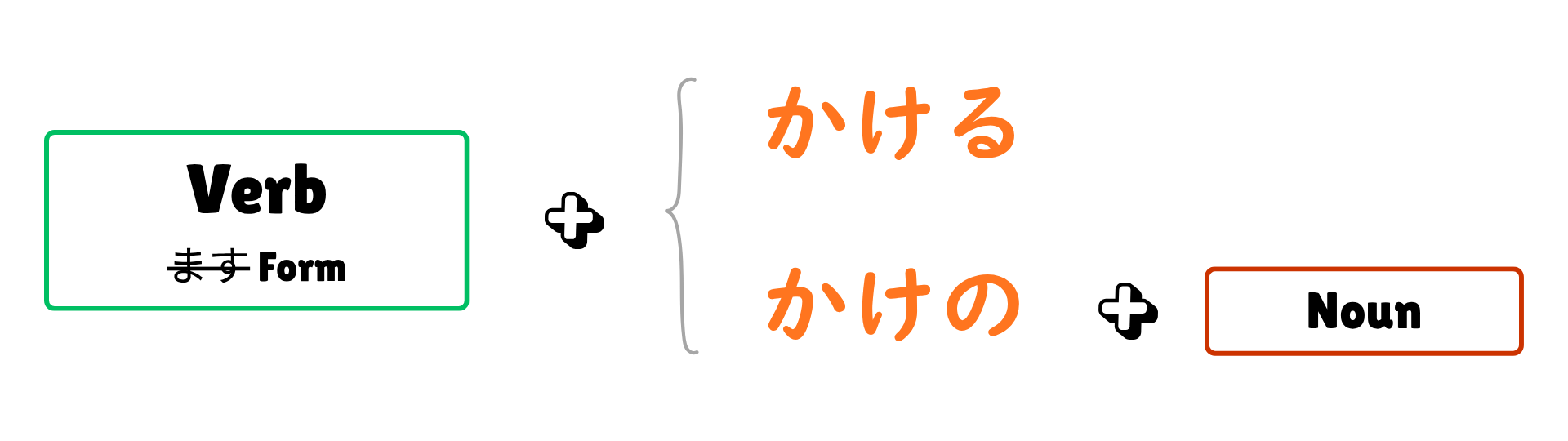
かける (kakeru) - Halfway done / about to do but stopped
かける focuses on the fact that an action is unfinished.
Something was started, but it hasn’t reached completion,or it was about to happen but stopped midway.
This often gives a feeling of “in the middle of” or “left incomplete.”
本を読みかけて、寝てしまった。
ほん を よみかけて、ねてしまった。
hon wo yomikakete, neteshimatta.
I was in the middle of reading a book and ended up falling asleep.
Use かける when you want to highlight that something was left unfinished.

彼は何かを言いかけて、結局何も言わずに立ち去った。
かれ は なにか を いいかけて、けっきょく なにも いわずに たちさった。
kare ha nanika wo iikakete, kekkyoku nani mo iwazu ni tachisatta.
He started to say something, but in the end, he left without saying anything.
西の空に、太陽が沈みかけている。
にし の そら に、たいよう が しずみかけている。
nishi no sora ni, taiyou ga shizumikakete iru.
The sun is starting to set in the western sky.
赤ちゃんがようやく眠りかけたのに、電話の音で起きてしまった。
あかちゃん が ようやく ねむりかけた のに、でんわ の おと で おきてしまった。
akachan ga youyaku nemurikaketa noni, denwa no oto de okiteshimatta.
The baby had just started to fall asleep, but woke up because of the phone ringing.
編みかけのセーターが、ベッドの上にある。
あみかけ の せーたー が、べっど の うえ に ある。
amikake no seetaa ga, beddo no ue ni aru.
There’s a half-knitted sweater on the bed.
テーブルの上に、まだ温かい飲みかけのコーヒーが置いてある。
てーぶる の うえ に、まだ あたたかい のみかけ の こーひー が おいてある。
teeburu no ue ni, mada atatakai nomikake no koohii ga oitearu.
There’s a still-warm, half-drunk cup of coffee on the table.

- Grammar Point: かける (kakeru)
- JLPT Level: N3
- Meaning: Half-, not yet finished, in the middle of
- Quick Explanation: 〜かける is used when an action has started but is not finished, or when something was about to happen but stopped halfway. It often describes unfinished actions, things left in progress, or moments that were almost completed.
So that’s how we use かける!
It’s a very Japanese way to describe those “in-between” states. Not quite started, not quite finished, but somewhere in the middle.
冷蔵庫に食べかけのケーキがある。
れいぞうこ に たべかけ の けーき がある。
reizouko ni tabekake no keeki ga aru.
There is a half-eaten cake in the refrigerator.
Next time you see a half-finished coffee, a book you’re still reading, or something you almost said, try using かける to describe it.
Your Japanese will sound more natural, more detailed, and much more real-life Japanese!
Your Sensei,
Hikari 👩🏻🏫✨
Get Hikari's JLPT Mock Exams & Preparation Lessons!
Whether you are studying to pass the JLPT or looking for a challenge in your learning journey, these courses are perfect for you!
Join my ニュースレター Newsletter 📩
You can expect an email from me once a week about Japanese culture.
Don't worry, your information will not be shared.
We hate SPAM. We will never sell your information, for any reason.