JLPT N3 - Grammar 🌟 あまりにも amari ni mo
Have you ever experienced a situation that was just… way too much?
Maybe you were so busy that you forgot to eat lunch. Or a movie was so sad that you could not stop crying even after leaving the theater.
Or maybe you finally made a date plan with someone you like and you are so happy that you cannot stop smiling.
When something goes far beyond the normal level and reaches an extreme point, especially when it leads to a strong emotional reaction or an unexpected result, that is when あまりにも(amari ni mo) comes to the rescue.
It is a powerful N3 expression that means “too much,” “excessively,” or “so much that...” It helps you describe situations that feel overwhelming, surprising, or intense.
Today, we will learn how to use this expressive phrase to add real emotion and impact to your Japanese.
Ready? Let’s dive in!


あまり〜ない(amari ~ nai) vs あまりに(も) (amari ni (mo))
This is a point where many learners get a little confused. While they look similar, their meanings are actually opposites.
あまり〜ない(amari ~ nai)
This pattern means “not very…” and is used with negative forms.
あまりお腹が空いていない。
あまり おなか が すいて いない。
amari onaka ga suite inai.
I’m not very hungry.
💡Quick Tip:
あまり + affirmative sentence sounds unnatural in modern Japanese. It is typically used with negative verbs.
あまりに(も) (amari ni (mo))
This form means “too much,” “excessively,” or “so much that…”
It emphasizes a strong or extreme degree.
あまりにもお腹が空いている。
あまりにも おなか が すいて いる。
amari ni mo onaka ga suite iru.
I’m extremely hungry. / I’m way too hungry.
💡Quick Tip:
Adding も at the end makes the emphasis even stronger.
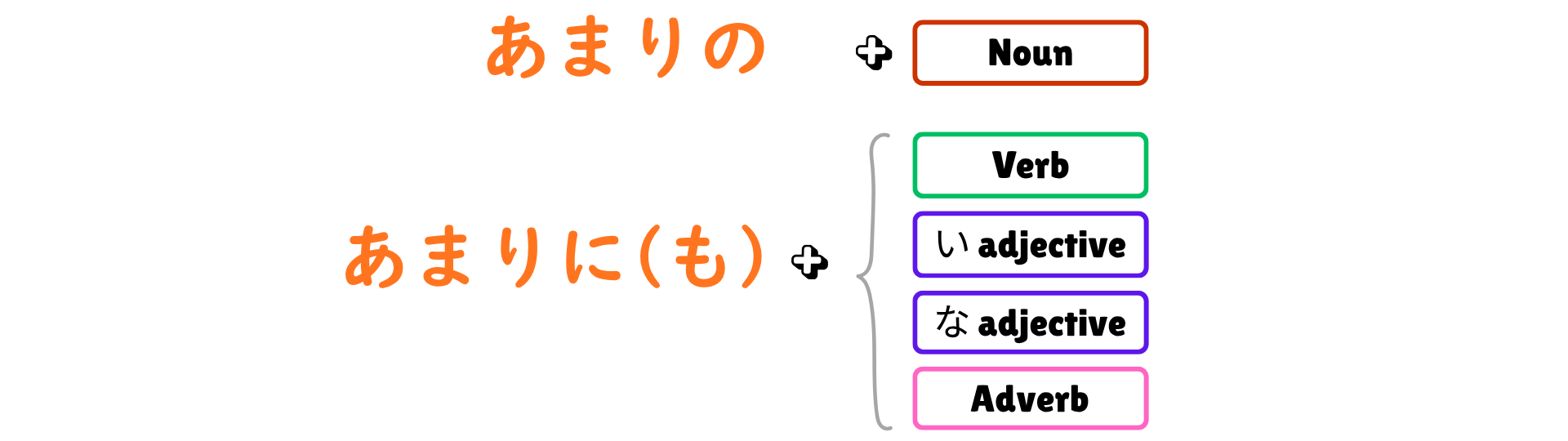
When you want to connect it directly to a noun to show that the noun itself is the cause of the extreme state, use あまりの.

あまりに忙しくて、昼ご飯を食べるのをすっかり忘れていた。
あまりに いそがしくて、ひるごはん を たべる の を すっかり わすれて いた。
amari ni isogashikute, hirugohan wo taberu no wo sukkari wasurete ita.
I was so busy that I completely forgot to eat lunch.
その映画があまりに悲しくて、映画館を出た後も涙が止まらなかった。
その えいが が あまりに かなしくて、えいがかん を でた あと も なみだ が とまらなかった。
sono eiga ga amari ni kanashikute, eigakan wo deta ato mo namida ga tomaranakatta.
The movie was so sad that I couldn’t stop crying even after leaving the theater.
あまりにも失礼な言い方に、腹が立った。
あまりにも しつれいな いいかた に、はら が たった。
amari ni mo shitsurei na iikata ni, hara ga tatta.
I got angry at such an extremely rude way of speaking.
その犬はあまりに激しくほえるので、周辺の住民は怖がっている。
その いぬ は あまりに はげしく ほえる ので、しゅうへん の じゅうみん は こわがって いる。
sono inu ha amari ni hageshiku hoeru node, shuuhen no juumin ha kowagatte iru.
The dog barks so violently that the nearby residents are afraid.
彼女があまりにも簡単に問題を解いたので、みんな驚いた。
かのじょ が あまりにも かんたん に もんだい を といた ので、みんな おどろいた。
kanojo ga amari ni mo kantan ni mondai wo toita node, minna odoroita.
She solved the problem so easily that everyone was surprised.
あまりにも突然のことで、まだ現実を受け入れられません。
あまりにも とつぜん の こと で、まだ げんじつ を うけいれられません。
amari ni mo totsuzen no koto de, mada genjitsu wo ukeireraremasen.
It was so sudden that I still can’t accept the reality.
窓から見えた景色のあまりの美しさに、言葉を失った。
まど から みえた けしき の あまり の うつくしさ に、ことば を うしなった。
mado kara mieta keshiki no amari no utsukushisa ni, kotoba wo ushinatta.
I was speechless at the sheer beauty of the view from the window.
デートが決まったあまりの嬉しさに、変なダンスを踊ってしまった。
デート が きまった あまり の うれしさ に、へんな ダンス を おどって しまった。
deeto ga kimatta amari no ureshisa ni, hen na dansu wo odotte shimatta.
I was so happy that the date was set that I ended up doing a weird dance.

- Grammar Point: あまりに(も) (amari ni (mo)) / あまりの (amari no)
- JLPT Level: N3
- Meaning: Too much, excessively, so much that...
- Quick Explanation: Use あまりに(も) when a situation or condition is far beyond the normal level, often leading to a specific result or a feeling of surprise or disbelief.
Use あまりの before a noun to show the cause of that extreme state.
So that’s how we use あまりにも.
It is a perfect way to express that something is truly off the charts and beyond what you expected. Whether you are talking about a movie that was overwhelmingly sad or a task that felt impossibly difficult, this expression helps you clearly convey strong emotions and intensity.
みんなの日本語に対するあまりの熱意に、私は圧倒されているよ!
みんな の にほんご に たいする あまり の ねつい に、わたし は あっとう されて いる よ!
minna no nihongo ni taisuru amari no netsui ni, watashi ha toutou sarete iru yo!
I am overwhelmed by everyone’s incredible passion for Japanese.
Now it is your turn!
Try making your own sentences using あまりにも.
Is there something in your life right now that feels just too much, in a good way or even in a challenging way?
Your Sensei,
Hikari 👩🏻🏫✨
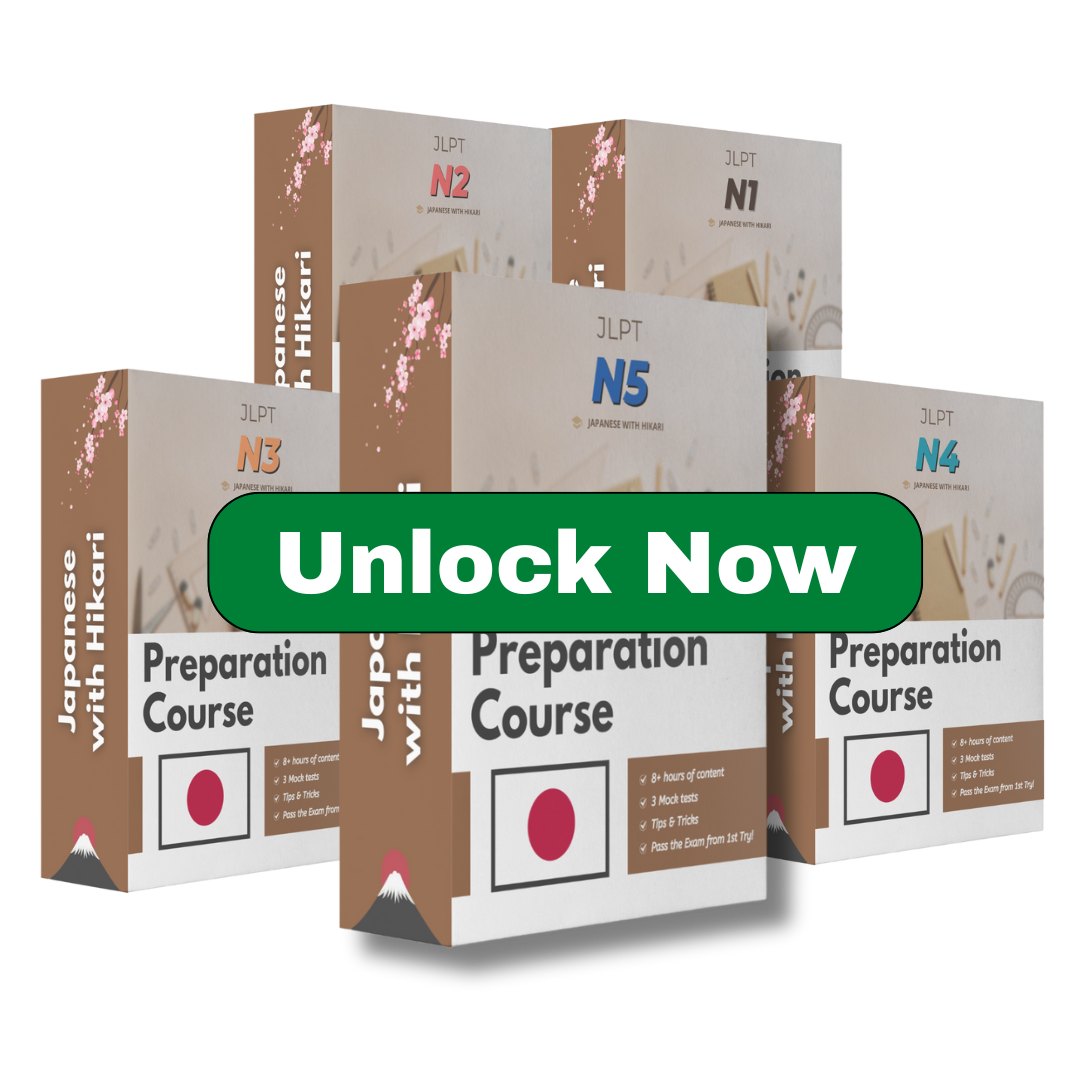
Get Hikari's JLPT Mock Exams & Preparation Lessons!
Whether you are studying to pass the JLPT or looking for a challenge in your learning journey, these courses are perfect for you!
Join my ニュースレター Newsletter 📩
You can expect an email from me once a week about Japanese culture.
Don't worry, your information will not be shared.
We hate SPAM. We will never sell your information, for any reason.