JLPT N3 Grammar: あまり (Amari) Meaning and Uses
What does amari (あまり) mean in Japanese?
あまり (amari) has three main uses:
- あまり + negative = "not very / not much" (JLPT N4)
あまり食べません。(I don't eat much.) - あまりに(も) = "too / way too" (JLPT N3)
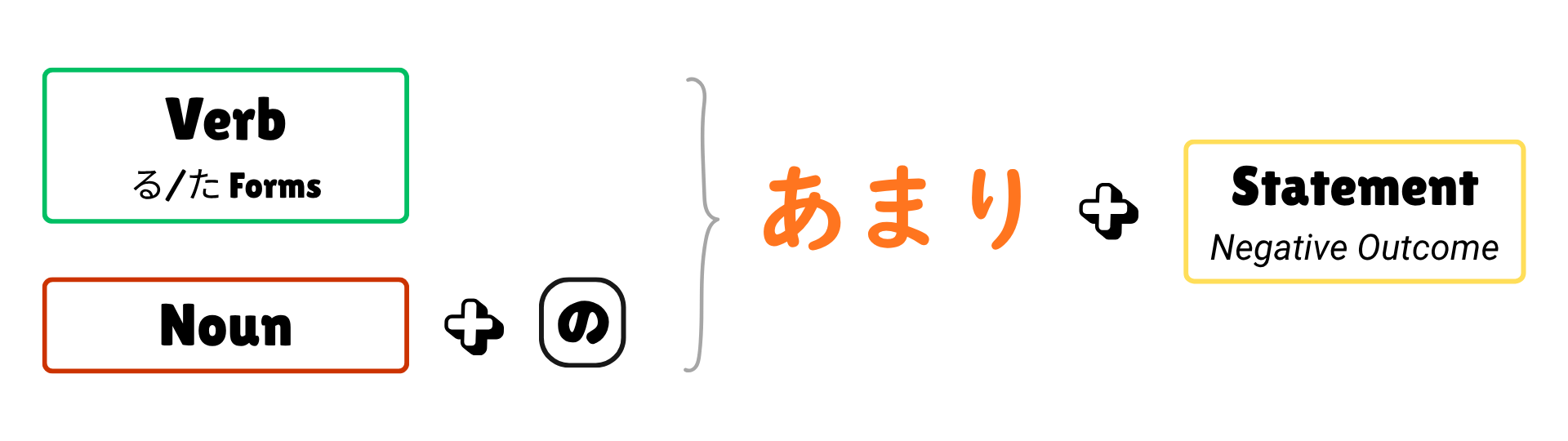
あまりにも高い。(It's way too expensive.) - Noun の / Verb + あまり = "so much that…" (JLPT N3)
緊張のあまり、手が震えた。(I was so nervous that my hands shook.)
Written in kanji as 余り, it can also mean "leftover" or "remainder", as in 余りの料理 (leftover food).
In this lesson, we focus on the third use, the pattern with nouns and verbs.
Have you ever been so nervous, so excited, or so worried that something totally unexpected happened?
Maybe your hands were shaking before a big meeting, or you were so happy you almost danced in the street (I’ve definitely been there), or you were so worried you checked your phone… twenty times… in five minutes.
In Japanese, there’s a perfect expression for these “my feelings were too much!!” moments: あまり (amari).
This grammar pattern describes situations where a strong emotion or extreme state leads to an unintended result. It’s expressive, natural, and honestly… it’s how life feels sometimes, right?
For example..
you might be so surprised that you scream, so excited that you can’t sit still, or so worried that you forget to eat (yes, even I forget to eat sometimes… usually when creating content for social media).
That’s exactly the nuance of あまり, something happens because your feelings or condition went “over the limit.”
So if you’ve ever said, “I was so nervous I couldn’t speak!” or “I was so happy I cried!”
Congratulations! You’re already thinking in あまり!
Ready to learn this dramatic, emotional, and very human expression?
Let’s dive in together!


すぎて(sugite) vs あまり (amari)
Both すぎて and あまり describe situations where something becomes “too much,” but the nuance and emotional tone are quite different.
Using the right one makes your Japanese sound much more natural!
すぎて (sugite) - Too (much), excessively
すぎて is used when something becomes too much in quantity, degree, or intensity.
It describes excess in a straightforward, objective way, too hot, too cold, too spicy, too expensive, too many, etc.
There’s no emotional overflow here, it’s simply “excess causes a result.”
This pattern is very common in daily conversation.
辛すぎて、食べられませんでした。
からすぎて、たべられませんでした。
karasugite, taberare masen deshita.
It was too spicy, so I couldn’t eat it.
Use すぎて when you want to say something is excessive or “too much” in a literal sense.
あまり (amari) - So much… that (an unintended result happens)
あまり expresses that a strong emotion or extreme state becomes so intense that it causes an unexpected or unintended result.
This pattern often appears with feelings such as worry, excitement, nervousness, joy, or surprise. Times when your emotions “overflow” and something happens because of it.
緊張したあまり、声が出ませんでした。
きんちょう した あまり、こえ が でませんでした。
kinchou shita amari, koe ga demasendeshita.
I was so nervous that I couldn’t speak.
Use あまり when your emotional state (or an extreme condition) leads to a surprising or unintended outcome.

両親は 私の病気を心配するあまり、眠れなくなった。
りょうしん は わたし の びょうき を しんぱい する あまり、ねむれなく なった。
ryoushin ha watashi no byouki wo shinpai suru amari, nemurenaku natta.
My parents were so worried about my illness that they couldn’t sleep.
ゲームに夢中になりすぎたあまり、視力が悪くなった。
げーむ に むちゅう に なりすぎた あまり、しりょく が わるく なった。
geemu ni muchuu ni narisugita amari, shiryoku ga waruku natta.
I got so absorbed in video games that my eyesight got worse.
集中のあまり、食事をするのを忘れていた。
しゅうちゅう の あまり、しょくじ を する の を わすれていた。
shuuchuu no amari, shokuji wo suru no wo wasurete ita.
I was so focused that I forgot to eat.
そのニュースを聞き、母は喜びのあまり声を出して泣いていた。
その にゅーす を きき、はは は よろこび の あまり こえ を だして ないていた。
sono nyuusu wo kiki, haha ha yorokobi no amari koe wo dashite naite ita.
When she heard the news, my mother cried out with joy.
好きなアーティストのコンサートに行けることになり、興奮のあまり身体が 震えた。
すき な あーてぃすと の こんさーと に いける こと に なり、こうふん の あまり からだ が ふるえた。
suki na aatisuto no konsaato ni ikeru koto ni nari, koufun no amari karada ga furueta.
When I found out I could go to my favorite artist’s concert, I was so excited that my body trembled.

- Grammar Point: あまり (amari)
- JLPT Level: N3
- Meaning: So much… that, because of (excessive emotion or state)
- Quick Explanation: あまり is used when a strong emotion or extreme state becomes so intense that it causes an unexpected or unintended result.
So that’s how we use あまり!
It’s a powerful and expressive pattern that lets you describe dramatic emotional moments, just like a natural Japanese storyteller.
私は、嬉しさのあまり1人で踊ってしまうことがある。
わたし は、うれしさ の あまり、ひとり で おどってしまう こと が ある。
watashi ha, ureshisa no amari, hitori de odotte shimau koto ga aru.
When I get too happy, I sometimes end up dancing all by myself.
Try using あまり the next time your feelings become “so much” that something unexpected happens.
Your Japanese will sound expressive, emotional, and beautifully natural!
Your Sensei,
Hikari 👩🏻🏫✨
Get Hikari's JLPT Mock Exams & Preparation Lessons!
Whether you are studying to pass the JLPT or looking for a challenge in your learning journey, these courses are perfect for you!
Join my ニュースレター Newsletter 📩
You can expect an email from me once a week about Japanese culture.
Don't worry, your information will not be shared.
We hate SPAM. We will never sell your information, for any reason.