JLPT N2 - Grammar 🌟 といった to itta
Have you ever noticed that Japanese sometimes lists a few examples… and then smoothly wraps them into one category?
For example, instead of just saying “I like sushi and tempura,”
Japanese often goes one step further and says something like:
“sushi and tempura… Japanese food like that.”
This kind of expression shows up a lot in articles, explanations, presentations, and even JLPT reading questions. It sounds a little more organized, a little more formal, and very Japanese.
You may already know 〜や〜など, which you learned at the beginner level.
That’s great!
Now, at the N2 level, Japanese introduces a more polished version of that idea: といった (to itta).
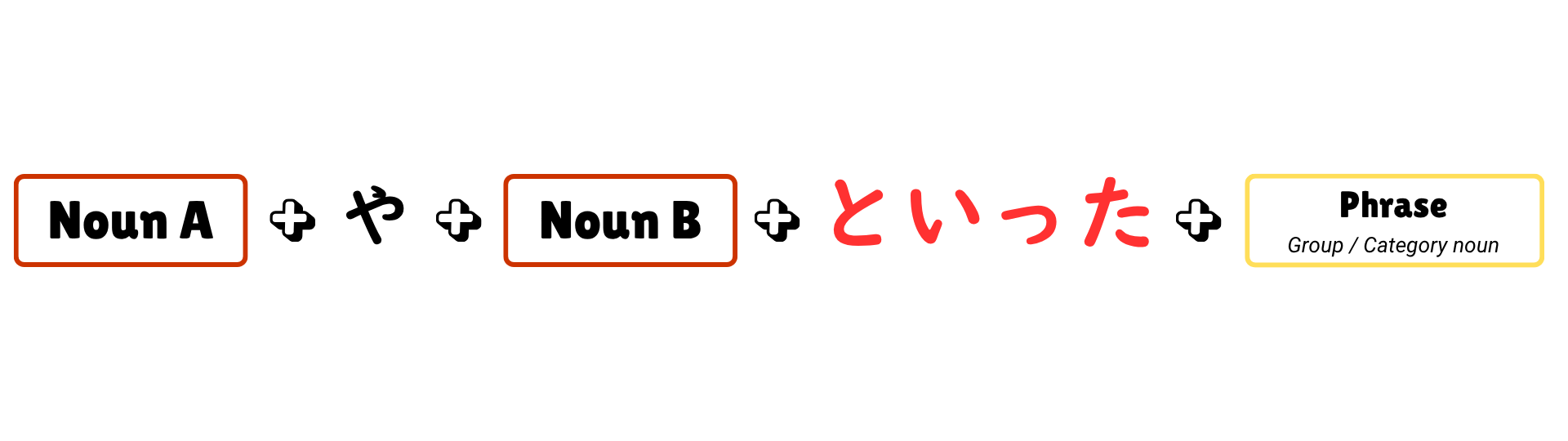
といった is used when you list a few representative examples and then describe them as a group. Like saying, “things such as A and B,” or “categories like these.”
It’s not something you use casually with friends every day, but it’s extremely common in written Japanese, news, explanations, and JLPT texts.
Let’s learn how 〜といった works, and how to recognize it quickly when you see it in real Japanese.


〜や〜など (~ya~nado) vs といった (to itta)
Both 〜や〜など and といった are used to give examples in Japanese, but they differ in formality, structure, and purpose.
〜や〜など (~ya~nado) - Casual listing of examples
〜や〜など is commonly used in everyday conversation.
It simply lists examples and doesn’t strongly define them as a category.
机の上に、本やペンなどがあります。
つくえ の うえ に、ほん や ぺん など が あります。
tsukue no ue ni, hon ya pen nado ga arimasu.
There are books, pens, and things like that on the desk.
Use 〜や〜など when you’re speaking casually and just want to mention a few examples.
といった (to itta) - Grouping examples into a category
といった is more formal and often used in written Japanese, explanations, articles, and presentations. It lists representative examples and then clearly defines them as one group or type of thing.
スマートフォンやパソコンといった電子機器は生活に欠かせません。
すまーとふぉん や ぱそこん といった でんしきき は せいかつ に かかせません。
sumaato fon ya pasokon to itta denshi kiki wa seikatsu ni kakasemasen.
Electronic devices such as smartphones and computers are essential to daily life.
Use 〜といった when you want to sound organized, explanatory, or formal. Especially when defining a category.

日本のアニメや漫画といった文化は、海外でも高く評価されています。
にほん の あにめ や まんが といった ぶんか は、かいがい でも たかく ひょうか されて います。
nihon no anime ya manga to itta bunka ha, kaigai demo takaku hyouka sarete imasu.
Japanese culture such as anime and manga is highly regarded overseas.
納豆やキムチといった発酵食品は、体に良いと言われています。
なっとう や きむち といった はっこうしょくひん は、からだ に よい と いわれて います。
nattou ya kimuchi to itta hakkou shokuhin ha, karada ni yoi to iwarete imasu.
Fermented foods such as natto and kimchi are said to be good for your health.
週末は、キャンプや登山といったアウトドアを楽しむ人が増えています。
しゅうまつ は、きゃんぷ や とざん といった あうとどあ を たのしむ ひと が ふえて います。
shuumatsu ha, kyanpu ya tozan to itta autodoa wo tanoshimu hito ga fuete imasu.
On weekends, more people are enjoying outdoor activities such as camping and hiking.
地震や台風といった自然災害への備えが重要です。
じしん や たいふう といった しぜんさいがい へ の そなえ が じゅうよう です。
jishin ya taifuu to itta shizensai gai he no sonae ga juuyou desu.
Preparing for natural disasters such as earthquakes and typhoons is important.
入会には、免許証やパスポートといった本人確認書類が必要です。
にゅうかい に は、めんきょしょう や ぱすぽーと といった ほんにんかくにん しょるい が ひつよう です。
nyuukai ni ha, menkyoshou ya pasupooto to itta honninkakunin shorui ga hitsuyou desu.
To join, identification documents such as a driver’s license or passport are required.
弊社では、英語や中国語といった語学に堪能な人材を求めています。
へいしゃ で は、えいご や ちゅうごくご といった ごがく に たんのう な じんざい を もとめて います。
heisha de ha, eigo ya chuugokugo to itta gogaku ni tannou na jinzai wo motomete imasu.
Our company is looking for people who are proficient in languages such as English and Chinese.

- Grammar Point: といった (to itta)
- JLPT Level: N2
- Meaning: Such as, like, examples of
- Quick Explanation: といった is used to list a few representative examples and then describe them as one group or category.
So that’s how we use といった!
It’s a very Japanese way to organize information giving clear examples first, and then neatly summarizing them into one idea.
日本では、寿司や天ぷらといった料理が有名です。
にほんでは、すしやてんぷらといったりょうりがゆうめいです。
Nihon de wa, sushi ya tenpura to itta ryouri ga yuumei desu.
In Japan, dishes such as sushi and tempura are famous.
Now, it’s your turn!
Try making your own sentence using といった think of two examples, then name the group they belong to!
Your Sensei,
Hikari 👩🏻🏫✨
Get Hikari's JLPT Mock Exams & Preparation Lessons!
Whether you are studying to pass the JLPT or looking for a challenge in your learning journey, these courses are perfect for you!
Join my ニュースレター Newsletter 📩
You can expect an email from me once a week about Japanese culture.
Don't worry, your information will not be shared.
We hate SPAM. We will never sell your information, for any reason.