JLPT N2 - Grammar 🌟 と同時に to douji ni

Have you ever experienced a moment when two things happened at exactly the same time, and you weren’t sure how to describe it in Japanese?
Maybe you opened your front door at the very same moment your phone started ringing.
Or your friend told a hilarious joke the instant you took a sip of tea, almost making you spit it out.
In situations like these, when two actions or events overlap or occur at the same timing, Japanese uses the expression と同時に (とどうじに / to douji ni).
This phrase is used to describe events that happen simultaneously, or something that happens the moment something else occurs.
It’s a super useful N2 grammar point for expressing timing, contrast, or two qualities that exist together.
Ready to learn how to use と同時に naturally and clearly?
Let’s get started!


とともに (to tomo ni) vs と同時に (to douji ni)
Both とともに and と同時に describe two things happening together, but each one highlights a different type of “togetherness.”
とともに (to tomo ni)
とともに focuses on parallel change or coexistence.
It’s used when two things develop together over time, influence each other, or exist at the same time, not necessarily in a single moment.
気温が下がるとともに、紅葉が始まった。
きおん が さがる と とも に、こうよう が はじまった。
kion ga sagaru to tomo ni, kouyou ga hajimatta.
As the temperature dropped, the autumn leaves began to change.
This expression is great for gradual changes, trends, or qualities that coexist.
と同時に (to douji ni)
と同時に focuses on timing.
It’s used when two actions or events occur at the exact same moment, or one happens the instant the other does.
ベルが鳴ると同時に、クラスが静かになった。
べる が なる と どうじ に、くらす が しずか に なった。
beru ga naru to douji ni, kurasu ga shizuka ni natta.
The moment the bell rang, the class became quiet.
Use this when the simultaneity is strong and immediate.

ドアを開けると同時に、電話が鳴り始めた。
どあ を あける と どうじ に、でんわ が なりはじめた。
doa wo akeru to douji ni, denwa ga narihajimeta.
The moment I opened the door, the phone started ringing.
旅行は楽しいと同時に疲れることも多い。
りょこう は たのしい と どうじ に つかれる こと も おおい。
ryokou ha tanoshii to douji ni tsukareru koto mo ooi.
Traveling is fun, but at the same time, it can also be tiring.
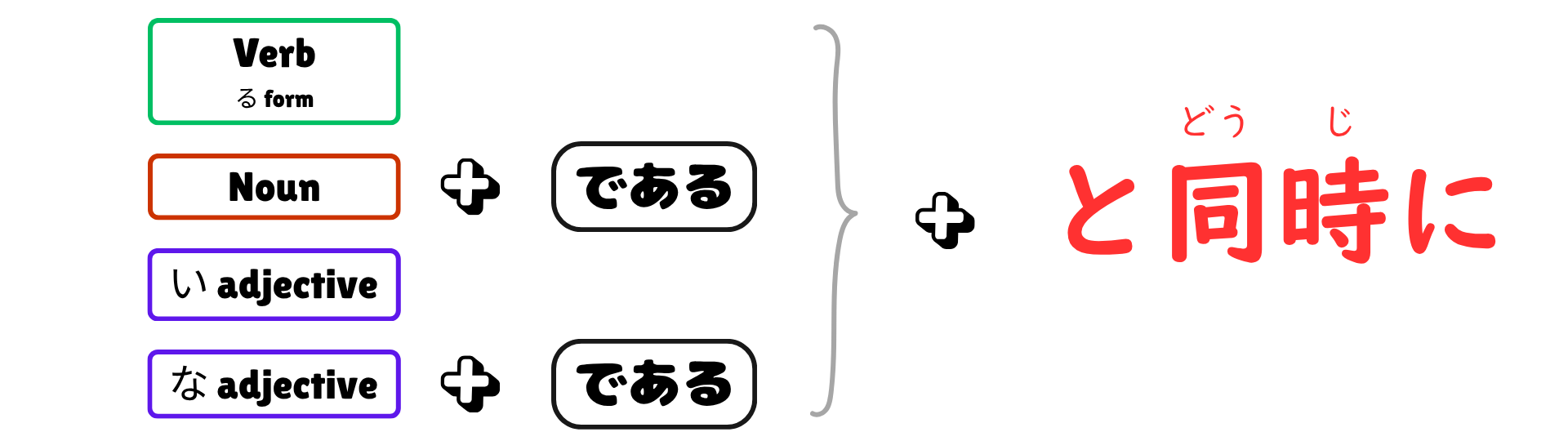
彼は優秀であると同時に、この職場で一番の努力家でもある。
かれ は ゆうしゅう である と どうじ に、この しょくば で いちばん の どりょくか でも ある。
kare ha yuushuu dearu to douji ni, kono shokuba de ichiban no doryokuka demo aru.
He is excellent, and at the same time, the hardest worker in this workplace.
私は結婚と同時に会社を辞めた。
わたし は けっこん と どうじ に かいしゃ を やめた。
watashi ha kekkon to douji ni kaisha wo yameta.
I quit my job at the same time that I got married.
あの女性は教授であると同時に、有名な作家でもある。
あの じょせい は きょうじゅ である と どうじ に、ゆうめい な さっか でも ある。
ano josei ha kyouju dearu to douji ni, yuumei na sakka demo aru.
That woman is a professor and at the same time a famous writer.

- Grammar Point: と同時に (to douji ni)
- JLPT Level: N2
- Meaning: At the same time, the moment that, simultaneously
- Quick Explanation: と同時に is used when two actions, events, or states occur at the exact same time, or one happens the instant the other occurs. It can also describe two qualities that exist together.
So that’s how we use と同時に!
It’s perfect for expressing two actions or states happening at the exact same moment, or describing two qualities that coexist naturally.
私は大学を卒業すると同時に、働き始めました。
わたしはだいがくをそつぎょうするとどうじに、はたらきはじめました。
watashi ha daigaku o sotsugyou suru to douji ni, hataraki hajime mashita.
I started working at the same time as graduating from university.
Now it’s your turn! try making your own sentences with と同時にand describe those perfect “two things happening at once” moments like a native speaker!
Your Sensei,
Hikari 👩🏻🏫✨
Get Hikari's JLPT Mock Exams & Preparation Lessons!
Whether you are studying to pass the JLPT or looking for a challenge in your learning journey, these courses are perfect for you!
Join my ニュースレター Newsletter 📩
You can expect an email from me once a week about Japanese culture.
Don't worry, your information will not be shared.
We hate SPAM. We will never sell your information, for any reason.