JLPT N2 - Grammar 🌟 幸いなことに saiwainakotoni
Have you ever had one of those moments where you thought, “Phew, that was close… luckily everything turned out okay”?
Or maybe something unfortunate happened, but looking at the situation you felt, “It could have been worse...”
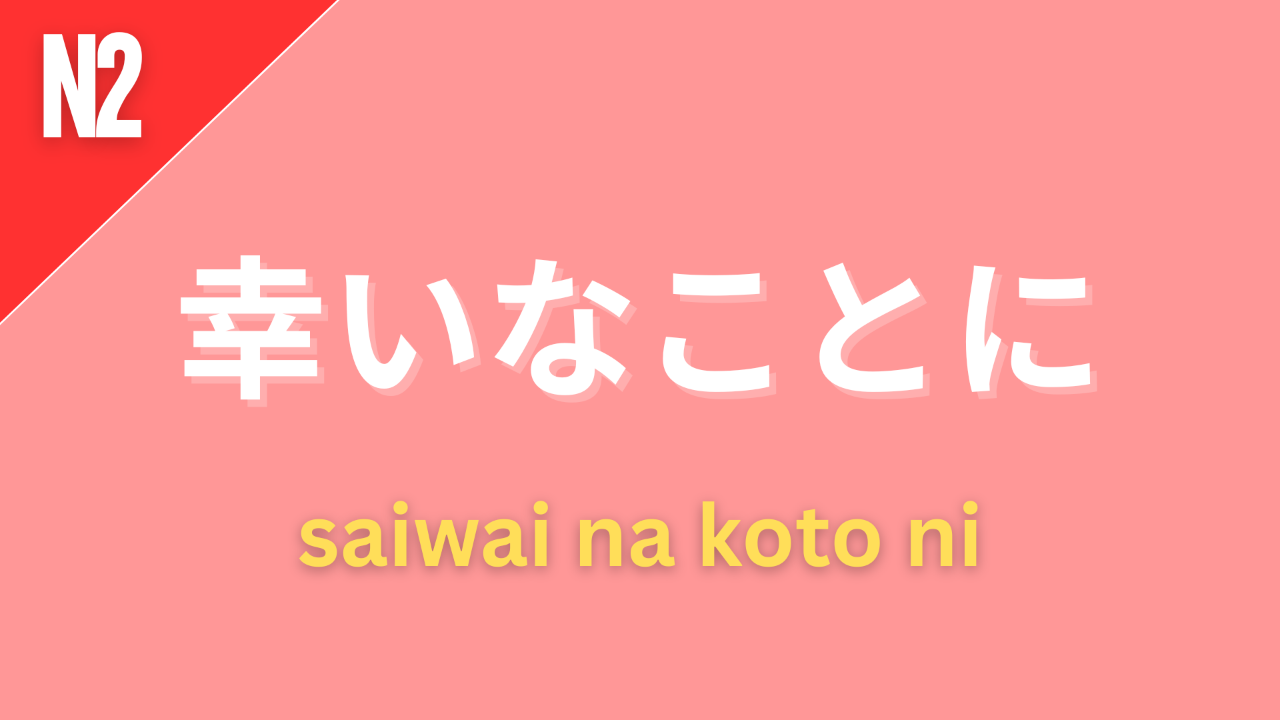
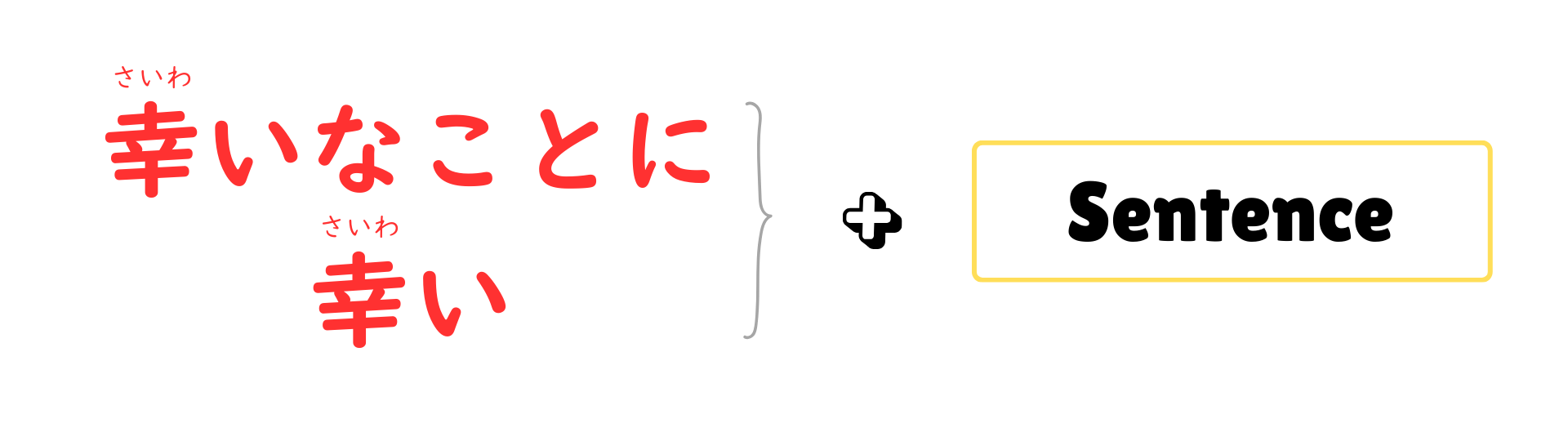
In Japanese, we say 幸いなことに (saiwai na koto ni) or simply 幸い (saiwai) to express “fortunately” or “luckily.”
It’s one of those polite, slightly formal phrases that you’ll hear in everyday conversation, news, or even business situations. And trust me, it’s a lifesaver when you want to politely show relief in Japanese!
Let’s explore how to use it.


不幸中の幸い (fukou chuu no saiwai)
→ Literally “happiness within misfortune.” It means “a blessing in disguise” or “the silver lining in a bad situation.”
事故で車は壊れたが、不幸中の幸いでけがはなかった。
じこ で くるま は こわれた が、ふこうちゅう の さいわい で けが は なかった。
jiko de kuruma wa kowareta ga, fukōchū no saiwai de kega wa nakatta.
My car was damaged in the accident, but fortunately, I wasn’t injured.
運よく (un yoku)
→ More casual, means “by good luck.”
運よく、最後の1つを買えた。
うんよく、さいご の ひとつ を かえた。
un yoku, saigo no hitotsu wo kaeta.
By good luck, I was able to buy the last one.
ありがたいことに (arigatai koto ni)
→ Expresses gratitude as well as relief.
ありがたいことに、親切な人にチケットを譲ってもらった。
ありがたいことに、しんせつ な ひと に ちけっと を ゆずって もらった。
arigatai koto ni, shinsetsu na hito ni chiketto wo yuzutte moratta.
Thankfully, a kind person gave me their ticket.

幸いなことに、大雨はすぐに止みました。
さいわいなことに、おおあめ は すぐに とまりました。
saiwai na koto ni, ooame ha sugu ni tomarimashita.
Fortunately, the heavy rain stopped quickly.
火事でアパートが全焼しましたが、幸い、けが人は いませんでした。
かじ で あぱーと が ぜんしょう しました が、さいわい、けがにん は いませんでした。
kaji de apaato ga zenshou shimashita ga, saiwai, keganin ha imasendeshita.
There was a fire and the apartment burned down, but luckily no one was injured.
新しい環境にとても不安だったが、幸いなことに友達がすぐできた。
あたらしい かんきょう に とても ふあん だった が、さいわいなことに ともだち が すぐ できた。
atarashii kankyou ni totemo fuan datta ga, saiwai na koto ni tomodachi ga sugu dekita.
I was very nervous in the new environment, but fortunately, I quickly made friends.
財布を落としたけど、幸いなことに中身は全部 無事でした。
さいふ を おとした けど、さいわいなことに なかみ は ぜんぶ ぶじ でした。
saifu wo otoshita kedo, saiwai na koto ni nakami ha zenbu buji deshita.
I lost my wallet, but fortunately, everything inside was safe.
電車はとても混んでいたが、幸い、座席を見つけられた。
でんしゃ は とても こんで いた が、さいわい、ざせき を みつけられた。
densha ha totemo konde ita ga, saiwai, zaseki wo mitsukerareta.
The train was very crowded, but luckily I was able to find a seat.
💡 Tips:
In most cases, you can use 幸いなことに (saiwai na koto ni) or 幸い(waiwai) either one and it will be fine.

- Grammar Point: 幸いなことに/幸い (saiwai na koto ni / saiwai)
- JLPT Level: N2
- Meaning: Fortunately, luckily
- Quick Explanation: Use 幸いなことに/幸い(saiwai na koto ni / saiwai) to politely express relief when something turned out well. It’s common in both everyday and formal situations.
So that’s how we use 幸いなことに / 幸い in Japanese!
Do you have a “幸いなこと” moment in your life?
幸いなことに、私は何年もみんなと日本語を楽しく勉強することができています。
さいわいなことに、わたし は なんねん も みんな と にほんご を たのしく べんきょう する こと が できています。
saiwai na koto ni, watashi ha nannen mo minna to nihongo wo tanoshiku benkyou suru koto ga dekiteimasu.
Fortunately, I’ve been able to enjoy studying Japanese together with all of you for many years.
Now it’s your turn, what’s something you feel fortunately about in your life right now? Write it down, or even better, try saying it in Japanese!
Your Sensei,
Hikari 👩🏻🏫
Get Hikari's JLPT Mock Exams & Preparation Lessons!
Whether you are studying to pass the JLPT or looking for a challenge in your learning journey, these courses are perfect for you!
Join my ニュースレター Newsletter 📩
You can expect an email from me once a week about Japanese culture.
Don't worry, your information will not be shared.
We hate SPAM. We will never sell your information, for any reason.