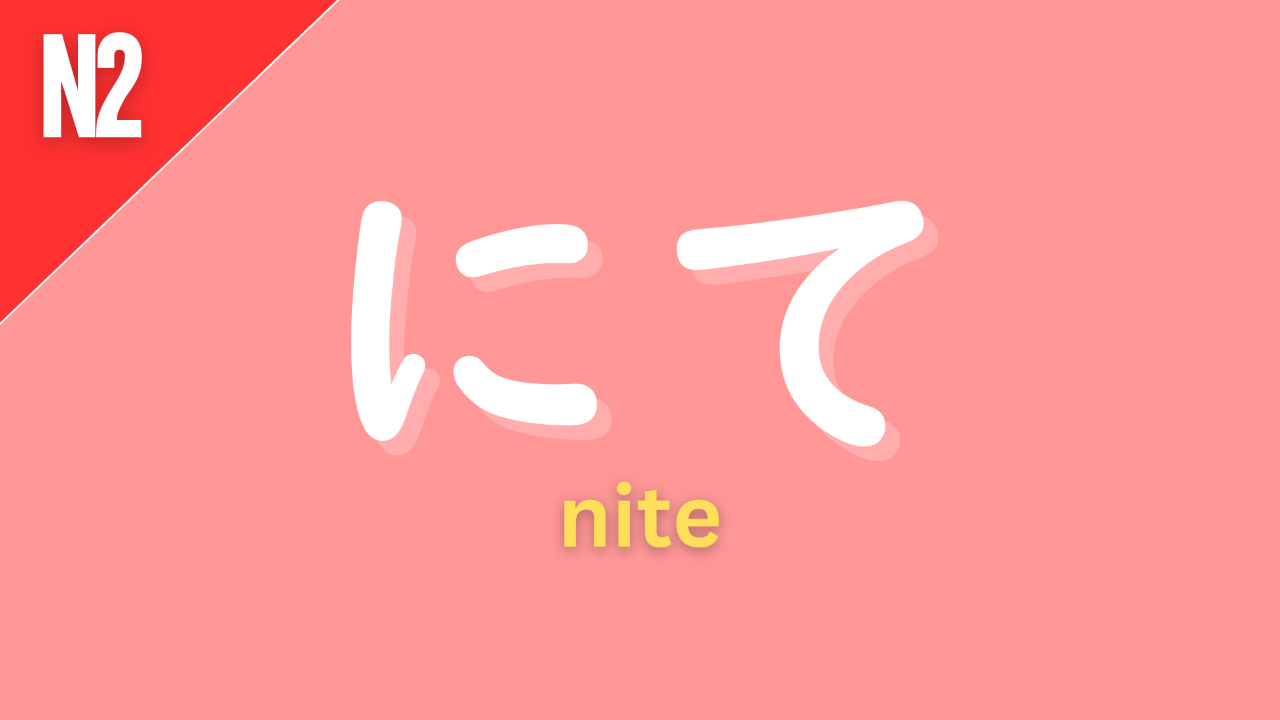
JLPT N2 - Grammar 🌟 にて nite
As you start reaching N2 level, you may notice something new in Japanese.
Have you ever read a sentence and thought,
“Huh… this sounds a little different from how I usually talk with friends,”
or “This feels kind of official… maybe more formal than everyday Japanese?”
That’s a very N2 moment.
As your Japanese level grows, you begin to sense context, setting, and who the message is for when something sounds casual, polite, formal, or official.
And once you notice that difference, you can’t unnotice it anymore.
At N2 level, many learners start realizing that Japanese changes its expressions depending on the situation, the relationship, and the purpose of communication.
Today’s grammar point is one of those expressions that quietly carries that nuance: にて (nite).
It often appears in announcements, business emails, notices, and written explanations, places where Japanese sounds more official than everyday conversation.
It doesn’t change the meaning much… but it changes the tone a lot.
So if you’ve ever wondered,
“Why does this sentence sound more formal than the Japanese I usually use?”
chances are, にて is part of the reason.
Let’s take a closer look at this small but very N2-style word together.



で (de) vs にて (nite)
Both で and にて can indicate place, method, time, or cause.
The meaning is often almost the same, but the tone and usage are very different.
で (de) - casual, everyday particle
で is the standard particle used in daily conversation.
It sounds natural, relaxed, and is what native speakers use when talking with friends, family, or colleagues in casual situations.
東京で会議をします。
とうきょう で かいぎ を します。
toukyou de kaigi wo shimasu.
We’ll have a meeting in Tokyo.
Use で in normal conversation and most spoken situations.
にて (nite) - formal, written / official particle
にて is a more formal and written version of で.
You’ll often see it in announcements, notices, business emails, official documents, or public signs. It gives a calm, polite, and official tone, even though the core meaning stays almost the same.
東京にて会議を行います。
とうきょう にて かいぎ を おこないます。
toukyou nite kaigi wo okonaimasu.
A meeting will be held in Tokyo.
(Formal, announcement-style.)
Use にて when you want your Japanese to sound official, professional, or written rather than conversational.
💡 Tip:
にて functions to indicate the following relationships, similar to で.

本日のセミナーは、5階のホールにて行われます。
ほんじつ の せみなー は、ごかい の ほーる にて おこなわれます。
honjitsu no seminaa ha, gokai no hooru nite okonawaremasu.
Today’s seminar will be held in the hall on the 5th floor.
商品の交換・返品は、ご購入店舗にて受け付けております。
しょうひん の こうかん・へんぴん は、ごこうにゅう てんぽ にて うけつけて おります。
shouhin no koukan henpin ha, gokounyuu tenpo nite uketsukete orimasu.
Product exchanges and returns are accepted at the store where the item was purchased.
お問い合わせは、メールにてお願いいたします。
おといあわせ は、めーる にて おねがい いたします。
otoiawase ha, meeru nite onegai itashimasu.
Please contact us by email.
ツアーの詳細は、専用ウェブサイトにてご覧ください。
つあー の しょうさい は、せんよう うぇぶさいと にて ごらん ください。
tsuaa no shousai ha, senyou webusaito nite goran kudasai.
Please check the tour details on the dedicated website.
これにて、本日の集会は終了とさせていただきます。
これ にて、ほんじつ の しゅうかい は しゅうりょう と させて いただきます。
kore nite, honjitsu no shuukai ha shuuryou to sasete itadakimasu.
With this, today’s meeting will now conclude.
(Formal closing expression.)
荒天にて、予定されていた屋外イベントは中止となりました。
こうてん にて、よてい されていた おくがい いべんと は ちゅうし となりました。
kouten nite, yotei sareteita okugai ibento ha chuushi to narimashita.
Due to severe weather, the scheduled outdoor event has been canceled.

- Grammar Point: にて (nite)
- JLPT Level: N2
- Meaning: In, at, by, with (formal version of で)
- Quick Explanation: にて is a formal particle that works much like で, but is mainly used in written Japanese, announcements, business emails, and official notices.
The meaning usually stays the same, but the tone becomes more polite, official, and composed.
So that’s how we use にて!
You don’t need to use it in everyday conversatio. In fact, that might sound a bit unnatural.
But once you recognize it, reading signs, emails, and announcements in Japanese becomes much easier.
何か質問があれば、メールにてご連絡くださいね。
なにかしつもんがあれば、めーるにてごれんらくくださいね。
nani ka shitumon ga areba, meeru nite gorenraku kudasai ne.
If you have any questions, please contact us by email.
Try noticing にて the next time you read an email, sign, or announcement in Japanese.
And if you get the chance, try using it yourself in a formal sentence even just once!
Don’t be afraid to try using it yourself!
Little by little, your Japanese will start to sound more natural, more accurate, and more “grown-up.”
Your Sensei,
Hikari 👩🏻🏫✨
Get Hikari's JLPT Mock Exams & Preparation Lessons!
Whether you are studying to pass the JLPT or looking for a challenge in your learning journey, these courses are perfect for you!
Join my ニュースレター Newsletter 📩
You can expect an email from me once a week about Japanese culture.
Don't worry, your information will not be shared.
We hate SPAM. We will never sell your information, for any reason.