JLPT N2 - Grammar 🌟 なくはない naku ha nai
Have you ever been asked a question where a simple “Yes” or “No” just doesn’t feel right?
Believe me, if you meet a Japanese person and tell them you love Japan, they will immediately start talking about food. It’s almost a national reflex.
“Do you like sushi?” “How about Ramen?”
And if the conversation goes well… then comes the natto question.
There are some things you genuinely love, of course, but honestly… there are also a few where you’re like, “Hmm… maybe?”
You’re probably thinking, “I don’t hate it… but I wouldn’t say I love it either.”
That’s exactly when なくはない (naku ha nai) comes to the rescue!
It’s a double negative expression that means “It’s not that I don’t…” or “It’s not impossible.”
This grammar lets you give a soft, nuanced answer instead of a blunt “Yes.”
Perfect for those very Japanese moments where being too direct might feel a bit strong.
Let’s dive in and learn how to use this to sound more natural and polite in Japanese!

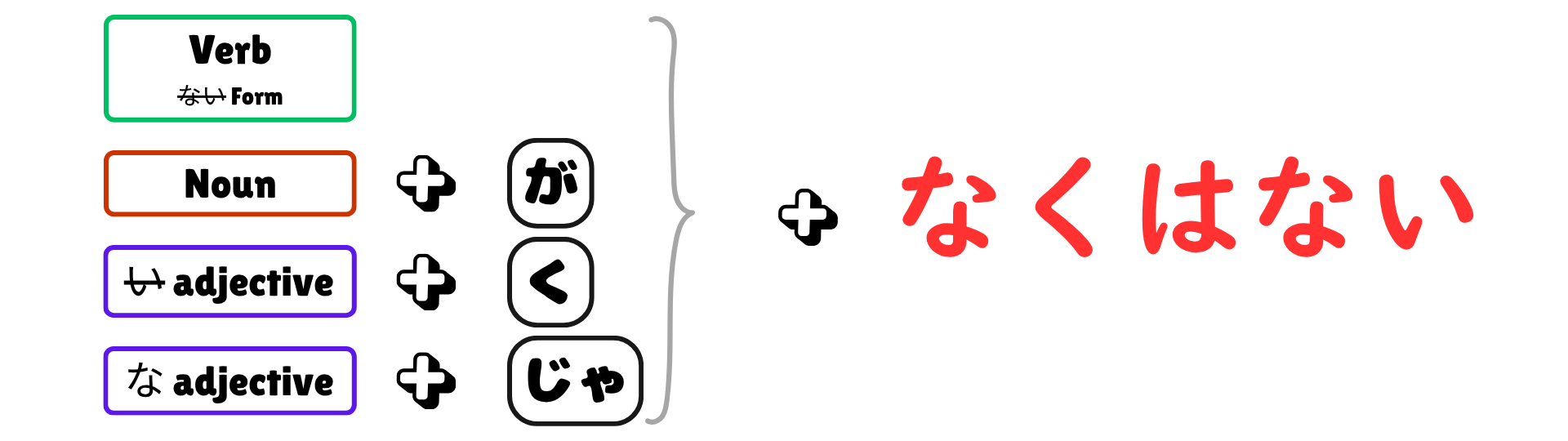

なくもない (naku mo nai) vs なくはない (naku ha nai)
Both expressions are double negatives meaning “not impossible” or “not completely no.”
In real conversation, they are often interchangeable, and either can sound natural.
However, there is a subtle difference in nuance, especially in the speaker’s attitude and what comes next in the sentence.
なくはない (naku ha nai)
なくはない often shows contrast or limitation.
The particle は highlights a boundary, meaning “it’s not zero, but…”.
This expression is frequently followed by something negative, cautious, or reluctant.
Nuance:
“Possible, but I’m not fully happy or convinced.”
Common patterns:
〜なくはない + けど / が / でも
行けなくはないけど、あまり行きたくないな。
いけなく は ない けど、あまり いきたく ない な。
ikenaku ha nai kedo, amari ikitakunai na.
It’s not that I can’t go(I can go), but I don’t really feel like it.
Use なくはない when the possibility exists, but your feelings are slightly negative or reserved.
なくもない (naku mo nai)
なくもない sounds more open and exploratory.
The particle も adds the idea of “that option exists too.”
It is often used when you discover something unexpected or when you are gently considering a positive possibility.
Nuance:
“Maybe… actually, that might work.”
Common patterns:
なくもない + かな / かも
このカレー、意外とおいしくなくもないかも!
この かれー、いがい と おいしく なく も ない かも!
kono karee, igai to oishiku naku mo nai kamo!
This curry might not be bad(This curry is actually not bad). (Better than expected.)
Use なくもない when you feel slightly positive or open to the idea.

あなたの気持ちもわからなくはないが、やはり賛成はできない。
あなた の きもち も わからなく は ない が、やはり さんせい は できない。
anata no kimochi mo wakaranaku ha nai ga, yahari sansei ha dekinai.
It’s not that I don’t understand how you feel, but I still can’t agree.
この料理、おいしくなくはないけど、ちょっと辛すぎかな。
この りょうり、おいしく なく は ない けど、ちょっと からすぎ かな。
kono ryouri, oishiku naku ha nai kedo, chotto karasugi kana.
This dish isn’t bad, but it might be a little too spicy.
彼女のことが好きじゃなくはないけれど、付き合うのは違うと思う。
かのじょ の こと が すき じゃ なく は ない けれど、つきあう の は ちがう と おもう。
kanojo no koto ga suki ja naku ha nai keredo, tsukiau no ha chigau to omou.
It’s not that I don’t like her, but I don’t think dating is the right choice.
今回の評価について、不満がなくはないけれど、受け入れることにする。
こんかい の ひょうか に ついて、ふまん が なく は ない けれど、うけいれる こと に する。
konkai no hyouka ni tsuite, fuman ga naku ha nai keredo, ukeireru koto ni suru.
I’m not completely satisfied with this evaluation, but I’ll accept it.
<Conversation Example>
A: 明日のパーティー、行ける?
あした の ぱーてぃー、いける?
ashita no paatii, ikeru?
Can you come to the party tomorrow?
B: うーん、行けなくはないけど、少し遅れるかもしれない。
うーん、いけなく は ない けど、すこし おくれる かもしれない。
uun, ikenaku ha nai kedo, sukoshi okureru kamoshirenai.
Hmm, it’s not that I can’t go, but I might be a bit late.

- Grammar Point: なくはない (naku ha nai)
- JLPT Level: N2
- Meaning: It’s not that…, not impossible, not entirely no
- Quick Explanation: This double negative is used to express a weak yes.
So that’s how we use なくはない!
If “yes” feels too strong, this expression gives you a beautifully Japanese middle ground.
日本語を全然知らなくても日本旅行はできなくはないけど、少しでも分かると楽しさが全然違うよ!
にほんご を ぜんぜん しらなくても にほん りょこう は できなく は ない けど、すこし でも わかる と たのしさ が ぜんぜん ちがう よ!
nihongo wo zenzen shiranakute mo nihon ryokou ha dekinaku ha nai kedo, sukoshi demo wakaru to tanoshisa ga zenzen chigau yo!
It’s not that you can’t travel in Japan even if you don’t know Japanese at all, but if you understand even a little, the enjoyment is completely different.
Now it’s your turn.
Try making a sentence about something you “don’t totally dislike” or “can almost do.”
Your Japanese will instantly sound more natural and nuanced.
Your Sensei,
Hikari 👩🏻🏫✨
Get Hikari's JLPT Mock Exams & Preparation Lessons!
Whether you are studying to pass the JLPT or looking for a challenge in your learning journey, these courses are perfect for you!
Join my ニュースレター Newsletter 📩
You can expect an email from me once a week about Japanese culture.
Don't worry, your information will not be shared.
We hate SPAM. We will never sell your information, for any reason.