JLPT N2 - Grammar 🌟 もう少しで mou sukoshi de

Have you ever had a moment where something almost happened… like right on the edge… but luckily didn’t?
Maybe you were having dinner with friends, laughing and talking so much that time completely slipped away… and you almost missed the last train home! (But you made it, just in time!)
Or maybe after a big, satisfying lunch, you felt a little too relaxed, your mind drifting off… and you nearly stepped into the street on a red light, until a honking car snapped you back to reality!
We all have these “that was close!” moments in daily life.
In Japanese, the expression もう少しで(もうすこしで / mou sukoshi de) is perfect for describing exactly those situations, when something was this close to happening… but didn’t.
Today, let’s take a closer look at how to use もう少しで naturally, so you can describe your close calls just like a native speaker! Let’s dive in!


あやうく(ayauku) vs もう少しで (mou sukoshi de)
Both あやうく and もう少しで mean “almost / nearly,” but they’re not always interchangeable. They differ in tone and when they’re typically used.
あやうく(ayauku)
あやうく is a bit more formal and often sounds more serious or dramatic.
It highlights that something dangerous, negative, or undesirable almost happened.
あやうく事故にあうところだった。
あやうく じこ に あう ところだった。
ayauku jiko ni au tokoro datta.
I almost got into an accident. (a close call, serious nuance)
もう少しで (mou sukoshi de)
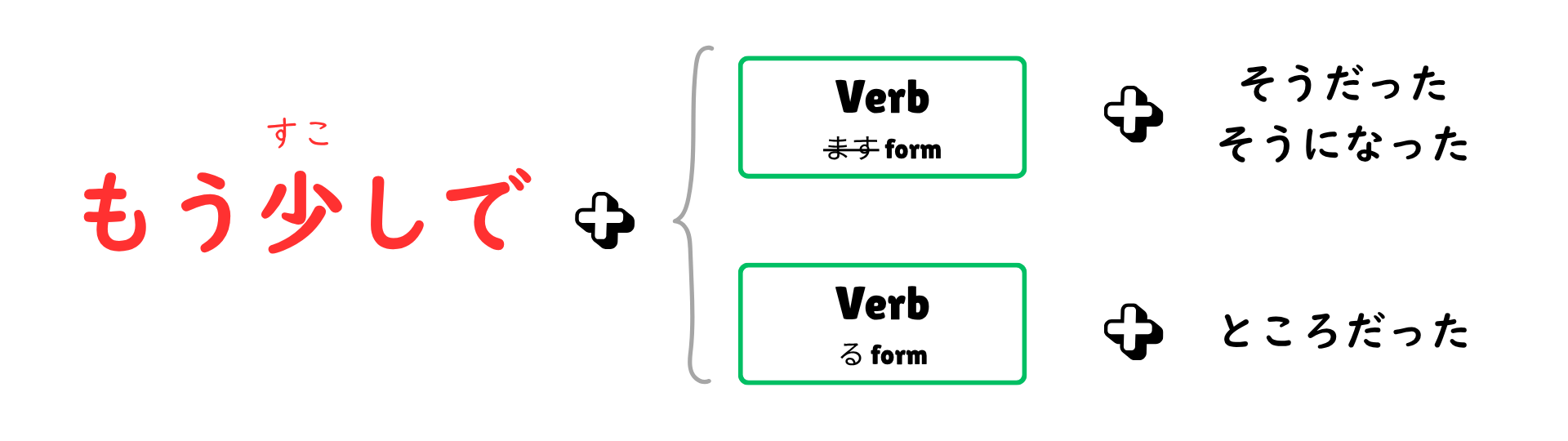
もう少しで is more common in daily conversation and can be used for both serious and lighthearted close calls. It expresses that something was right on the edge of happening.
もう少しで遅刻するところだった。
もうすこしで ちこく する ところだった。
mou sukoshi de chikoku suru tokoro datta.
I almost arrived late. (casual, everyday nuance)

もう少しで 大事な お皿を 落としそうだった。
もうすこしで だいじ な おさら を おとし そうだった。
mou sukoshi de daiji na osara wo otoshi soudatta.
I almost dropped an important plate.
薄着で 外出してしまい、もう少しで 風邪を ひきそうだった。
うすぎ で がいしゅつ してしまい、もうすこしで かぜ を ひき そうだった。
usugi de gaishutsu shiteshimai, mou sukoshi de kaze wo hiki soudatta.
I went out dressed too lightly and almost caught a cold.
詐欺の 電話に、もう少しで 出るところだった。
さぎ の でんわ に、もうすこしで で るところだった。
sagi no denwa ni, mou sukoshi de deru tokoro datta.
I almost answered a scam call.
もう少しで 終電に 乗り遅れる ところだった。
もうすこしで しゅうでん に のりおくれる ところだった。
mou sukoshi de shuuden ni noriokureru tokoro datta.
I almost missed the last train.
しっかり 前を 見て! もう少しで 事故に あう ところだったよ!
しっかり まえ を みて! もうすこしで じこ に あう ところだった よ!
shikkari mae wo mite! mou sukoshi de jiko ni au tokoro datta yo!
Watch where you’re going! You almost got into an accident!

- Grammar Point: もう少しで (mou sukoshi de)
- JLPT Level: N2
- Meaning: Almost, nearly, just about to (but didn’t happen)
- Quick Explanation: もう少しで is used when something was very close to happening, right on the edge, but in the end, it didn’t occur. It’s perfect for describing close calls, near-mistakes, and “that was close!” moments.
So that’s how we use もう少しで!
It’s your go-to expression for talking about those moments where you were just one step away from something, whether it’s nearly missing your train, almost dropping something valuable, or being seconds away from trouble.
私は今日、もう少しで ミーティングに遅刻するところでした。
わたし は きょう、もうすこしで ミーティングに ちこくする ところでした。
watashi ha kyou, mou shikoshi de miitingu ni chikoku suru tokoro deshita.
I almost arrived late to the meeting today.
Now it’s your turn! Make your own sentences using もう少しで and describe those close calls just like a native speaker!
Your Sensei,
Hikari 👩🏻🏫✨
Get Hikari's JLPT Mock Exams & Preparation Lessons!
Whether you are studying to pass the JLPT or looking for a challenge in your learning journey, these courses are perfect for you!
Join my ニュースレター Newsletter 📩
You can expect an email from me once a week about Japanese culture.
Don't worry, your information will not be shared.
We hate SPAM. We will never sell your information, for any reason.