JLPT N2 - Grammar 🌟 全く~ない mattaku ~ nai
Do you remember when you first started studying Japanese?
Those days when you looked at a kanji filled menu or textbook and thought…
“I have absolutely no idea what this says”.
Not just a little confused, but completely blank!
Even though you have reached the N2 level, that feeling of “zero” is exactly what we are talking about today.
That is where 全く~ない (まったく~ない / mattaku ~ nai) comes in.
全く~ない is a powerful expression used to emphasize a strong negative.
While you may already know 全然(zenzen), using 全く adds a more serious, mature tone.
It means “not at all,” “not in the least,” or “completely not.”
Whether you are expressing a total lack of knowledge, no change at all, or a firm denial, 全く~ない helps you be clear and emphatic.
Ready to master the art of total negation? Let’s go!

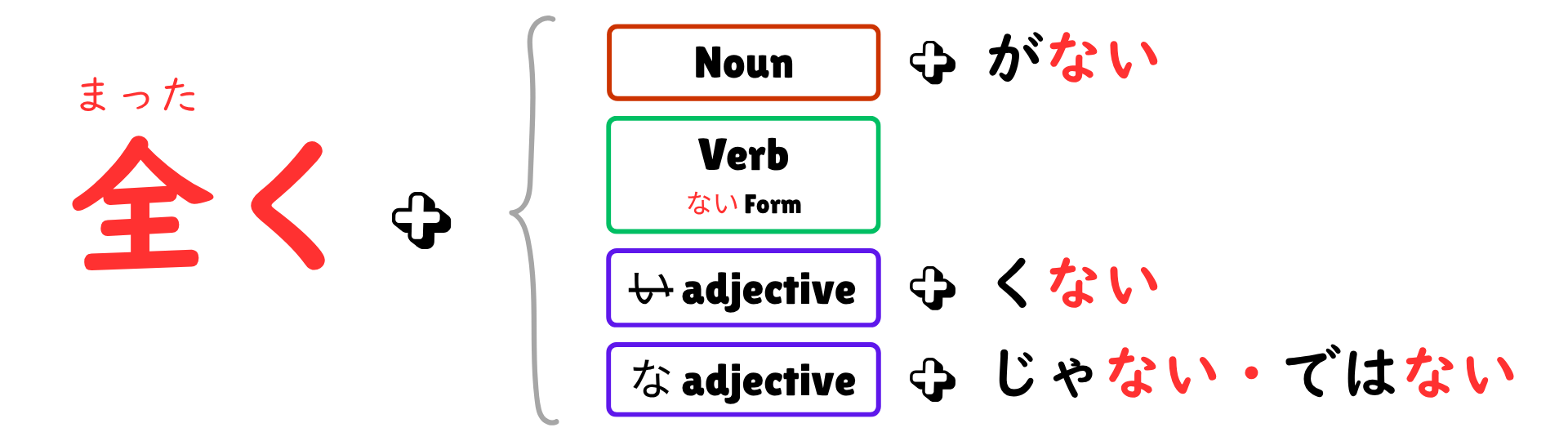

全然 (zenzen) vs 少しも~ない (sukoshi mo ~ nai) vs 全く~ない (mattaku ~ nai)
All three expressions can mean “not at all,” but the nuance and formality are different.
全然 (zenzen)
全然 is casual and very common in daily conversation. You will hear this one everywhere.
彼はそのニュースを全然知らなかった。
かれ は その にゅーす を ぜんぜん しらなかった。
kare ha sono nyuusu wo zenzen shiranakatta.
He did not know that news at all. (casual)
少しも~ない (sukoshi mo ~ nai)
少しも~ない emphasizes “not even a little bit.”
It is often used when some change or progress was expected.
10年たったが、彼は少しも変わっていない。
じゅうねん たった が、かれ は すこし も かわって いない。
juunen tatta ga, kare ha sukoshi mo kawatte inai.
Ten years have passed, but he has not changed even a little.
全く~ない (mattaku ~ nai)
全く is the strongest and most formal of the three.
It sounds objective and is often used in writing, business, or firm statements.
私はその事について全く記憶がない。
わたし は その こと に ついて まったく きおく が ない。
watashi ha sono koto ni tsuite mattaku kioku ga nai.
I have absolutely no memory of that matter.
💡 Quick Tip:
Casual talk - 全然 (zenzen)
Emphasizing zero change - 少しも~ない (sukoshi mo ~ nai)
Formal or strong denial - 全く~ない (mattaku ~ nai)

彼女が何を考えているのか、私には全く理解できない。
かのじょ が なに を かんがえている の か、わたし に は まったく りかい できない。
kanojo ga nani wo kangaete iru no ka, watashi ni ha mattaku rikai dekinai.
I have absolutely no idea what she is thinking.
忙しすぎて、自分の趣味に使う時間が全く取れない。
いそがしすぎて、じぶん の しゅみ に つかう じかん が まったく とれない。
isogashisugite, jibun no shumi ni tsukau jikan ga mattaku torenai.
I am so busy that I cannot get any time at all for my hobbies.
日本語を勉強し始めた頃は、先生の話が全くわからなかった。
にほんご を べんきょう しはじめた ころ は、せんせい の はなし が まったく わからなかった。
nihongo wo benkyou shihajimeta koro ha, sensei no hanashi ga mattaku wakaranakatta.
When I first started studying Japanese, I did not understand the teacher at all.
このスープはスパイスは効いているが、全く辛くない。
この すーぷ は すぱいす は きいている が、まったく からくない。
kono suupu ha supaisu ha kiite iru ga, mattaku karakunai.
This soup has spices in it, but it is not spicy at all.
この靴、ヒールが高いけど全く痛くないんだ。
この くつ、ひーる が たかい けど まったく いたくない ん だ。
kono kutsu, hiiru ga takai kedo mattaku itakunai n da.
These shoes have high heels, but they do not hurt at all.
あなたを助けることは、私にとっては全く迷惑じゃないよ。
あなた を たすける こと は、わたし に とって は まったく めいわく じゃない よ。
anata wo tasukeru koto ha, watashi ni totte ha mattaku meiwaku ja nai yo.
Helping you is not a bother at all for me.
あの新入社員は、全くやる気がない。
あの しんにゅうしゃいん は、まったく やるき が ない。
ano shinnyuushain ha, mattaku yaruki ga nai.
That new employee has absolutely no motivation.
この説明は、全く根拠がないので、調べ直してください。
この せつめい は、まったく こんきょ が ない ので、しらべなおして ください。
kono setsumei ha, mattaku konkyo ga nai node, shirabenaoshite kudasai.
This explanation has no basis at all, so please check it again.

- Grammar Point: 全く~ない (まったく~ない / mattaku ~ nai)
- JLPT Level: N2
- Meaning: Not at all, not in the least
- Quick Explanation: 全く~ない is used to emphasize a strong negative. It means something is 100 percent not the case and sounds more formal and firm than 全然.
So that’s how we use 全く~ない.
It is a powerful expression for showing strong, clear negation in Japanese
and for expressing things that are truly zero.
こうしてブログを読んだりしているあなたの努力は、全く無駄ではありません。
こうして ぶろぐ を よんだり している あなた の どりょく は まったく むだ では ありません。
koushite burogu wo yondari shiteiru anata no doryoku ha mattaku muda deha arimasen.
The effort you are making by reading blogs like this is absolutely not a waste.
Even when progress feels slow or invisible, each small step is quietly building your Japanese.
Now it’s your turn. Try making your own sentences with 全く, and notice how much more precise your Japanese can be!
Your Sensei,
Hikari 👩🏻🏫✨
Get Hikari's JLPT Mock Exams & Preparation Lessons!
Whether you are studying to pass the JLPT or looking for a challenge in your learning journey, these courses are perfect for you!
Join my ニュースレター Newsletter 📩
You can expect an email from me once a week about Japanese culture.
Don't worry, your information will not be shared.
We hate SPAM. We will never sell your information, for any reason.