JLPT N2 - Grammar 🌟 かと思ったら katoomottara

Have you ever had one of those moments where you think,
“Ah, it’s finally warm and sunny!” … and then suddenly it starts raining?
Or maybe you were relaxing at home, thinking you could finally take a break… and your boss sends you a message: “Can we talk for a minute?”
In Japanese, there’s a perfect expression for those “just when I thought” or “no sooner than” moments, it’s かと思ったら (ka to omottara).
It’s an N2 grammar point that means “then again,” “just when,” or “no sooner than.”
You’ll often use it when something unexpected happens right after another thing, especially in daily conversation or storytelling.
Once you master かと思ったら, you’ll be able to tell stories that really grab people’s attention, adding rhythm, surprise, and emotion to your Japanese!
There are also similar expressions like かと思うと (ka to omou to) and かと思えば (ka to omoeba), which carry the same “just when I thought” feeling, but with slightly different nuances.
Let’s explore these together, before the weather changes again!

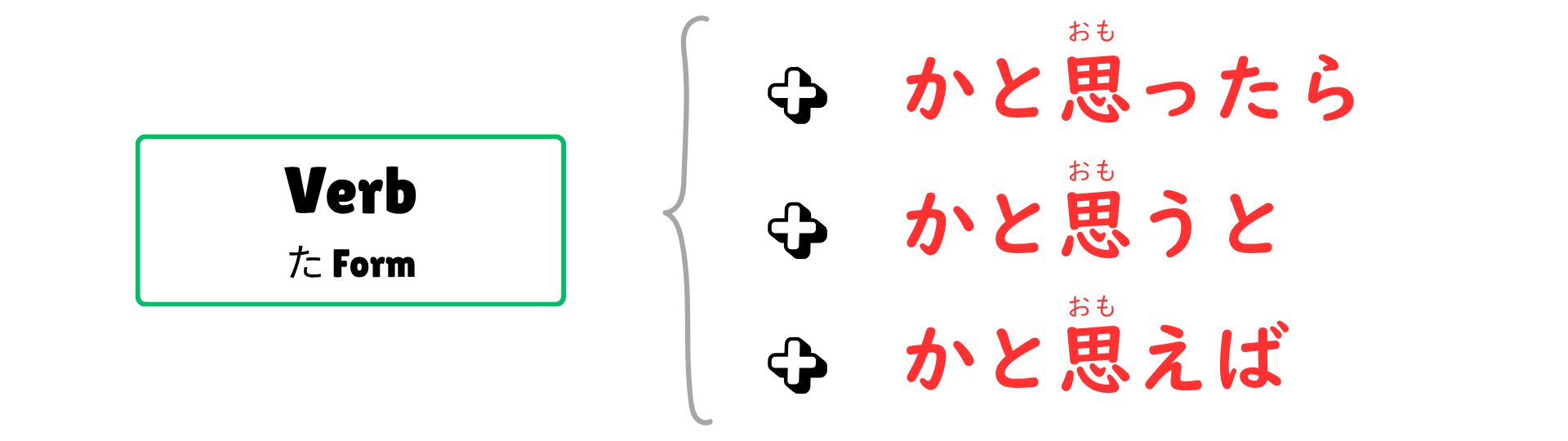

かと思ったら(kato omottara) vs かと思うと(kato omouto) vs かと思えば(kato omoeba)
All three expressions share the same core meaning.
“just when I thought ”, “no sooner than”, used when one event happens right after another.
However, the nuance slightly changes depending on which one you use.
かと思ったら(kato omottara)
👉 The most common and natural form in conversation.
It often carries a feeling of surprise or sudden change, something unexpected happens immediately after. Used frequently in daily speech or storytelling.
ドアが開いたかと思ったら、猫が飛び出した。
どあ が あいた か と おもったら、ねこ が とびだした。
doa ga aita ka to omottara, neko ga tobidashita.
Just when I thought the door opened, a cat jumped out!
かと思うと(kato omouto)
👉 A little more neutral and descriptive than かと思ったら(kato omottara).
Often found in written or narrative style, such as novels, reports, or news.
It doesn’t emphasize emotion as much, but focuses on sequence or timing.
授業が終わったかと思うと、すぐ次の授業が始まった。
じゅぎょう が おわった か と おもう と、すぐ つぎ の じゅぎょう が はじまった。
jugyou ga owatta ka to omou to, sugu tsugi no jugyou ga hajimatta.
As soon as one class ended, the next one started.
かと思えば(kato omoeba)
👉 Often shows contrast or surprise, like “on the other hand” or “unexpectedly.”
It can express contradictory situations or shifts in mood or perspective.
泣いたかと思えば、すぐ笑う。
ないた か と おもえば、すぐ わらう。
naita ka to omoeba, sugu warau.
One moment they’re crying, and the next they’re laughing.
とたんに (totan ni) vs. かと思ったら(kato omottara)
Both express something that happens immediately after another event,
but the nuance and tone are slightly different.
とたんに (totan ni) emphasizes a sudden change in time and is often used for objective or neutral facts.
かと思ったら(kato omottara) focuses more on the speaker’s surprise or emotional reaction to something unexpected.
雨がやんだとたんに、風が強くなった。
あめ が やんだ とたん に、かぜ が つよく なった。
ame ga yanda totan ni, kaze ga tsuyoku natta.
The moment the rain stopped, the wind got stronger.
雨がやんだかと思ったら、また降り出した。
あめ が やんだ か と おもったら、また ふりだした。
ame ga yanda ka to omottara, mata furidashita.
Just when I thought the rain had stopped, it started again.

桜が咲いたかと思ったら、もう散り始めた。
さくら が さいた か と おもったら、もう ちり はじめた。
sakura ga saita ka to omottara, mou chiri hajimeta.
Just when I thought the cherry blossoms had bloomed, they already started falling.
やっと仕事が終わったかと思ったら、次の依頼が来た。
やっと しごと が おわった か と おもったら、つぎ の いらい が きた。
yatto shigoto ga owatta ka to omottara, tsugi no irai ga kita.
Just when I thought I had finished my work, the next task came in.
彼女は笑ったかと思うと、すぐに泣き出した。
かのじょ は わらった か と おもう と、すぐ に なきだした。
kanojo ha waratta ka to omou to, sugu ni nakidashita.
One moment she was laughing, and the next she started crying.
会議が終わったかと思うと、すぐに新しい話が始まった。
かいぎ が おわった か と おもう と、すぐ に あたらしい はなし が はじまった。
kaigi ga owatta ka to omou to, sugu ni atarashii hanashi ga hajimatta.
As soon as the meeting ended, a new discussion started.
電車が来たかと思えば、反対方向行きだった。
でんしゃ が きた か と おもえば、はんたい ほうこう いき だった。
densha ga kita ka to omoeba, hantai houkou iki datta.
Just when I thought my train had arrived, it was going the opposite direction!

- Grammar Point: かと思ったら(ka to omottara), かと思うと (ka to omouto), かと思えば (ka to omoeba)
- JLPT Level: N2
- Meaning: Just when, no sooner than, then again
- Quick Explanation: Used when something unexpected happens immediately after another event or when the situation suddenly changes. It expresses surprise, contrast, or quick succession, and is usually used for situations outside the speaker’s control.
So that’s how we use かと思ったら (and its variations)!
Once you start using this phrase, your Japanese will sound much more expressive and natural, perfect for telling stories with rhythm and surprise.
日本語の旅も、ひとつ終わったかと思ったら、すぐに新しい学びがやってきますね。
にほんご の たび も、ひとつ おわった か と おもったら、すぐ に あたらしい まなび が やって きます ね。
nihongo no tabi mo, hitotsu owatta ka to omottara, sugu ni atarashii manabi ga yatte kimasu ne.
On your journey of learning Japanese, just when you finish one thing, a new lesson always comes your way!
Don’t forget to enjoy the learning process more than anything, and remember, I, Hikari-sensei, am always here for you!
Now it’s your turn! Try making your own sentences with かと思ったら, and surprise yourself with how natural your Japanese sounds!
Your Sensei,
Hikari 👩🏻🏫
Get Hikari's JLPT Mock Exams & Preparation Lessons!
Whether you are studying to pass the JLPT or looking for a challenge in your learning journey, these courses are perfect for you!
Join my ニュースレター Newsletter 📩
You can expect an email from me once a week about Japanese culture.
Don't worry, your information will not be shared.
We hate SPAM. We will never sell your information, for any reason.