JLPT N2 - Grammar 🌟 からすると kara suruto / からすれば kara sureba
Have you ever looked at a situation and thought,
“Hmmm… judging from this, I think I know what’s going on.”
For example, you step outside, see dark clouds, feel that slightly suspicious wind,
and think, “Yeah… judging from the sky, I should probably bring an umbrella.”
Or you hear someone say “I’m fine” but their tone, their face, everything else says the opposite. Judging from that voice… nope. They’re definitely not fine.
And sometimes, it’s not even about facts or data. It’s about perspective.
From a parent’s point of view, safety comes first.
From a student’s point of view, N2 grammar suddenly looks… very long.
And from a teacher’s point of view? I see effort everywhere (and a little panic, too).
In Japanese, when you want to say “judging from this” or “from this point of view,” there’s a very natural N2 expression for that:
からすると(kara suruto) / からすれば(kara sureba)
These phrases help you explain how you reached your conclusion what you’re basing your opinion or judgment on.
Let’s take a closer look and learn how to use からすると and からすれば in a clear, natural way.

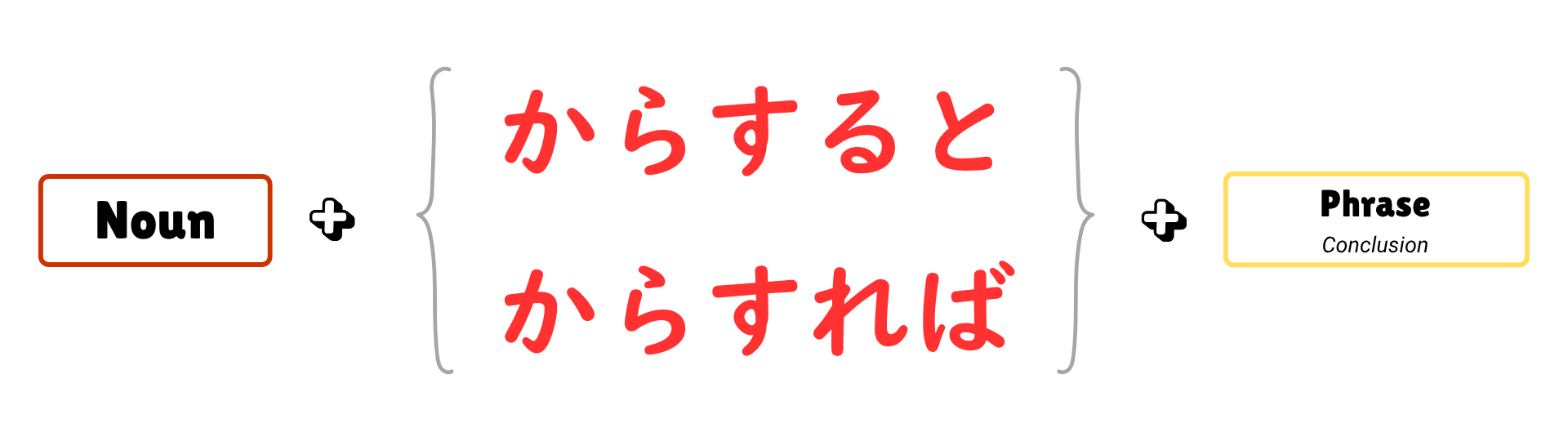

からすると (kara suruto) vs からすれば (kara sureba)
Both からすると and からすれば are used to explain how you reach a judgment or opinion.
In most cases, they are interchangeable, and using either one will usually be understood correctly.
That said, depending on the sentence ending and whether you want to emphasize objective judgment or a hypothetical point of view, one may sound slightly more natural than the other.
からすると (kara suruto) - Judging from (objective judgment)
からすると has a stronger nuance of objective evaluation.
It’s used when you look at facts, data, or observable situations and make a logical judgment based on that information.
部屋の明かりがついているところからすると、もう帰宅しているようだ。
へや の あかり が ついて いる ところ から すると、もう きたく して いる よう だ。
heya no akari ga tsuite iru tokoro kara suru to, mou kitaku shite iru you da.
Judging from the lights being on, it seems they’ve already come home.
Use からすると when your conclusion flows naturally from observable facts.
からすれば (kara sureba) - From the point of view of (conditional perspective)
からすれば carries a slight nuance of assumption or condition.
It often carries the nuance of “if you were in that position,” and is commonly used with people, roles, or groups.
親からすれば、子供の安全が一番大切だ。
おや から すれば、こども の あんぜん が いちばん たいせつ だ。
oya kara sureba, kodomo no anzen ga ichiban taisetsu da.
From a parent’s point of view, a child’s safety is the most important thing.
Use からすれば when you want to clearly show whose standpoint or perspective the opinion is based on.
When both sound natural
When you’re making a judgment based on facts or results, both expressions often work equally well.
今の成績からすると、合格は確実だ。
いま の せいせき から すると、ごうかく は かくじつ だ。
ima no seiseki kara suru to, goukaku ha kakujitsu da.
今の成績からすれば、合格は確実だ。
いま の せいせき から すれば、ごうかく は かくじつ だ。
ima no seiseki kara sureba, goukaku ha kakujitsu da.
In both cases, the meaning is the same: “Judging from the current grades, passing is certain.”
When one is preferred
When you strongly emphasize standing in someone’s position, からすれば often sounds more natural.
For example, when talking about parents, teachers, or customers, the conditional “if you were them” feeling becomes stronger.
On the other hand, when the sentence ends with a judgment or inference based on facts, からすると is commonly preferred because it connects smoothly to objective reasoning.
If you’re not sure…
If you’re unsure which one to use, からすると is usually the safer choice.
In daily conversation and even on exams, confusing these two rarely causes serious misunderstanding!

空の暗さからすると、もうすぐ雨が降り出しそうだ。
そら の くらさ から すると、もうすぐ あめ が ふりだしそう だ。
sora no kurasa kara suru to, mousugu ame ga furidashisou da.
Judging from how dark the sky is, it looks like it’s about to start raining.
あの様子からすると、彼はまだ真実を知らないのではないかな。
あの ようす から すると、かれ は まだ しんじつ を しらない の では ない かな。
ano yousu kara suru to, kare ha mada shinjitsu wo shiranai no deha nai kana.
Judging from the way he’s acting, I don’t think he knows the truth yet.
今の売れ行きからすれば、今週末には完売しそうですね!
いま の うれゆき から すれば、こんしゅうまつ に は かんばい しそう です ね。
ima no ure yuki kara sureba, konshuumatsu ni ha kanbai shisou desu ne.
Considering the current sales, it looks like it’ll be sold out by this weekend!
親からすれば、子供が元気で笑ってくれるだけで十分だ。
おや から すれば、こども が げんき で わらって くれる だけ で じゅうぶん だ。
oya kara sureba, kodomo ga genki de waratte kureru dake de juubun da.
From a parent’s point of view, it’s enough if their child is healthy and smiling.
学校側からすれば、多少不便でも生徒の安全を第一に考えざるを得ない。
がっこう がわ から すれば、たしょう ふべん でも せいと の あんぜん を だいいち に かんがえざる を えない。
gakkou gawa kara sureba, tashou fuben demo seito no anzen wo daiichi ni kangaezaru wo enai.
From the school’s perspective, they have no choice but to put student safety first, even if it’s somewhat inconvenient.
<Conversation Example>
A:
田中さんの様子、どうだった?
たなか さん の ようす、どう だった?
tanaka san no yousu, dou datta?
How was Tanaka? How did s/he seem?
B:
大丈夫っていってたけど、あの表情と声のトーンからすると、だいぶ落ち込んでると思うな…。
だいじょうぶ って いってた けど、あの ひょうじょう と こえ の とーん から すると、だいぶ おちこんでる と おもう な…。
daijoubu tte itteta kedo, ano hyoujou to koe no toon kara suru to, daibu ochikonderu to omou na...
S/he said s/he was fine, but judging from her/his expression and tone of voice, I think s/he’s pretty down…

- Grammar Point: からすると (kara suruto) / からすれば (kara sureba)
- JLPT Level: N2
- Meaning: Judging from, considering, from the point of view of
- Quick Explanation: からすると and からすれば are used to explain how you reach a judgment or opinion based on evidence, situation, or perspective. In most cases, they are interchangeable.
So that’s how we use からすると / からすれば!
They’re very Japanese ways to show your reasoning, calmly, logically, and thoughtfully.
And before we wrap up, let me say this.
日本語教師の私からすると、生徒のみんな、がんばりやさんです!その調子!
にほんごきょうしのわたし から すると、せいと の みんな、がんばりやさん です!その ちょうし!
nihongo kyoushi no watashi kara suru to, seito no minna, ganbariya san desu! sono choushi!
From my perspective as a Japanese teacher, all of my students are hardworking! Keep it up!
Now, it’s your turn!
Try making a sentence with からすると or からすれば based on your own experience.
Think about what you’re judging from, or whose point of view you’re speaking from!
Your Sensei,
Hikari 👩🏻🏫✨
Get Hikari's JLPT Mock Exams & Preparation Lessons!
Whether you are studying to pass the JLPT or looking for a challenge in your learning journey, these courses are perfect for you!
Join my ニュースレター Newsletter 📩
You can expect an email from me once a week about Japanese culture.
Don't worry, your information will not be shared.
We hate SPAM. We will never sell your information, for any reason.