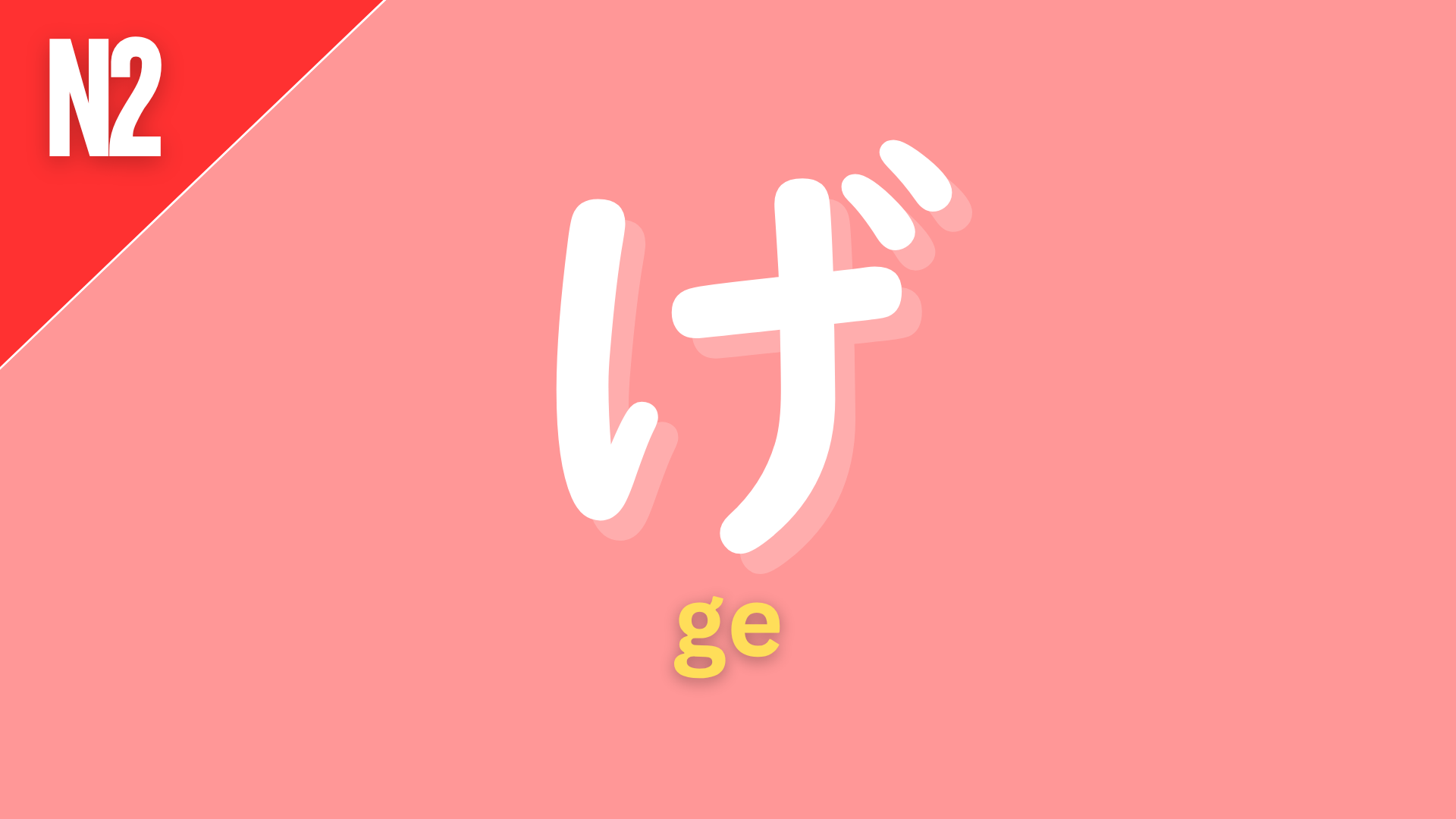
JLPT N2 - Grammar 🌟 げ ge
Have you ever looked at someone and thought,
“He looks a little sad…” or “She seems kind of proud”?
You’re not hearing their words. You’re not reading their mind.
You’re just seeing it in their face, their posture, their attitude…
In Japanese, there’s a very elegant way to express that feeling.
That expression is げ (ge).
げ is used when someone’s inner feelings quietly show on the outside.
Not loudly. Not directly. Just a subtle hint that you notice as an observer.
Because of that, げ often sounds a little more literary, calm, and objective than そう.
You’ll see it a lot in stories, news, and careful descriptions of people.
Let’s take a closer look at how げ works, and how Japanese uses what you see to talk about what someone feels.

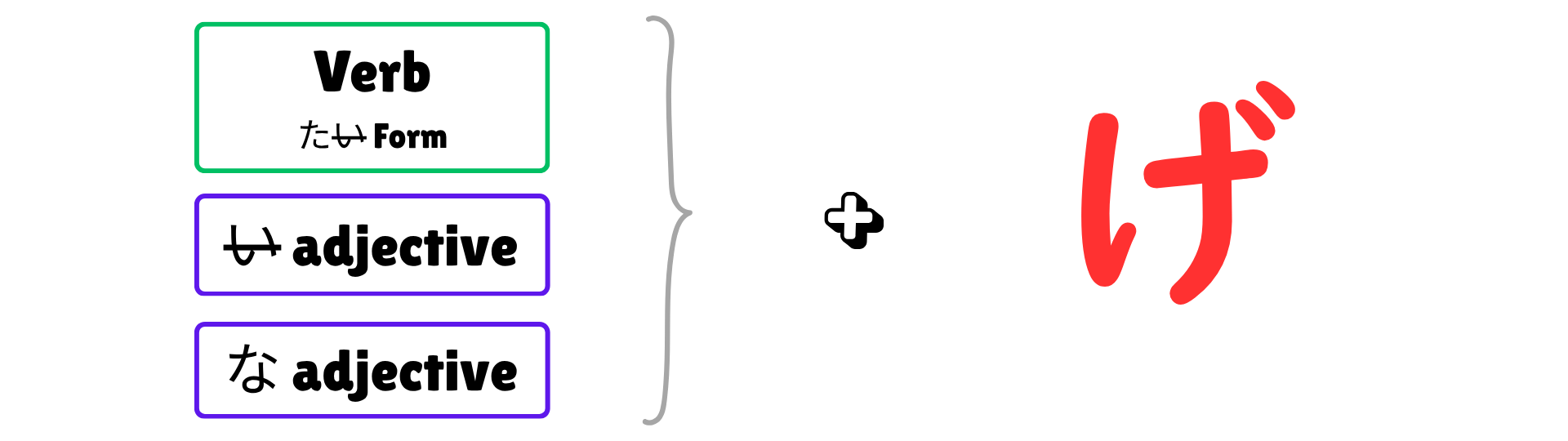

そう (sou) vs げ (ge)
Both expressions are used to describe how something appears, but they focus on slightly different viewpoints.
そう (sou)
そう is commonly used in daily conversation.
It sounds direct, casual, and is often used when something looks obvious at a glance.
彼は悲しそうです。
かれ は かなしそう です。
kare ha kanashi sou desu.
He looks sad.
Use そう when you want to describe a clear, visible impression in a natural, spoken way.
げ (ge)
げ sounds a little more formal and literary.
It is used when a feeling or state seems to quietly show on the outside, based on observation.
彼は悲しげな表情をしていました。
かれ は かなしげ な ひょうじょう を して いました。
kare ha kanashige na hyoujou wo shite imashita.
He had a sad-looking expression.
Use げ when you want to describe someone’s appearance calmly and objectively, often in writing, stories, or careful explanations.
Irregular Forms
Some adjectives change slightly with げ (ge), so it’s best to remember them as set expressions.
よい(yoi) / いい(ii) → よさげ (yosage)
= seems good (sounds casual)
ない(nai) → なさげ (nasage)
= seems like there isn’t (sounds casual)
ある(aru) → ありげ (arige)
= seems like there is (sounds casual)

こどもたちが、楽しげにテレビをみている。
こどもたち が、たのしげ に てれび を みて いる。
kodomotachi ga, tanoshige ni terebi wo mite iru.
The children are watching TV happily.
彼はJLPTの合格通知を、自慢げに見せてきた。
かれ は jlpt の ごうかく つうち を、じまんげ に みせて きた。
kare ha jlpt no goukaku tsuuchi wo, jimange ni misete kita.
He proudly showed me his JLPT pass notification.
何か悪いことをしたのか、その子は申し訳なさげにうつむいている。
なにか わるい こと を した の か、その こ は もうしわけなさげ に うつむいて いる。
nanika warui koto wo shita no ka, sono ko ha moushiwakenasage ni utsumuite iru.
As if they had done something wrong, the child was looking down apologetically.
迷子になった子供が、不安げに周りを見渡している。
まいご に なった こども が、ふあんげ に まわり を みわたして いる。
maigo ni natta kodomo ga, fuange ni mawari wo miwatashite iru.
A lost child is looking around anxiously.
彼は恥ずかしげもなく、街中で歌いだした。
かれ は はずかしげ も なく、まちなか で うたいだした。
kare ha hazukashige mo naku, machinaka de utaidashita.
He started singing in the middle of town without any embarrassment.
彼は危なげない足取りで、険しい山道を登っていった。
かれ は あぶなげない あしどり で、けわしい やまみち を のぼって いった。
kare ha abunagenai ashidori de, kewashii yamamichi wo nobotte itta.
He climbed the steep mountain path with steady, confident steps.
両親は何か言いたげな顔をしていたが、だまって見送ってくれた。
りょうしん は なにか いいたげ な かお を して いた が、だまって みおくって くれた。
ryoushin ha nanika iitage na kao wo shite ita ga, damatte miokutte kureta.
My parents looked like they wanted to say something, but they quietly saw me off.
あのレストラン、雰囲気がよさげだから今度行ってみよう。
あの れすとらん、ふんいき が よさげ だ から こんど いって みよう。
ano resutoran, funiki ga yosage da kara kondo itte miyou.
That restaurant looks like it has a nice atmosphere, so let’s try going sometime.
みんなの前に立ち、彼は自信なさげに話し始めた。
みんなのまえにたち、かれはじしんなさげにはなしはじめた。
Minna no mae ni tachi, kare wa jishin nasage ni hanashi hajimeta.
Standing in front of everyone, he began speaking without confidence.

- Grammar Point: げ (ge)
- JLPT Level: N2
- Meaning: Looks like, seems like, appears to
- Quick Explanation: げ is used to describe how someone’s feelings or state appear on the outside, based on observation.
So that’s how we use げ!
It’s a very Japanese way to describe emotions indirectly. Instead of saying exactly what someone feels, you describe how those feelings quietly show on the surface.
日本語を勉強したげな顔をしているね!私のコースにおいでよ!
にほんご を べんきょう したげ な かお を して いる ね!わたし の こーす に おいで よ!
nihongo wo benkyou shitage na kao wo shite iru ne! watashi no koosu ni oide yo!
You look like you want to study Japanese! Come join my course!
Now, it’s your turn!
Try making your own sentence with げ.
Think about someone’s expression, attitude, or mood that you noticed recently.
Your Sensei,
Hikari 👩🏻🏫✨
Get Hikari's JLPT Mock Exams & Preparation Lessons!
Whether you are studying to pass the JLPT or looking for a challenge in your learning journey, these courses are perfect for you!
Join my ニュースレター Newsletter 📩
You can expect an email from me once a week about Japanese culture.
Don't worry, your information will not be shared.
We hate SPAM. We will never sell your information, for any reason.