JLPT N2 - Grammar 🌟 だけましだ dake mashi da
Have you ever had a morning where you were still half-asleep and… splash!
You accidentally spilled your coffee?
It’s the worst, right?
“Nooo… I can’t believe I did that.”
But then you check and think,
“Oh… okay. At least it didn’t hit my shirt.”
That moment of “Phew… still not the worst case.” is exactly what だけましだ(dake mashi da) expresses!
It’s an N2 expression meaning “it’s better than…” or “at least it wasn’t worse.”
We use it when a situation isn’t perfect or is actually pretty annoying, but we choose to see it positively because a much worse outcome was avoided.
It’s like saying “It’s not great, but I’ll take this over the alternative.”
Let’s learn how to use this very Japanese, glass-half-full expression.

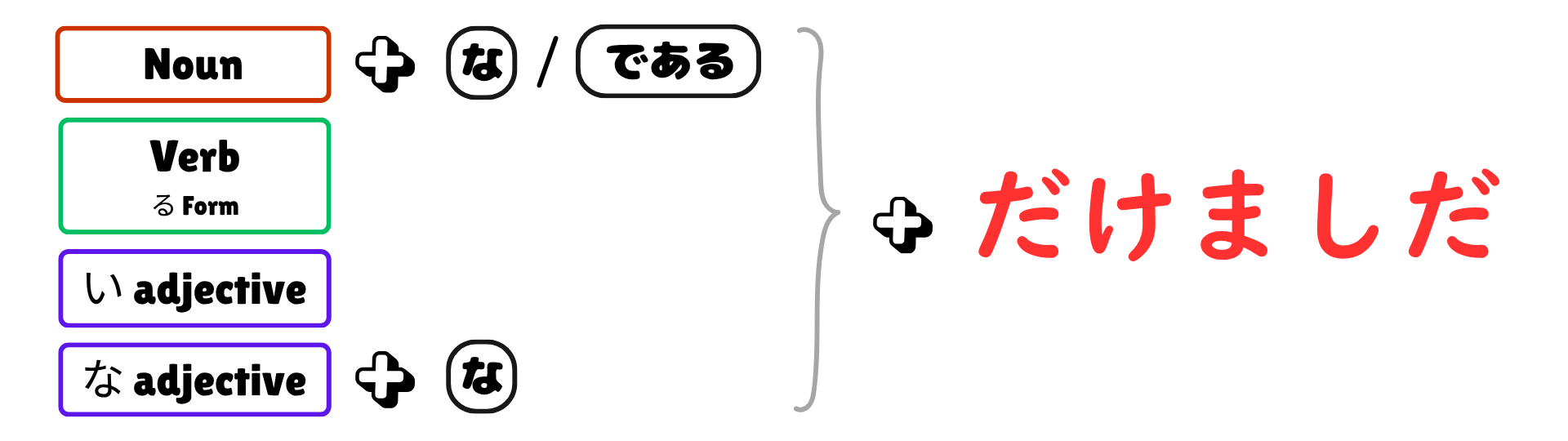

Politeness & Social Caution
だけましだ (dake mashi da) has a slightly negative nuance.
Because it means “less bad,” it can sound judgmental depending on the situation.
When used about people, especially those of higher status, or in direct comparisons (work, relationships, appearance, etc.), it may come across as impolite or insensitive, as if you are ranking or looking down on others.
The grammar itself is correct, but always consider who you are talking to and the social context before using it!
ほうがいい (hou ga ii) vs だけましだ (dake mashi da)
Both expressions compare situations, but the feeling behind them is very different.
ほうがいい (hou ga ii)
ほうがいい is a neutral preference.
You’re simply saying one option is better than another.
コーヒーより紅茶のほうがいいです。
こーひー より こうちゃ の ほう が いい です。
koohii yori koucha no hou ga ii desu.
I prefer tea over coffee.
Use this when you’re calmly choosing between options.
だけましだ (dake mashi da)
だけましだ expresses relief after comparing a bad situation with an even worse one.
You’re not saying it’s good. You’re saying “this is acceptable, considering…”
給料は安いけど、仕事があるだけましだ。
きゅうりょう は やすい けど、しごと が ある だけ まし だ。
kyuuryou ha yasui kedo, shigoto ga aru dake mashi da.
The salary is low, but it’s better than having no job at all.
Use だけましだ when you want to soften frustration and focus on what didn’t go wrong.

泥棒に入られて、物はとられたけれども、命があるだけましだ。
どろぼう に はいられて、もの は とられた けれども、いのち が ある だけ まし だ。
dorobou ni hairarete, mono ha torareta keredomo, inochi ga aru dake mashi da.
I was robbed and lost my belongings, but at least I’m alive.(I'm lucky to be alive.)
ボーナスが出るだけましだよ。うちはゼロなんだから。
ぼーなす が でる だけ まし だ よ。うち は ぜろ なんだ から。
boonasu ga deru dake mashi da yo. uchi ha zero nanda kara.
At least you get a bonus. Our company gets nothing.(It’s not great, but it could be worse.)
暑いけど、風があって涼しいだけましだ。
あつい けど、かぜ が あって すずしい だけ まし だ。
atsui kedo, kaze ga atte suzushii dake mashi da.
It’s hot, but at least there’s a breeze and it feels cooler.
部屋は狭いけれど、家賃が安いだけましだ。
へや は せまい けれど、やちん が やすい だけ まし だ。
heya ha semai keredo, yachin ga yasui dake mashi da.
The room is small, but at least the rent is cheap.(At least it’s affordable.)
機能は完璧ではないけれど、操作が簡単なだけましだ。
きのう は かんぺき では ない けれど、そうさ が かんたん な だけ まし だ。
kinou ha kanpeki deha nai keredo, sousa ga kantan na dake mashi da.
The features aren’t perfect, but at least it’s easy to use.(Ease of use saves it.)
デザインは地味だが、丈夫で頑丈なだけましだ。
でざいん は じみ だ が、じょうぶ で がんじょう な だけ まし だ。
dezain ha jimi da ga, joubu de ganjou na dake mashi da.
The design is plain, but at least it’s sturdy and durable.(Durability matters more.)
雨は降っているが、小雨であるだけましだ。
あめ は ふっている が、こさめ で ある だけ まし だ。
ame ha futteiru ga, kosame de aru dake mashi da.
It’s raining, but at least it’s only a light rain.(This is manageable.)
転びはしたが、かすり傷なだけましだ。
ころび は した が、かすりきず な だけ まし だ。
korobi ha shita ga, kasurikizu na dake mashi da.
I fell, but at least it was just a scrape.(That could’ve been much worse.)

- Grammar Point: だけましだ (dake mashi da)
- JLPT Level: N2
- Meaning: It’s better than, at least, could be worse
- Quick Explanation: Use だけましだ when something is not ideal, but you feel relief because a worse outcome was avoided.
So that’s how we use だけましだ.
It helps you acknowledge frustration without sounding overly negative.
電車が遅れたけど、止まらなかっただけましだ。
でんしゃがおくれたけど、とまらなかっただけましだ。
Densha ga okureta kedo, tomaranakatta dake mashi da.
The train was delayed, but at least it didn’t stop completely.
Now it’s your turn!
Try making your own sentence with だけましだ and practice seeing the brighter side.
Your Sensei,
Hikari 👩🏻🏫✨
Get Hikari's JLPT Mock Exams & Preparation Lessons!
Whether you are studying to pass the JLPT or looking for a challenge in your learning journey, these courses are perfect for you!
Join my ニュースレター Newsletter 📩
You can expect an email from me once a week about Japanese culture.
Don't worry, your information will not be shared.
We hate SPAM. We will never sell your information, for any reason.