JLPT N2 - Grammar 🌟 ちっとも~ない chittomo~nai

Imagine meeting an old friend for the first time in ten years.
You’re both excited, maybe a little nervous, and then, the moment you see them, you realize… they haven’t changed at all!
In English, you might say, “You haven’t changed a bit!”
In Japanese, we use ちっとも〜ない (chitto mo ~nai) to express that feeling, “not at all,” “not even a little,” or “not in the least.”
It’s an N2 grammar point that adds emotion to your speech, whether you’re expressing surprise, frustration, or even kindness in a soft, casual way.
Ready to learn how to use it naturally in conversation? Let’s go!


まったく(mattaku) vs 全然(zenzen) vs ちっとも (chittomo)
まったく(mattaku) and 全然 (zenzen) are close in meaning to ちっとも (chittomo) , since all can mean “not at all.”
However, their nuance and usage differ slightly.
まったく(mattaku)
Strong and clear. Often used in both spoken and written Japanese.
It sounds more formal or emphatic than ちっとも (chittomo).
まったく理解できません。
まったく りかい できません。
mattaku rikai dekimasen.
I don’t understand at all.
全然(zenzen)
Casual and very common in everyday conversation.
While it originally meant “not at all,” it can also be used in a positive way in modern Japanese!
全然わからない。
ぜんぜん わからない。
zenzen wakaranai.
I don’t understand at all.
ちっとも(chittomo)
Feels softer, more emotional, and slightly old-fashioned, but in a charming way!
It’s often used when showing feelings (like warmth, surprise, or irritation) rather than logical statements.
10年ぶりに会ったのに、ちっとも変わってないね!
じゅうねんぶり に あった のに、ちっとも かわって ない ね!
juunenburi ni atta noni, chitto mo kawatte nai ne!
It’s been ten years, and you haven’t changed at all!

あなたの言っていること、ちっともわからないです。
あなた の いっている こと、ちっとも わからない です。
anata no itteiru koto, chitto mo wakaranai desu.
I don’t understand what you’re saying at all.
ちっとも気にならないよ、そんなこと。
ちっとも き に ならない よ、そんな こと。
chitto mo ki ni naranai yo, sonna koto.
That doesn’t bother me at all.
このカレー、ちっとも辛くないね。
この かれー、ちっとも からく ない ね。
kono karee, chitto mo karaku nai ne.
This curry isn’t spicy at all.
彼の話、ちっとも面白くない。
かれ の はなし、ちっとも おもしろく ない。
kare no hanashi, chitto mo omoshiroku nai.
His story isn’t interesting at all.
彼女はちっとも素直じゃないね。
かのじょ は ちっとも すなお じゃ ない ね。
kanojo ha chitto mo sunao ja nai ne.
She’s not honest at all.
ここ、図書館だよね?ちっとも静かではないね。
ここ、 としょかん だ よ ね? ちっとも しずか では ない ね。
koko, toshokan da yo ne? chitto mo shizuka deha nai ne.
This is supposed to be a library, right? It’s not quiet at all!

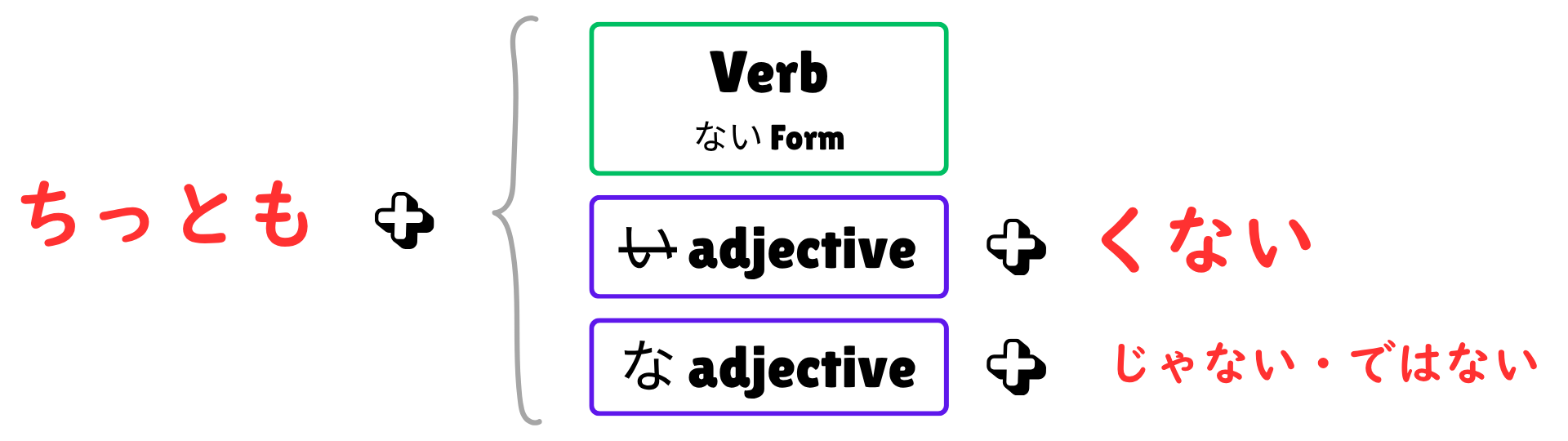
- Grammar Point: ちっとも〜ない (chittomo~nai)
- JLPT Level: N2
- Meaning: Not at all, not even a little, not in the least
- Quick Explanation: Used to strongly emphasize that something is not at all true or that there’s no change whatsoever. It’s common in spoken Japanese, especially for expressing feelings like surprise, frustration, or reassurance in a soft, emotional way.
So that’s how we use ちっとも〜ない!
It’s short, expressive, and perfect for everyday Japanese, from “You haven’t changed at all!” to “That doesn’t bother me at all.”
あなたがコツコツがんばっている日本語の勉強も、ちっとも無駄にはならないよ!
あなた が こつこつ がんばっている にほんご の べんきょう も、ちっとも むだ に は ならない よ!
anata ga kotsukotsu ganbatteiru nihongo no benkyou mo, chitto mo muda ni wa naranai yo!
The Japanese study you’ve been steadily working on will never go to waste, not even a little!
Now it’s your turn! Try making your own sentences with ちっとも〜ない and express your feelings naturally in Japanese!
Your Sensei,
Hikari 👩🏻🏫
Get Hikari's JLPT Mock Exams & Preparation Lessons!
Whether you are studying to pass the JLPT or looking for a challenge in your learning journey, these courses are perfect for you!
Join my ニュースレター Newsletter 📩
You can expect an email from me once a week about Japanese culture.
Don't worry, your information will not be shared.
We hate SPAM. We will never sell your information, for any reason.