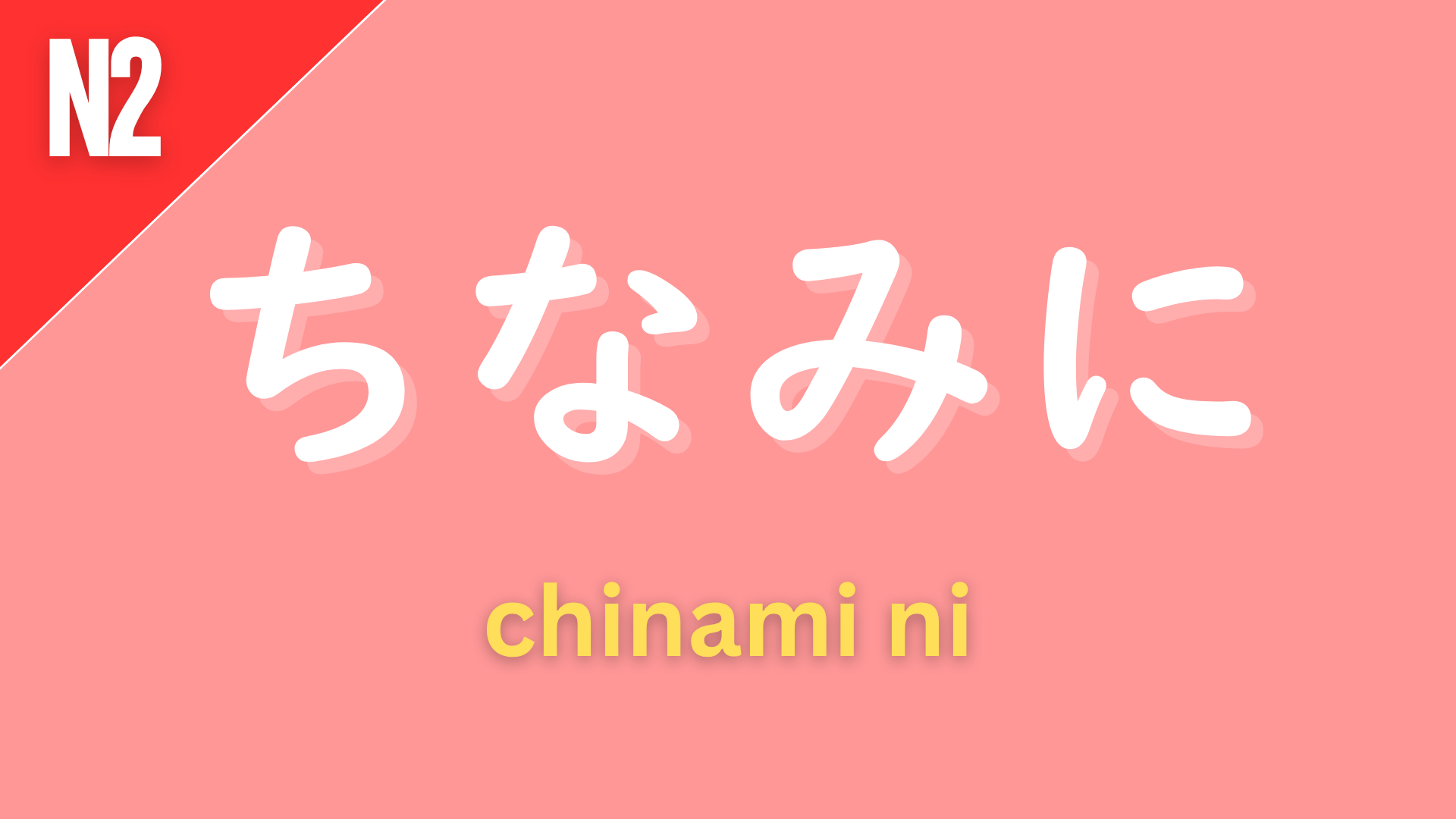
JLPT N2 - Grammar 🌟 ちなみに chinami ni
Have you ever been sharing a story or giving some information, and then suddenly thought, “Oh, I should also mention this little extra detail”?
Maybe you’re telling a friend about a great restaurant you found during your trip to Japan. You want to add a small but helpful note, like “By the way, you need a reservation,” or “Incidentally, their matcha desserts are amazing!”
That’s exactly when ちなみに (chinami ni) comes in.
ちなみに is a handy expression used to add extra or supplemental information related to what you just said.
Think of it as adding a small bonus detail without changing the topic.
However, Japanese also has another expression that translates as “by the way,” and it works very differently. In this lesson, we’ll also look at how to tell these expressions apart and when to use each one naturally.
Let’s learn how to use ちなみに correctly so your Japanese sounds clear and natural!



ところで (tokoro de) vs ちなみに (chinami ni) vs なお (nao)
All three expressions can be translated as “by the way,” but they play very different roles in Japanese.
The key difference is whether the topic changes and how important the added information is.
ところで (tokoro de)
ところで is used to completely change the topic. It works as a topic switcher.
明日は会議です。ところで、今日のランチ一緒に食べない?
あした は かいぎ です。ところで、きょう の らんち いっしょ に たべない?
ashita ha kaigi desu. tokoro de, kyou no ranchi issho ni tabenai?
We have a meeting tomorrow. By the way, do you want to have lunch together today?
(The topic changes from meeting to lunch.)
Use ところで when you want to smoothly jump to a new topic.
ちなみに (chinami ni)
ちなみに adds extra or bonus information that is related to the main topic, but not essential.
明日は会議です。ちなみに、場所はいつもと同じです。
あした は かいぎ です。ちなみに、ばしょ は いつも と おなじ です。
ashita ha kaigi desu. chinamini, basho ha itsumo to onaji desu.
We have a meeting tomorrow. By the way, the location is the same as usual.
(The topic is still the meeting.)
Use ちなみに in conversations, emails, or blogs when you want to share a light extra detail.
なお (nao)
なお also adds information, but the importance level is much higher.
It is used for rules, conditions, warnings, or things the listener must not miss.
Because of this, it sounds formal and is common in announcements, instructions, and business writing.
明日は会議です。なお、遅刻した場合は入室できませんので時間厳守でお願いします。
あした は かいぎ です。なお、おくれた ばあい は にゅうしつ できません ので、じかん げんしゅ で おねがいします。
ashita ha kaigi desu. nao, okureta baai ha nyuushitsu dekimasen node, jikan genshu de onegaishimasu.
We have a meeting tomorrow. Please note that if you are late, you will not be allowed to enter, so please be on time.
Use なお when the added information is important for action or decision making.

昨日はカレーを作ったんだ。ちなみに、隠し味にチョコレートを入れたよ。
きのう は かれー を つくった ん だ。ちなみに、かくしあじ に ちょこれーと を いれた よ。
kinou ha karee wo tsukutta n da. chinamini, kakushiaji ni chokoreeto wo ireta yo.
I made curry yesterday. By the way, I added chocolate as a secret ingredient.
彼は有名な写真家です。ちなみに、私の父の友人でもあります。
かれ は ゆうめい な しゃしんか です。ちなみに、わたし の ちち の ゆうじん でも あります。
kare ha yuumei na shashinka desu. chinamini, watashi no chichi no yuujin demo arimasu.
He is a famous photographer. Incidentally, he is also a friend of my father.
来週からセールが始まります。ちなみに、最大50%オフだそうですよ。
らいしゅう から せーる が はじまります。ちなみに、さいだい ごじゅっぱーせんと おふ だ そう です よ。
raishuu kara seeru ga hajimarimasu. chinamini, saidai gojuppaasento ofu da sou desu yo.
A sale starts next week. By the way, I heard it’s up to 50% off.
出張のホテルを予約しました。ちなみに、朝食付きのプランです。
しゅっちょう の ほてる を よやく しました。ちなみに、ちょうしょく つき の ぷらん です。
shucchou no hoteru wo yoyaku shimashita. chinamini, choushoku tsuki no puran desu.
I booked a hotel for my business trip. By the way, it’s a plan that includes breakfast.
駅から会場まで歩いて10分です。ちなみに、無料の送迎バスも出ています。
えき から かいじょう まで あるいて じゅっぷん です。ちなみに、むりょう の そうげい ばす も でています。
eki kara kaijou made aruite juppun desu. chinamini, muryou no sougei basu mo deteimasu.
It’s a 10 minute walk from the station to the venue. By the way, there is also a free shuttle bus.
富士山は日本で一番高い山です。ちなみに、世界遺産にも登録されています。
ふじさん は にほん で いちばん たかい やま です。ちなみに、せかい いさん に も とうろく されています。
fujisan ha nihon de ichiban takai yama desu. chinamini, sekai isan ni mo touroku sareteimasu.
Mt. Fuji is the tallest mountain in Japan. By the way, it is also registered as a World Heritage site.

- Grammar Point: ちなみに (chinami ni)
- JLPT Level: N2
- Meaning: By the way, incidentally, in addition
- Quick Explanation: Use ちなみに to add extra information that is related to what you just said.
So that’s how we use ちなみに.
It’s a great expression for adding small, related details without changing the topic, and it makes your Japanese sound smooth and natural.
今日のブログ、面白かったかな?ちなみに、ポッドキャストもやっているからチェックしてね!
きょう の ぶろぐ、おもしろかった かな?ちなみに、ぽっどきゃすと も やっている から ちぇっく して ね!
kyou no burogu, omoshirokatta kana? chinamini, poddokyasuto mo yatteiru kara chekku shite ne!
Did you enjoy today’s blog? By the way, I also have a podcast, so be sure to check it out!
Keep noticing those little “extra” details as you study Japanese.
They add up faster than you think.
Your Sensei,
Hikari 👩🏻🏫✨
Get Hikari's JLPT Mock Exams & Preparation Lessons!
Whether you are studying to pass the JLPT or looking for a challenge in your learning journey, these courses are perfect for you!
Join my ニュースレター Newsletter 📩
You can expect an email from me once a week about Japanese culture.
Don't worry, your information will not be shared.
We hate SPAM. We will never sell your information, for any reason.