JLPT N1 - Grammar 🌟 ずじまい zu jimai

Have you ever had something you fully intended to do… but the day ended, and you realized you never actually did it?
Maybe you planned to study Japanese that morning, textbook open, notebook ready, but after making a cup of tea, checking one message, and taking “just a short break,” suddenly it was nighttime… and you hadn’t studied at all.
Or maybe during a trip, you promised yourself you’d try a new local dish every single day, but somewhere along the way, you started craving the familiar flavors you always eat, and before you knew it… the trip ended without you trying most of the things you wanted to.
We all know this feeling, when we wanted to do something, truly meant to, but for one reason or another… it just didn’t happen.
In Japanese, there’s a perfect expression for this: ずじまい(zu jimai).
It describes those moments when you end up not doing something you had planned or hoped to do, often with a little touch of regret.
Today, let’s take a closer look at how to use ずじまい naturally, so you can express those “I meant to do it, but…” moments just like a native speaker!


ないまま (nai mama) vs ずじまい (zu jimai)
Both can describe situations where something didn’t get done, but the nuance is very different.
ないまま (nai mama)
ないまま means “without doing X, Y happened.”
It simply explains that one action didn’t happen, and then another action followed.
There is no built-in feeling of regret.
朝ごはんを 食べないまま 学校へ 行った。
あさごはん を たべないまま がっこう へ いった。
asagohan wo tabenai mama gakkou he itta.
I went to school without eating breakfast.
(Neutral sequence of events, not necessarily “I wish I had eaten.”)
ずじまい (zu jimai)
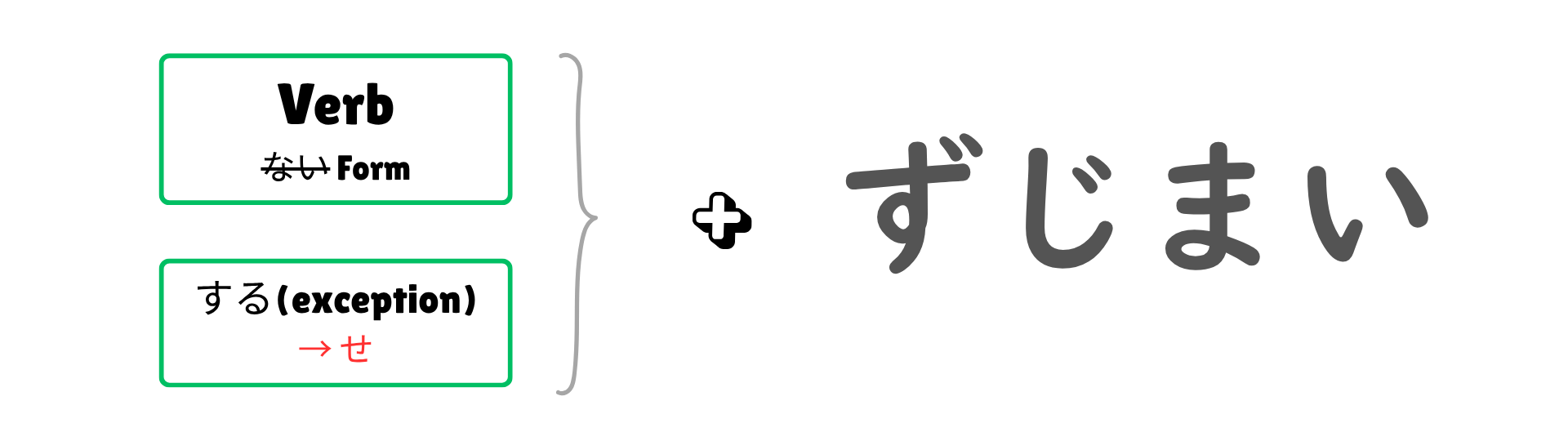
ずじまい expresses that you planned or intended to do something, but you ended up not doing it, and there is usually a sense of regret, disappointment, or “Ah… I missed my chance.”
旅行中に地元の名物を食べようと思っていたが、結局食べずじまいだった。
りょこうちゅう に じもと の めいぶつ を たべよう と おもっていた が、けっきょく たべずじまい だった。
ryokouchuu ni jimoto no meibutsu wo tabeyou to omotteita ga, kekkyoku tabezu jimai datta.
I meant to try the local specialty during my trip, but I ended up not eating it.

図書館で本 借りたのに、忙しくて読まずじまいで 返却した。
としょかん で ほん を かりた のに、いそがしくて よまずじまい で へんきゃく した。
toshokan de hon wo karita noni, isogashikute yomazujimai de henkyaku shita.
I borrowed a book from the library, but I was so busy that I ended up returning it without reading it.
ギターを買おうと思った が、買わずじまいで興味が薄れてしまった。
ぎたー を かおう と おもった が、かわずじまい で きょうみ が うすれて しまった。
gitaa wo kaou to omotta ga, kawazujimai de kyoumi ga usurete shimatta.
I wanted to buy a guitar, but I never did, and eventually my interest faded.
外出するつもりだった のに、雨が強くて行けずじまいだった。
がいしゅつ する つもり だった のに、あめ が つよくて いけずじまい だった。
gaishutsu suru tsumori datta noni, ame ga tsuyokute ikezujimai datta.
I planned to go out, but the rain was too heavy and I ended up not going.
ケンカした友達に謝ろうとしていた のに、結局謝らずじまいのまま疎遠になってしまった。
けんか した ともだち に あやまろう と していた のに、けっきょく あやまらずじまい の まま そえん に なって しまった。
kenka shita tomodachi ni ayamarou to shiteita noni, kekkyoku ayamarazujimai no mama soen ni natte shimatta.
I meant to apologize to the friend I argued with, but I never did, and we grew apart.
家族と次の休暇で日本旅行に行こうと 話した が、具体的な予定を立てずじまいで休暇は 終わってしまった。
かぞく と つぎ の きゅうか で にほんりょこう に いこう と はなした が、ぐたいてき な よてい を たてずじまい で きゅうか は おわって しまった。
kazoku to tsugi no kyuuka de nihonryokou ni ikou to hanashita ga, gutaiteki na yotei wo tatezujimai de kyuuka ha owatte shimatta.
My family talked about traveling to Japan for our next vacation, but we never made any concrete plans and the break ended before anything was decided.
宿題をしようと思っていたのに、結局せずじまいだった。
しゅくだいをしようとおもっていたのに、けっきょくせずじまいだった。
shukudai wo shiyou to omotte ita noni, kekkyoku sezu jimai datta.
I intended to do my homework, but ended up not doing it.

- Grammar Point: ずじまい (zu jimai)
- JLPT Level: N1
- Meaning: Ended up not doing, despite intending to, it didn’t happen
- Quick Explanation: ずじまい is used when you planned, intended, or wanted to do something…but in the end, you didn’t do it, often with a nuance of regret or missed opportunity.
So that’s how we use ずじまい!
It’s the perfect expression for describing those “I meant to do it, but…” moments,
like returning a library book without reading it, missing your chance to apologize,
or ending a vacation without trying what you planned.
行こうと思っていた レストランに、行けずじまいのまま 一か月経った。
いこう と おもっていた れすとらん に、いけずじまい の まま いっかげつたった。
ikou to omotteita resutoran ni, ikezujimai no mama ikkagetsu tatta.
A month has passed, and I still haven’t managed to go to the restaurant I had planned to visit.
Now it’s your turn! Try making your own sentences with ずじまい and express your “I meant to do it, but it never happened…” moments naturally in Japanese!
Your Sensei,
Hikari 👩🏻🏫✨
Get Hikari's JLPT Mock Exams & Preparation Lessons!
Whether you are studying to pass the JLPT or looking for a challenge in your learning journey, these courses are perfect for you!
Join my ニュースレター Newsletter 📩
You can expect an email from me once a week about Japanese culture.
Don't worry, your information will not be shared.
We hate SPAM. We will never sell your information, for any reason.