JLPT N1 - Grammar 🌟 を機に wo ki ni

Have you ever had a moment that changed the flow of your life, like moving to a new city and setting up your cozy new apartment, getting married and starting a new chapter, or landing a new job and meeting inspiring people?
That kind of moment, when one event becomes the start of something new, is exactly when we use を機に (wo ki ni) in Japanese.
It means “taking something as an opportunity or turning point.”
We use it to describe a positive change or decision inspired by an event, like improving your habits, rethinking your lifestyle, or beginning something fresh.
It’s a bit more formal than をきっかけに (wo kikkake ni), and you’ll often find it in writing or polite speech.
So let’s learn how to use を機に naturally and talk about those turning points that move your life forward! Let’s go!

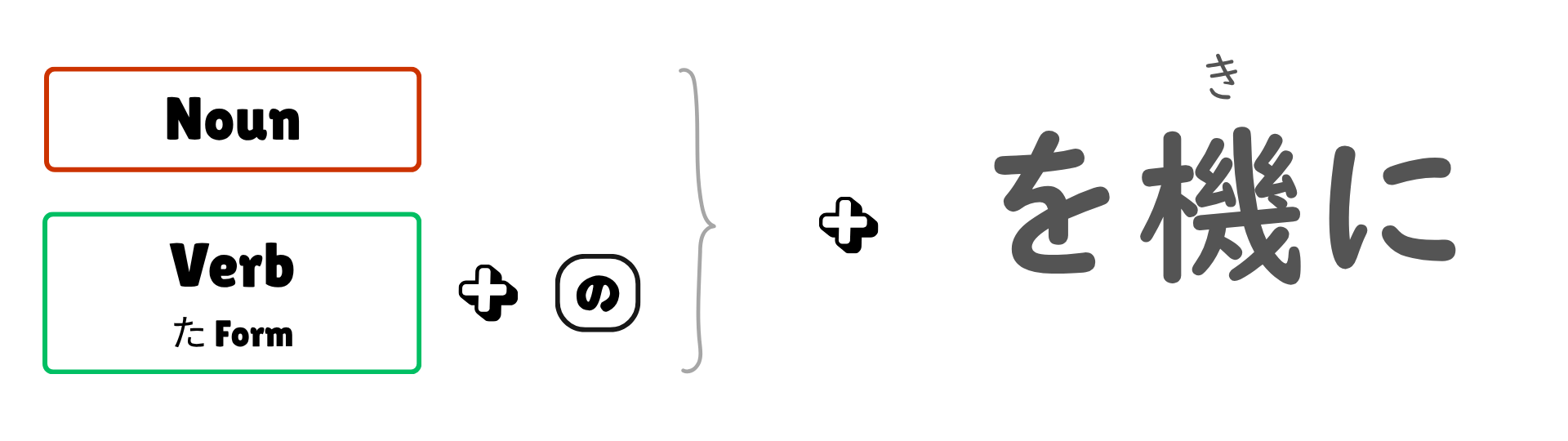

をきっかけに (wo kikkake ni) vs を機に(wo ki ni)
Both mean “taking something as an opportunity / turning point,” but there’s a slight difference in tone and formality.
をきっかけに (wo kikkake ni) is more casual and often used in everyday conversation.
You might say it when talking to friends or sharing your personal experiences.
留学をきっかけに、日本語を勉強し始めました。
りゅうがく を きっかけ に、にほんご を べんきょう し はじめました。
ryuugaku wo kikkake ni, nihongo wo benkyou shi hajimemashita.
I started studying Japanese after studying abroad.
を機に(wo ki ni) , on the other hand, sounds more formal and is often used in writing, speeches, or professional contexts, like company announcements or essays.
留学を機に、日本語教育の道に進みました。
りゅうがく を き に、にほんご きょういく の みち に すすみました。
ryuugaku wo ki ni, nihongo kyouiku no michi ni susumimashita.
I took my study abroad as an opportunity to pursue Japanese education.

留学を機に、人生の目標がはっきりしました。
りゅうがく を き に、じんせい の もくひょう が はっきり しました。
ryuugaku wo ki ni, jinsei no mokuhyou ga hakkiri shimashita.
Studying abroad helped me clarify my life goals.
卒業を機に、東京に引っ越した。
そつぎょう を き に、とうきょう に ひっこした。
sotsugyou wo ki ni, toukyou ni hikkoshita.
I moved to Tokyo after graduation.
病気を機に、健康に気を使うようになった。
びょうき を き に、けんこう に き を つかう よう に なった。
byouki wo ki ni, kenkou ni ki wo tsukau you ni natta.
I started paying more attention to my health after getting sick.
子どもが生まれたのを機に、家をリフォームした。
こども が うまれた の を き に、いえ を りふぉーむ した。
kodomo ga umareta no wo ki ni, ie wo rifo-mu shita.
We renovated our house after our baby was born.
資格を取ったのを機に、仕事の幅が広がった。
しかく を とった の を き に、しごと の はば が ひろがった。
shikaku wo totta no wo ki ni, shigoto no haba ga hirogatta.
Getting a certification expanded my career opportunities.

- Grammar Point: を機に (wo ki ni)
- JLPT Level: N1
- Meaning: As an opportunity, taking something as a turning point
- Quick Explanation: Use 〜を機に to express that a specific event or occasion became a turning point that led to a new action, habit, or change. It often appears in formal or written contexts.
So that’s how we use を機に!
It’s a beautiful expression for talking about life’s milestones, those moments when one event inspires a new beginning or positive change.
私はバックパックでヨーロッパを旅したのを機に、英語の勉強を始めました。
わたしはばっくぱっくでよーろっぱをたびしたのをきに、えいごのべんきょうをはじめました。
watashi ha bakkupakku de yooroppa wo tabi shita no wo ki ni, eigo no benkyou wo hajime mashita.
Taking the opportunity of traveling around Europe with a backpack, I started studying English.
Now it’s your turn! Think about your own turning points and try making a sentence with を機に!
Your Sensei,
Hikari 👩🏻🏫
Get Hikari's JLPT Mock Exams & Preparation Lessons!
Whether you are studying to pass the JLPT or looking for a challenge in your learning journey, these courses are perfect for you!
Join my ニュースレター Newsletter 📩
You can expect an email from me once a week about Japanese culture.
Don't worry, your information will not be shared.
We hate SPAM. We will never sell your information, for any reason.