JLPT N1 - Grammar 🌟 とりわけ toriwake
Have you ever noticed that when you’re talking about your favorites, you say you like many things…but deep down, there’s always that one thing you secretly love the most?
Like,
“I like Japanese food in general…
but honestly? Ramen. Especially ramen.”
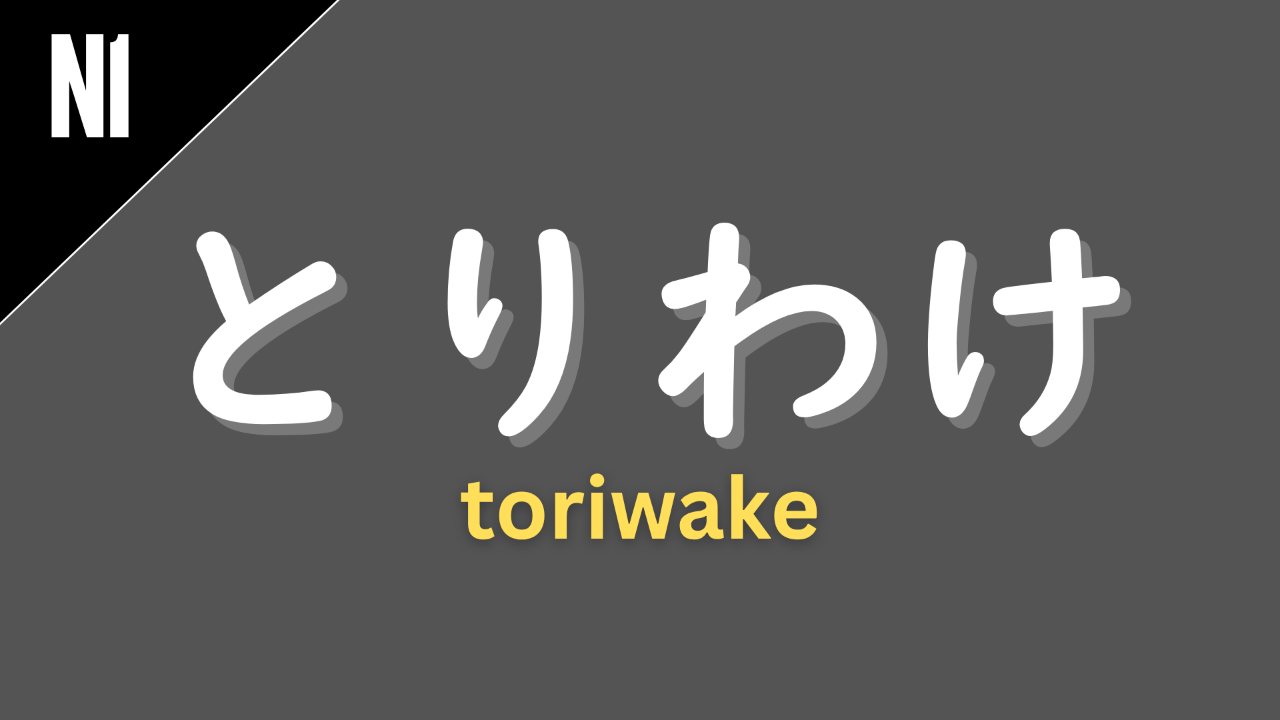
In Japanese, when you want to do exactly that, start broad and then gently point to the one thing that really stands out. That’s when とりわけ (toriwake) becomes your best helper.
とりわけ means “especially” or “above all,” and it’s used when there are several options, situations, or qualities, but one of them deserves a little spotlight.
It sounds a bit thoughtful, slightly polished, and very Japanese.
You’ll often see it in writing, explanations, or calm, reflective speech. The kind that makes people nod and think, “Ahh, I see what you mean.”
Let’s take a closer look at how とりわけ works and learn how to highlight what really matters, Japanese style.



特に (とくに / tokuni) vs なかでも (nakademo) vs とりわけ (toriwake)
All three expressions are used to highlight something, but the tone, focus, and level of formality are a little different.
特に (toku ni) - the most common and flexible “especially”
特に is the most neutral and widely used option.
It works in almost any situation. Casual conversation, writing, presentations, you name it.
You can use it even when the “group” isn’t very clearly defined.
That’s why it’s often the safest choice for learners.
日本食は好きですが、特に寿司が好きです。
にほんしょく は すき です が、とくに すし が すき です。
nihonshoku ha suki desu ga, tokuni sushi ga suki desu.
I like Japanese food, especially sushi.
Use 特に (toku ni) when you want a simple, natural “especially” with no extra nuance.
なかでも (naka demo) - “among them,” slightly more conversational
なかでも literally means “among them,” so it works best when the group is clear and specific.
It feels more conversational than とりわけ (toriwake) and is common in spoken Japanese.
この店のケーキはどれもおいしいですが、なかでもチョコレートケーキが人気です。
この みせ の けーき は どれも おいしい です が、なかでも ちょこれーと けーき が にんき です。
kono mise no keeki ha doredemo oishii desu ga, nakademo chokoreeto keeki ga ninki desu.
All the cakes at this shop are good, but the chocolate cake is especially popular.
Use なかでも (nakademo) when you want a friendly, spoken-feel way to say “among these, this one stands out.”
とりわけ (toriwake) - thoughtful, slightly formal “especially / above all”
とりわけ has a more refined, written, or explanatory tone.
It’s often used when talking calmly and logically in essays, news, reviews, or thoughtful explanations.
There’s usually a sense of:
“many things apply, but this one is particularly noteworthy.”
今年は忙しい一年でしたが、とりわけ春は大変でした。
ことし は いそがしい いちねん でした が、とりわけ はる は たいへん でした。
kotoshi ha isogashii ichinen deshita ga, toriwake haru ha taihen deshita.
This year was busy, but spring in particular was tough.
Use とりわけ (toriwake) when you want to sound calm, reflective, or slightly polished.
💡 Quick Tip
特に (toku ni) - safest, most common, all-purpose
なかでも (nakademo) - conversational, “among them”
とりわけ (toriwake) - thoughtful, written, slightly formal emphasis

日本の四季はそれぞれに美しいが、とりわけ春が好きだ。
にほん の しき は それぞれ に うつくしい が、とりわけ はる が すき だ。
nihon no shiki ha sorezore ni utsukushii ga, toriwake haru ga suki da.
Japan’s four seasons are all beautiful, but I especially like spring.
この店の料理はどれもおいしいが、とりわけ魚料理が評判だ。
この みせ の りょうり は どれも おいしい が、とりわけ さかなりょうり が ひょうばん だ。
kono mise no ryouri ha doredemo oishii ga, toriwake sakanaryouri ga hyouban da.
All the food at this restaurant is delicious, but the fish dishes in particular are well known.
この画家の作品はどれも素晴らしいが、とりわけ初期の作品には勢いがある。
この がか の さくひん は どれも すばらしい が、とりわけ しょき の さくひん には いきおい が ある。
kono gaka no sakuhin ha doredemo subarashii ga, toriwake shoki no sakuhin niha ikioi ga aru.
All of this painter’s works are wonderful, but the early pieces in particular have a strong energy.
この山の紅葉は見事ですが、とりわけ谷底から見上げる景色は圧巻です。
この やま の こうよう は みごと です が、とりわけ たにぞこ から みあげる けしき は あっかん です。
kono yama no kouyou ha migoto desu ga, toriwake tanizoko kara miageru keshiki ha akkan desu.
The autumn leaves on this mountain are stunning, but the view looking up from the valley is especially breathtaking.
彼女はチームのムードメーカーで、とりわけ若手社員からの信頼が厚い。
かのじょ は ちーむ の むーどめーかー で、とりわけ わかて しゃいん から の しんらい が あつい。
kanojo ha chiimu no muudomeekaa de, toriwake wakate shain kara no shinrai ga atsui.
She’s the mood-maker of the team, and she’s especially trusted by the younger employees.

- Grammar Point: とりわけ (toriwake)
- JLPT Level: N1
- Meaning: Especially, particularly, above all
- Quick Explanation: とりわけ is used to highlight one thing that stands out the most among many options.
So that’s how we use とりわけ!
It’s a great expression for highlighting what really stands out among many options, and it adds a thoughtful, slightly polished tone to your Japanese.
あなたが知っている日本語の中で、とりわけ好きな表現はなんですか。
あなた が しっている にほんご の なか で、とりわけ すき な ひょうげん は なん です か。
anata ga shitteiru nihongo no naka de, toriwake suki na hyougen ha nan desu ka.
Among the Japanese you know, which expression do you especially like?
Try using とりわけ when talking about your preferences, recommendations, or impressions.
It’s a small word, but it makes your Japanese sound more precise and expressive.
Your Sensei,
Hikari 👩🏻🏫✨
Get Hikari's JLPT Mock Exams & Preparation Lessons!
Whether you are studying to pass the JLPT or looking for a challenge in your learning journey, these courses are perfect for you!
Join my ニュースレター Newsletter 📩
You can expect an email from me once a week about Japanese culture.
Don't worry, your information will not be shared.
We hate SPAM. We will never sell your information, for any reason.