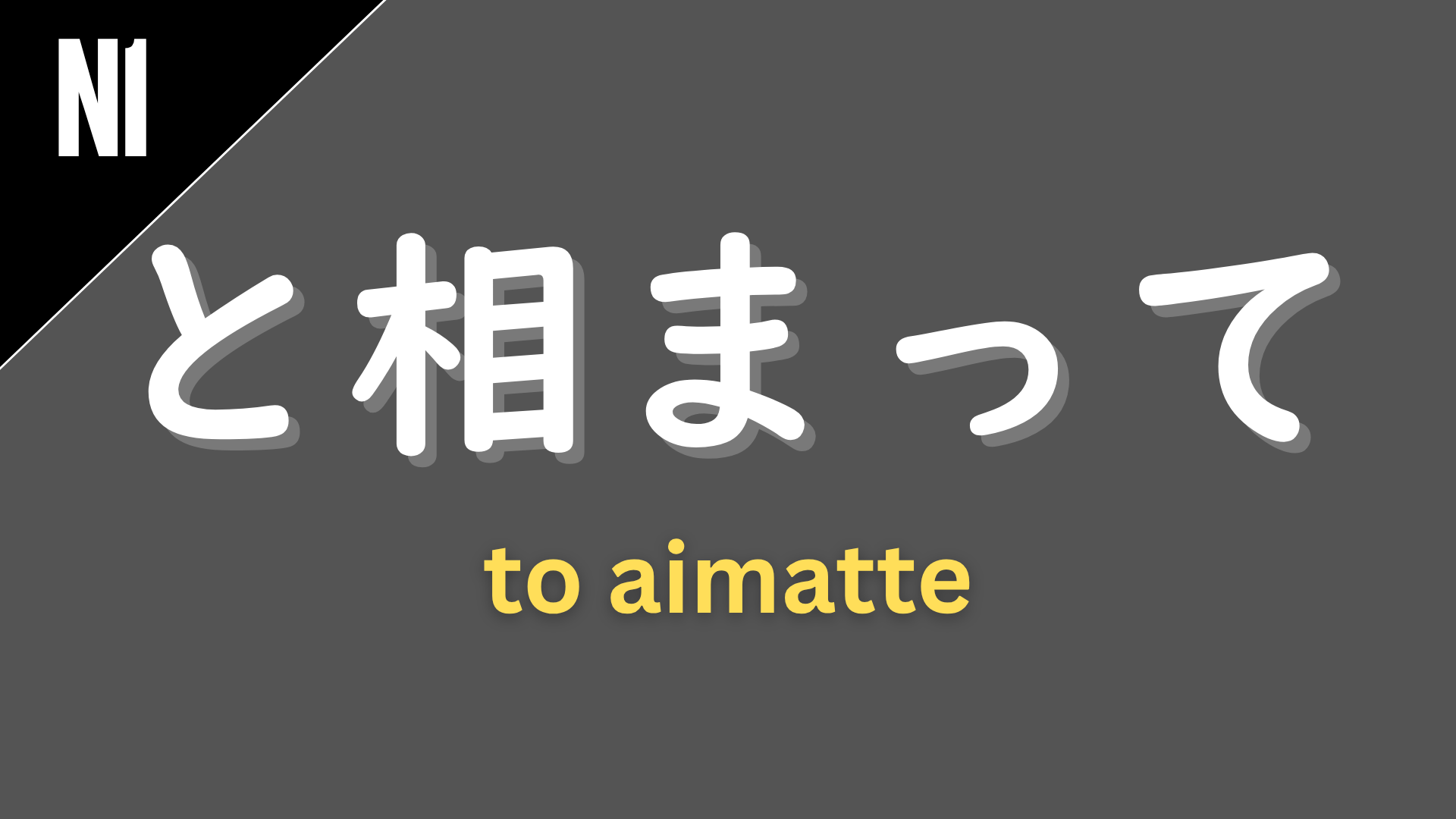
JLPT N1 - Grammar 🌟 と相まって to aimatte
Have you ever seen something so beautiful or powerful that you felt it wasn’t just one factor at work, but a “perfect storm” of elements coming together?
Maybe you visited a temple where the ancient architecture looked even more stunning because of the autumn leaves. Or perhaps you met someone whose natural talent, combined with their incredible hard work, made them a true superstar.
In Japanese, when two or more factors blend together to create a stronger effect, whether it is extra beautiful, impressive, or intense, we use the elegant N1 expression と相まって (とあいまって / to aimatte).
It means “coupled with,” “together with,” or “combined with.”
It describes situations where one element enhances another, creating a result greater than each part alone.
Let’s learn how to use this sophisticated expression to describe powerful synergies in Japanese.



Usage of と (to) / が (ga) / も (mo) 相まって (aimatte)
と相まって expresses the idea of two or more factors influencing each other and creating a stronger result. It is close in meaning to “coupled with,” “together with,” or “combined with” in English.
The particle you choose (と / が / も) slightly changes where the focus is placed.
と相まって (to aimatte)
This is the most common and neutral pattern. This form describes one main factor being combined with another element to create a stronger effect.
It often feels like: “A, together with B, results in C.”
彼女の美声が、会場の響きと相まって、聴衆を魅了した。
かのじょ の びせい が、かいじょう の ひびき と あいまって、ちょうしゅう を みりょう した。
kanojo no bisei ga, kaijou no hibiki to aimatte, choushuu wo miryou shita.
Her beautiful voice, coupled with the acoustics of the venue, captivated the audience.
が相まって (ga aimatte)
This expression is used when multiple factors are treated as equal subjects.
This pattern is used when two or more elements together act as the subject and jointly produce the result. Both factors are equally important.
アーティストの才能と努力が相まって、素晴らしい成果が生まれた。
あーてぃすと の さいのう と どりょく が あいまって、すばらしい せいか が うまれた。
aatisuto no sainou to doryoku ga aimatte, subarashii seika ga umareta.
The artist’s talent and effort combined to produce wonderful results.
も相まって (mo aimatte)
This one adds emphasis: “this factor also contributed.”
This form highlights an additional factor, implying that there are already other reasons, and
this one also made the situation stronger.
日曜日ということもあり、好天も相まって、公園は人でいっぱいだった。
にちようび という こと も あり、こうてん も あいまって、こうえん は ひと で いっぱい だった。
nichiyoubi to iu koto mo ari, kouten mo aimatte, kouen ha hito de ippai datta.
Because it was Sunday, and with the good weather added in, the park was crowded.
💡 Quick Tip
と相まって (to aimatte) - combining a main factor with another element
が相まって (ga aimatte) - multiple factors acting together equally
も相まって (mo aimatte) - adding one more contributing factor for emphasis

古い神社やお寺が、周辺の紅葉と相まって、絵のような美しさだ。
ふるい じんじゃ や おてら が、しゅうへん の こうよう と あいまって、え の ような うつくしさ だ。
furui jinja ya otera ga, shuuhen no kouyou to aimatte, e no youna utsukushisa da.
The old shrines and temples, combined with the surrounding autumn leaves, are as beautiful as a painting.
厳選された素材が、職人の技と相まって、最高の一皿を生み出した。
げんせん された そざい が、しょくにん の わざ と あいまって、さいこう の ひとさら を うみだした。
gensen sareta sozai ga, shokunin no waza to aimatte, saikou no hitosara wo umidashita.
Carefully selected ingredients, coupled with the artisan’s skill, produced an exceptional dish.
寝不足と疲れが相まって、ひどい頭痛を起こしている。
ねぶそく と つかれ が あいまって、ひどい ずつう を おこしている。
nebusoku to tsukare ga aimatte, hidoi zutsuu wo okoshiteiru.
Lack of sleep and fatigue combined are causing a severe headache.
不景気と物価高が相まって、生活は苦しくなる一方だ。
ふけいき と ぶっかだか が あいまって、せいかつ は くるしく なる いっぽう だ。
fukeiki to bukkadaka ga aimatte, seikatsu ha kurushiku naru ippou da.
The recession, combined with rising prices, is making life increasingly difficult.
丁寧な接客に加え、店の内装の良さも相まって、このカフェは非常に人気がある。
ていねい な せっきゃく に くわえ、みせ の ないそう の よさ も あいまって、この かふぇ は ひじょう に にんき が ある。
teinei na sekkyaku ni kuwae, mise no naisou no yosa mo aimatte, kono kafe ha hijou ni ninki ga aru.
In addition to attentive service, the nice interior also contributes to this cafe’s great popularity.
内容の面白さは当然ながら、宣伝のタイミングも相まって、その本は爆発的に売れた。
ないよう の おもしろさ は とうぜん ながら、せんでん の たいみんぐ も あいまって、その ほん は ばくはつてき に うれた。
naiyou no omoshirosa ha touzen nagara, senden no taimingu mo aimatte, sono hon ha bakuhatsuteki ni ureta.
The book sold explosively, not only because its content was interesting, but also thanks to well-timed promotion.

- Grammar Point: と相まって (と あいまって / to aimatte)
- JLPT Level: N1
- Meaning: Coupled with, together with, combined with
- Quick Explanation: Use と相まって to describe how two or more factors influence each other and work together to create a stronger result. It is often used in written Japanese, news, analysis, and formal explanations to show synergy rather than simple addition.
So that’s how we use と相まって.
It’s a powerful expression for describing how multiple elements come together to create impact and depth in your Japanese.
努力と継続と、そしてあなたの好奇心が相まって、日本語力は伸びていきます!
どりょく と けいぞく と、そして あなた の こうきしん が あいまって、にほんごりょく は のびていきます!
doryoku to keizoku to, soshite anata no koukishin ga aimatte, nihongoryoku ha nobite ikimasu!
When effort, consistency, and your curiosity all come together, your Japanese ability will keep growing.
Now it’s your turn!
Think of two or more things that work well together, and try making your own sentence using と相まって.
Your Sensei,
Hikari 👩🏻🏫✨
Get Hikari's JLPT Mock Exams & Preparation Lessons!
Whether you are studying to pass the JLPT or looking for a challenge in your learning journey, these courses are perfect for you!
Join my ニュースレター Newsletter 📩
You can expect an email from me once a week about Japanese culture.
Don't worry, your information will not be shared.
We hate SPAM. We will never sell your information, for any reason.