JLPT N1 - Grammar 🌟 ても差し支えない temo sashitsukaenai
Have you ever wanted to say, “It’s okay if you…”, but in a super polite, professional way?
That’s where ても差し支えない (temo sashitsukaenai) comes in!
It means “it’s okay if…” or “you can…”, and it’s an N1-level expression often used in business or formal situations.
Compared to casual phrases like てもいい or てもかまいません, this one sounds more refined, respectful, and business-appropriate.
So next time you’re talking to a client, your boss, or even your doctor, you’ll sound extra professional and polite when you use ても差し支えない.
Let’s take a look at how it works!

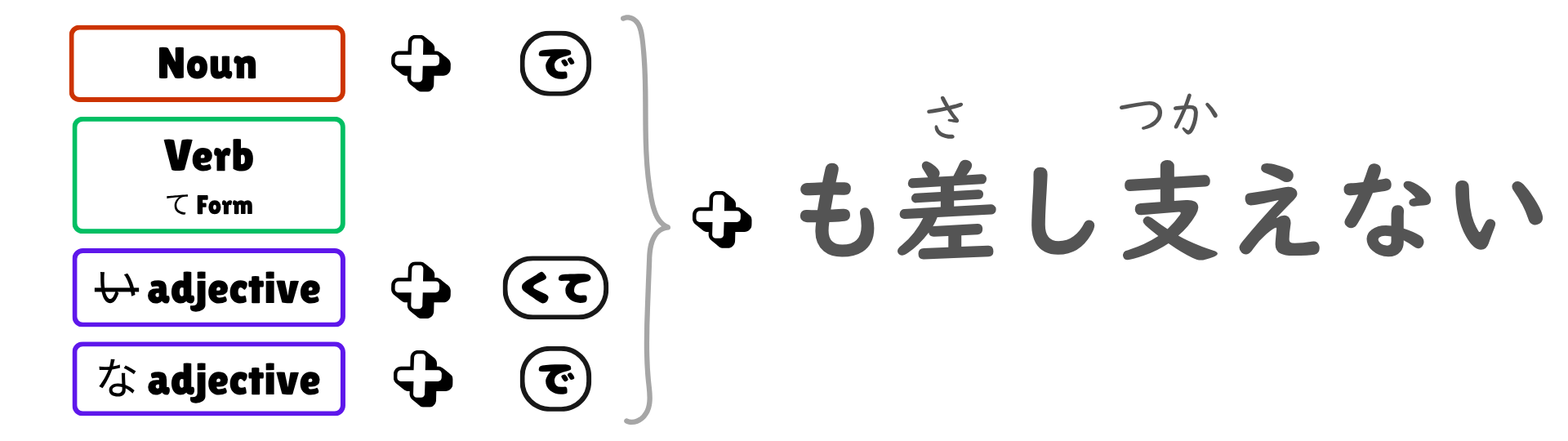

てもいい(temo ii) / てもかまいません(temo kamaimasen) vs ても差し支えない(temo sashitsukae nai)
All three mean “it’s okay to…”, but the tone and formality are different.
てもいい(temo ii) : Casual, everyday.
“You can / it’s okay to.”
てもかまいません(temo kamaimasen) : Polite but still neutral.
“It’s fine / no problem if you do.”
ても差し支えない(temo sashitsukae nai) : Formal, respectful, and used in professional settings.
“It’s acceptable / there’s no problem if you do.”
💡 Tip:
You can also use the negative form, なくても差し支えない, which means “it’s okay even if you don’t.”

この席に座っても差し支えないですか。
この せき に すわって も さしつかえない です か。
kono seki ni suwatte mo sashitsukaenai desu ka?
May I sit here? / Is it okay if I sit here?
この薬は他の薬と一緒に飲んでも差し支えないでしょうか。
この くすり は ほか の くすり と いっしょ に のんで も さしつかえない でしょう か。
kono kusuri ha hoka no kusuri to issho ni nonde mo sashitsukaenai deshou ka?
Is it okay to take this medicine with the other one?
この書類は任意なので、提出しなくても差し支えありません。
この しょるい は にんい な の で ていしゅつ しなくても さしつかえ ありません。
kono shorui ha nin’i na node teishutsu shinakute mo sashitsukae arimasen.
This document is optional, so it’s okay even if you don’t submit it.
会議はオンラインでも差し支えないですよ。
かいぎ は おんらいん でも さしつかえ ないですよ。
kaigi ha onrain demo sashitsukaenai desu yo.
The meeting can be held online.
支払いは来週でも差し支えないでしょうか。
しはらい は らいしゅう でも さしつかえない でしょう か。
shiharai ha raishuu demo sashitsukaenai deshou ka?
Would it be alright to make the payment next week?
少しくらい遅くても差し支えありません。
すこし くらい おそくて も さしつかえ ありません。
sukoshi kurai osokute mo sashitsukae arimasen.
It’s fine if it’s a little late.
簡単でなくても差し支えありません。
かんたん で なくても さしつかえ ありません。
kantan de nakute mo sashitsukae arimasen.
It’s okay even if it’s not simple.

- Grammar Point: ても差し支えない (temo sashitsukaenai)
- JLPT Level: N1
- Meaning: It’s okay if, can, there’s no problem if
- Quick Explanation: A polite and formal way to say “it’s okay” or “no problem.” Used when giving permission or confirmation in formal situations.
So that’s how we use ても差し支えない!
It’s the perfect phrase for sounding professional, polite, and considerate in Japanese.
In business or formal settings, this expression helps you give permission or approval while showing respect for the other person’s position, a very important skill in Japanese communication.
Master it, and you’ll sound like someone who truly understands Japanese professionalism and politeness!
Your Sensei,
Hikari 👩🏻🏫
Get Hikari's JLPT Mock Exams & Preparation Lessons!
Whether you are studying to pass the JLPT or looking for a challenge in your learning journey, these courses are perfect for you!
Join my ニュースレター Newsletter 📩
You can expect an email from me once a week about Japanese culture.
Don't worry, your information will not be shared.
We hate SPAM. We will never sell your information, for any reason.