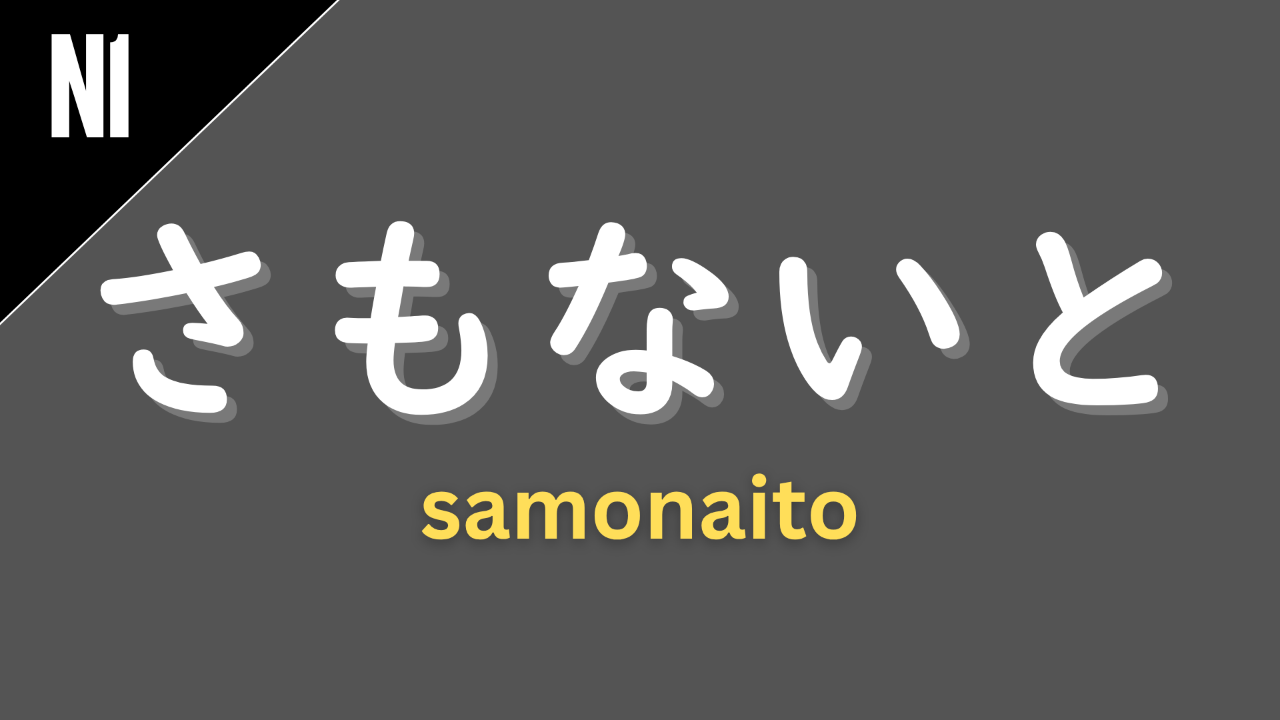
JLPT N1 - Grammar 🌟 さもないと samonaito
Have you ever heard someone give a warning that sounds very serious, the kind that tells you exactly what will happen if you don’t listen?
Like…
“Submit your assignment by tomorrow, or you’ll fail the class.”
“Leave now, or else I’m calling the police.”
“Tell the truth, or you’re going to regret it.”
(You hear this one a lot in yakuza movies.)
All of these follow the same pattern:
Do A… otherwise, B (a bad outcome) will happen.
In Japanese, the expression that perfectly matches this strong, warning tone is:
さもないと (samonaito) !
It means “otherwise / or else.”
You use it when you want to say,
“If you don’t do X, something bad will happen.”
It’s common in dramas, manga, intense scenes, and sometimes in real conversations too. Definitely stronger than everyday casual speech, but incredibly useful to understand at the N1 level.
Ready to learn how to use さもないと naturally? Let’s jump right in!



そうでなければ (sou de nakereba) vs さもないと (samonaito)
Both can mean “otherwise”, but the nuance and intensity are very different.
そうでなければ (sou de nakereba)
そうでなければ is a soft, neutral, and polite way to say “otherwise / if not.”
Used in everyday conversation, explanations, or instructions without emotional force.
早く出発してください。そうでなければ、間に合いません。
はやく しゅっぱつ して ください。そうで なければ、まにあいません。
hayaku shuppatsu shite kudasai. sou de nakereba, maniaimasen.
Please leave early. Otherwise, you won’t make it in time.
It feels calm, logical, and non-threatening.
さもないと (samonaito)
さもないと is much stronger and more dramatic. Often a warning, threat, or urgent command. Common in movies, arguments, scolding, and intense situations.
早く逃げろ、さもないと命が危ないぞ!
はやく にげろ、さもないと いのち が あぶない ぞ!
hayaku nigero, samonaito inochi ga abunai zo!
Run now, or else your life will be in danger!
This one has emotional weight and urgency.

パスポートを持ってきてください。さもないと、出国できませんから。
ぱすぽーとをもってきてください。さもないと、しゅっこく できません から。
pasupooto wo motte kite kudasai. samonaito, shukkoku dekimasen kara.
Please bring your passport. Otherwise, you won’t be able to leave the country.
無断欠勤はしないでください。さもないと、解雇される可能性があります。
むだん けっきん は しないで ください。さもないと かいこ される かのうせい が あります。
mudan kekkin ha shinaide kudasai. samonaito kaiko sareru kanousei ga arimasu.
Please don’t skip work without notice. Otherwise, you may be fired.
いますぐここから出て行ってください。さもないと、警察を呼びます。
いま すぐ ここ から でていって ください。さもないと、けいさつ を よびます。
ima sugu koko kara deteitte kudasai. samonaito, keisatsu wo yobimasu.
Leave here right now. Otherwise, I’ll call the police.
ここではタバコは吸わないでください。さもないと、罰金を課されます。
ここ では タバコ は すわないで ください。さもないと、ばっきん を かされます。
koko deha tabako ha suwanaide kudasai. samonaito, bakkin wo kasararemasu.
Please don’t smoke here. Otherwise, you will be fined.
いますぐ本当のことを言え。さもないとお前…後悔するぞ。
いま すぐ ほんとう の こと を いえ。さもないと おまえ…こうかい する ぞ。
ima sugu hontou no koto wo ie. samonaito omae… koukai suru zo.
Tell the truth right now. Otherwise… you’ll regret it. (Yakuza vibes !!)

- Grammar Point: さもないと (samonaito)
- JLPT Level: N1
- Meaning: Otherwise, or else
- Quick Explanation: さもないと is a strong, warning-like expression used to show what will happen if the previous action is not done. It often appears after instructions or commands, followed by a negative or undesirable result.
So that’s how we use さもないと!
It’s a powerful expression when you need to warn, caution, or strongly insist on something.
Use it carefully. It’s direct, forceful, and best suited for serious or urgent moments.
「さもないと」が聞こえたら、そのあとはネガティブな内容がくることが予測できるね!
「さもないと」 が きこえたら、その あと は ねがてぃぶ な ないよう が くる こと が よそく できる ね!
samonaito ga kikoetara, sono ato ha negatibu na naiyou ga kuru koto ga yosoku dekiru ne!
When you hear samonaito, you can expect that something negative is coming next!
Now it’s your turn! Try making your own sentences with さもないと and practice expressing warnings naturally (but safely)!
Your Sensei,
Hikari 👩🏻🏫✨
Get Hikari's JLPT Mock Exams & Preparation Lessons!
Whether you are studying to pass the JLPT or looking for a challenge in your learning journey, these courses are perfect for you!
Join my ニュースレター Newsletter 📩
You can expect an email from me once a week about Japanese culture.
Don't worry, your information will not be shared.
We hate SPAM. We will never sell your information, for any reason.