JLPT N1 - Grammar 🌟 およそ oyoso

Have you ever needed to give a number that wasn’t exact, just an estimate?
Maybe someone asks:
“How long will it take?”
“How many people are coming?”
“How much will it cost?”
In English, you might say “about,” “around,” or “approximately.”
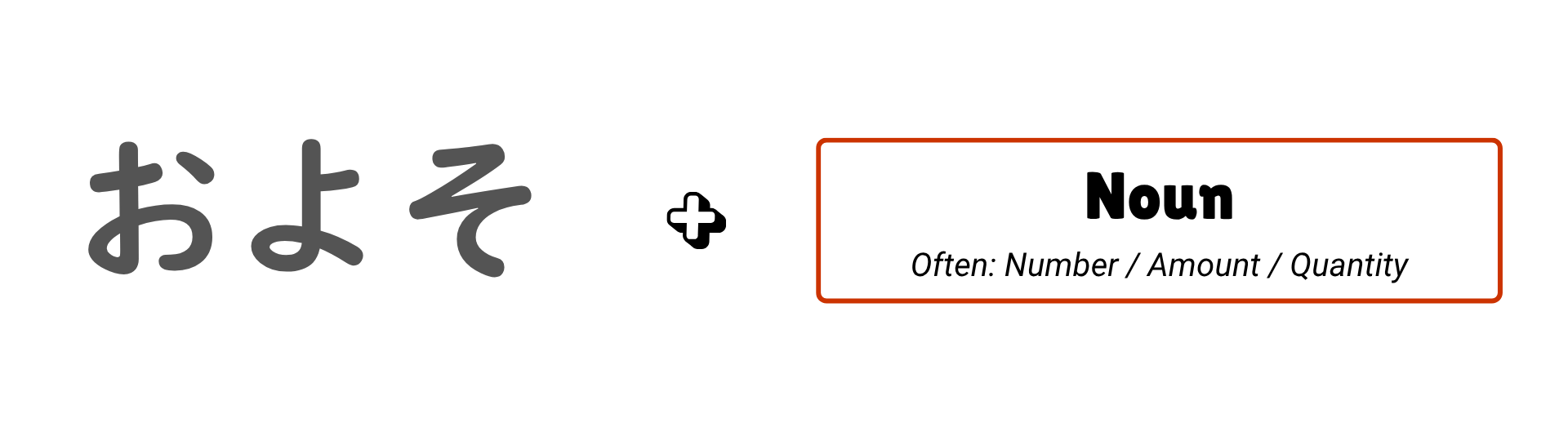
In Japanese, a polished and professional way to express this is およそ (oyoso).
You’ll often see およそ in news reports, presentations, official statements, business conversations, or any situation where you want your language to sound clear, neutral, and slightly formal.
Let’s explore how to use およそ naturally and confidently!


だいたい (daitai) vs 約 (やく/ yaku) vs およそ (oyoso)
These three can all mean “about / roughly / approximately,” but each has its own feeling and preferred usage.
だいたい (daitai)
Casual and conversational.
Used in everyday speech when the estimate doesn’t need to be precise.
だいたい3時間かかるよ。
daitai 3 jikan kakaru yo.
It takes about three hours.
You’ll hear it a lot among friends, family, or casual situations.
約 (やく / yaku)
Neutral and commonly used, especially in written Japanese.
It appears in news, announcements, and statistics.
約100名が参加しました。
yaku 100 mei ga sanka shimashita.
Approximately 100 people participated.
It feels more formal than だいたい, but not as stiff as およそ.
およそ (oyoso)
More formal and polished than the other two.
It works beautifully in reports, business emails, presentations, academic texts, and official announcements. It gives an impression of being clean, objective, and professional.
被害額はおよそ5億円と発表されました。
higai gaku ha oyoso 5 okuen to happyou saremashita.
The damages were reported to be approximately 500 million yen.
💡Quick Tip
だいたい (daitai) - casual, everyday
約 (やく / yaku) - neutral, widely used in writing
およそ (oyso) - formal, polished, professional

この料理はおよそ1時間で出来上がります。
この りょうり は およそ いちじかん で できあがります。
kono ryouri ha oyoso ichijikan de dekiagarimasu.
This dish will be ready in approximately one hour.
犯人はおよそ40歳くらいだとの報告がありました。
はんにん は およそ よんじっさい くらい だ との ほうこく が ありました。
hannin ha oyoso yonjissai kurai da to no houkoku ga arimashita.
There was a report that the suspect is roughly around 40 years old.
東京から京都まで、新幹線でおよそ2時間かかります。
とうきょう から きょうと まで、しんかんせん で およそ にじかん かかります。
toukyou kara kyouto made, shinkansen de oyoso nijikan kakarimasu.
It takes approximately two hours by Shinkansen from Tokyo to Kyoto.
大阪府の人口はおよそ878万人です。
おおさかふ の じんこう は およそ はっぴゃく ななじゅう はち まんにん です。
oosakafu no jinkou ha oyoso happyaku nanajuu hachi mannin desu.
The population of Osaka Prefecture is roughly 8.78 million.
彼の話は、およそ事実に基づいているようです。
かれ の はなし は、およそ じじつ に もとづいて いる よう です。
kare no hanashi ha, oyoso jijitsu ni motozuite iru you desu.
His story seems to be mostly based on facts.
事故の原因は、およそ見当がついている。
じこ の げんいん は、およそ けんとう が ついて いる。
jiko no genin ha, oyoso kentou ga tsuite iru.
We have a rough idea of the cause of the accident.

- Grammar Point: およそ (oyoso)
- JLPT Level: N1
- Meaning: About, roughly, approximately, generally speaking
- Quick Explanation: およそ is a formal and neutral adverb used to express approximations, like numbers, amounts, time, distance, or overall outlines.
So that’s how we use およそ!
It’s a versatile and polished word that helps you sound natural in business settings, reports, presentations, and even daily life when describing estimates or general outlines.
このブログの内容、およそ理解できましたか?
このぶろぐのないよう、およそ りかい できました か?
kono burogu no naiyou, oyoso rikai dekimashita ka?
Did you get a rough understanding of this blog's contents?
Now it’s your turn! Try making your own sentences with およそ and practice describing estimates naturally in Japanese!
Your Sensei,
Hikari 👩🏻🏫✨
Get Hikari's JLPT Mock Exams & Preparation Lessons!
Whether you are studying to pass the JLPT or looking for a challenge in your learning journey, these courses are perfect for you!
Join my ニュースレター Newsletter 📩
You can expect an email from me once a week about Japanese culture.
Don't worry, your information will not be shared.
We hate SPAM. We will never sell your information, for any reason.