JLPT N1 - Grammar 🌟 には無理がある niha muri ga aru
Have you ever heard someone make a plan and thought, “Umm… I don’t think that’s going to work”?
Maybe your coworker says, “Let’s finish this huge project today!”
Maybe your friend suggests planning a day where you tour all of Tokyo and climb Mt. Fuji all in one day.
Or maybe someone tells you to memorize 500 kanji this week.
You don’t want to be rude.
You don’t want to crush their enthusiasm.
But… you know it’s pretty unrealistic.
That’s exactly when Japanese uses には無理がある(にはむりがある / niha muri ga aru). A soft, polite way to say something is unrealistic or not going to work as it is.
It gently suggests that there’s something unreasonable or impossible about the idea, without sounding harsh or critical.
It’s perfect for sounding honest and kind at the same time, a skill every Japanese learner needs! Now let’s dive in and take a look!

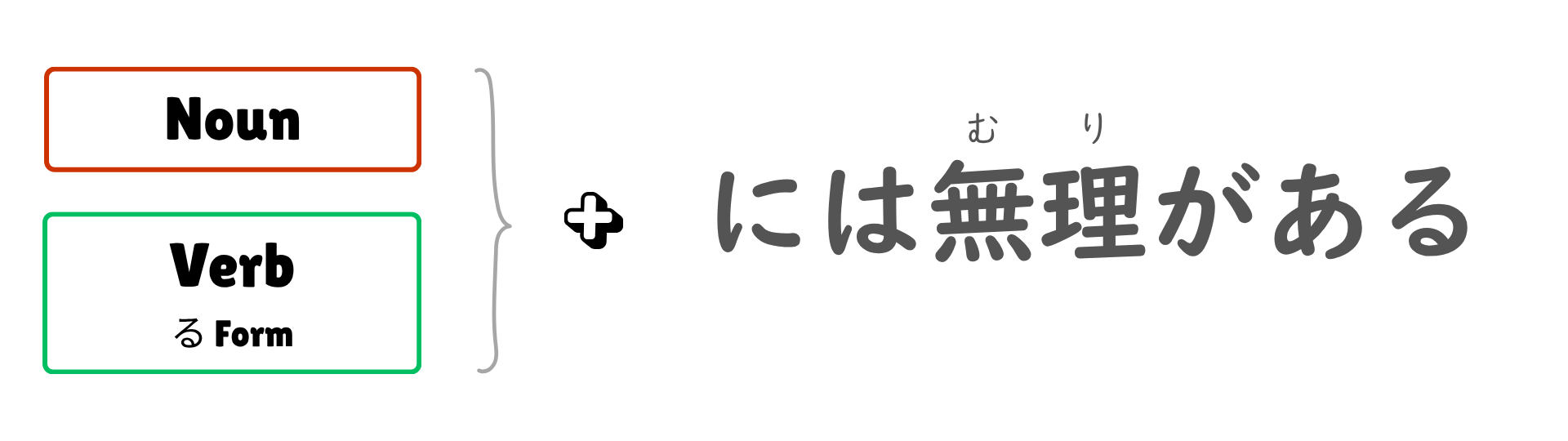

無理 (muri) vs には無理がある (niha muri ga aru)
Both expressions relate to something being “not possible,” but the nuance is noticeably different.
無理 (muri)
This is a direct and absolute way of saying “Impossible.”
It clearly shuts down the idea with no room for adjustment or discussion.
その計画は無理です。
sono keikaku ha muri desu.
That plan is impossible.
It’s strong, clear, and final.
には無理がある (niha muri ga aru)
This expression is softer and more nuanced.
Instead of denying the idea completely, it gently points out that there’s something unrealistic or unreasonable about it.
It suggests the idea might work if changed, but “as it is now,” it doesn’t make sense.
その計画には無理がある。
sono keikaku ni ha muri ga aru.
There’s something unrealistic about that plan.
It’s polite and natural, and perfect for offering honest feedback without sounding too harsh.

未経験の私にそんな大役を任せるには無理がある。
みけいけん の わたし に そんな たいやく を まかせる には むり が ある。
mikeiken no watashi ni sonna taiyaku wo makaseru ni ha muri ga aru.
It’s unrealistic to entrust such an important role to someone like me with no experience.
この予算でプロジェクトを遂行するには無理があります。
この よさん で プロジェクト を すいこう する には むり が あります。
kono yosan de purojekuto wo suikou suru ni ha muri ga arimasu.
It’s impossible to carry out the project with this budget.
いくらひかりちゃんでも、このケーキを丸々一人で全部食べるには無理があるよ。
いくら ひかりちゃん でも、この ケーキ を まるまる ひとり で ぜんぶ たべる には むり が ある よ。
ikura Hikari-chan demo, kono ke-ki wo marumaru hitori de zenbu taberu ni ha muri ga aru yo.
Even for Hikari-chan, it’s impossible to eat this entire cake alone.
彼の要求には無理がある。
かれ の ようきゅう に は むり が ある。
kare no youkyuu ni ha muri ga aru.
His demands are unreasonable.
現時点の技術力では実用化には無理がある。
げんじてん の ぎじゅつりょく では じつようか に は むり が ある。
genjiten no gijutsuryoku deha jitsuyouka ni ha muri ga aru.
With the current level of technology, practical application is unrealistic.

- Grammar Point: には無理がある (niha muri ga aru)
- JLPT Level: N1
- Meaning: Unrealistic, unreasonable, not feasible
- Quick Explanation: には無理がある is used when something sounds possible on the surface, but realistically, it’s not going to work. It’s a polite, soft way to point out that a plan, request, or idea isn't practical without sounding harsh or negative.
So that’s how we use には無理がある!
It’s an extremely useful phrase for evaluating ideas, softening criticism, and sounding thoughtful and natural in advanced Japanese.
何も知らずにいきなりJLPTを受けるのにはちょっと無理があるよ。私のJLPT対策コースをぜひチェックしてみてね!
なにも しらず に いきなり JLPT を うける の に は ちょっと むり が ある よ。わたし の JLPT たいさく こーす を ぜひ ちぇっく して みて ね!
nani mo shirazu ni ikinari JLPT wo ukeru no ni ha chotto muri ga aru yo. watashi no JLPT taisaku koosu wo zehi chekku shite mite ne!
Jumping into the JLPT with zero preparation is a bit unrealistic. Check out my JLPT prep course!
Now it’s your turn! Try making your own sentences with には無理がある and practice expressing “that’s not realistic” in a natural, polite way!
Your Sensei,
Hikari 👩🏻🏫✨
Get Hikari's JLPT Mock Exams & Preparation Lessons!
Whether you are studying to pass the JLPT or looking for a challenge in your learning journey, these courses are perfect for you!
Join my ニュースレター Newsletter 📩
You can expect an email from me once a week about Japanese culture.
Don't worry, your information will not be shared.
We hate SPAM. We will never sell your information, for any reason.