JLPT N1 - Grammar 🌟 じみた jimita
Have you ever had a moment when someone’s behavior felt a little childish, or a message sounded almost threatening, or someone’s tone seemed weirdly preachy…
but not enough to say it directly?
Japanese has a perfect expression for describing that “kind of like…” feeling, when something carries a hint of a certain quality, often with a slightly negative or humorous tone.
That expression is じみた (jimita).
It describes something that resembles a certain characteristic, feels like it, or is borderline that thing, even if it isn’t exactly that.
It’s an N1 grammar pattern, but don’t worry!
Once you understand the nuance, it becomes incredibly fun to use, especially when you want to be polite… but still let your feelings show a little.
Ready to explore this expressive and subtly sassy grammar? Let’s begin!


っぽい(ppoi) vs みたい(mitai) vs じみた(jimita)
These three expressions can all describe resemblance, but the nuance and strength are different.
っぽい (ppoi)
〜っぽい expresses a light, surface-level similarity.
It feels casual and can be neutral or slightly negative depending on the context.
子供っぽい (kodomo ppoi) = childish (child-like behavior, but not deeply negative)
大人っぽい (otona ppoi)= mature, grown-up
It’s commonly used in everyday spoken Japanese.
みたい (mitai)
みたい is more general and flexible.
It can describe appearance, guesses, or similarity, and can be used for both positive and negative meanings.
子供みたい (kodomo mitai) = like a child
夢みたい (yume mitai) = like a dream
It doesn’t necessarily carry any negative tone.
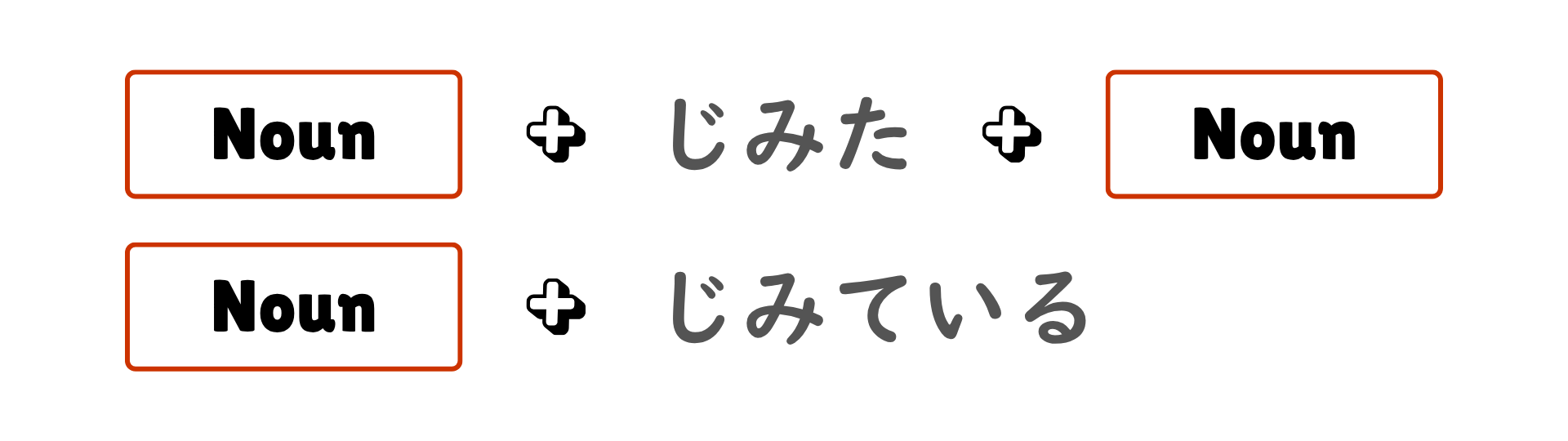
じみた (jimita)
じみた expresses a stronger and more pointed kind of resemblance.
It suggests that something resembles a certain quality in a way that feels exaggerated, a little inappropriate for the situation, or somewhat unpleasant.
In many cases, it carries a slightly negative or critical undertone, as if the speaker is subtly saying, “It’s not exactly that… but it really feels like it.”
It’s often used when the speaker wants to express mild criticism, sarcasm, or disapproval.
子供じみた (kodomo jimita) = overly childish
説教じみた (sekkyou jimita) = preachy
This is the sharpest and most critical of the three expressions.
💡 Quick Tip
Light or casual resemblance → 〜っぽい
Appearance or general similarity → 〜みたい
Negative, exaggerated, or unpleasant resemblance → じみた

そのような子供じみた態度は大人としてふさわしくない。
その よう な こども じみた たいど は おとな として ふさわしく ない。
sono you na kodomo jimita taido ha otona toshite fusawashiku nai.
Such childish behavior is not appropriate for an adult.
あの子供は、年寄りじみた言葉遣いがユニークだね。
あの こども は、としより じみた ことばづかい が ゆにーく だ ね。
ano kodomo ha, toshiyori jimita kotobazukai ga yuniiku da ne.
That child’s old-person-like way of speaking is pretty unique.
彼女は計算じみた行動をよくする。
かのじょ は けいさん じみた こうどう を よく する。
kanojo ha keisan jimita koudou wo yoku suru.
She often behaves in a calculating way.
その意見はかなり説教じみている。
その いけん は かなり せっきょう じみて いる。
sono iken ha kanari sekkyo jimite iru.
That opinion sounds quite preachy.
その言動は脅迫じみているので、注意が必要だ。
その げんどう は きょうはく じみて いる ので、ちゅうい が ひつよう だ。
sono gendou ha kyouhaku jimite iru node, chuui ga hitsuyou da.
Those words and actions are borderline threatening, so caution is needed.

- Grammar Point: じみた (jimita)
- JLPT Level: N1
- Meaning: Appears like, resembles, tainted with, borderline, has a hint of
- Quick Explanation: じみた describes something that resembles a certain quality in a way that feels exaggerated, inappropriate, or slightly unpleasant. It often carries a subtle critical or sarcastic nuance and is used to describe behavior, tone, or impressions that are “kind of / -ish.”
So that’s how we use じみた!
It’s perfect for expressing a pointed or slightly critical nuance when something feels “a little too much like…” a certain quality, without saying it directly.
年寄りじみていると思われるかもしれないけど、真冬に半てん*を着て、熱い緑茶を飲みながらみかんをこたつ*で食べるのは最高なんだよ!
としより じみている と おもわれる かも しれない けど、まふゆ に はんてん を きて、あつい りょくちゃ を のみ ながら みかん を こたつ で たべる の は さいこう なんだ よ!
toshiyori jimite iru to omowareru kamo shirenai kedo, mafuyu ni hanten wo kite, atsui ryokucha wo nomi nagara mikan wo kotatsu de taberu no ha saikou nanda yo!
You might think it’s a bit “old-person-ish,” but wearing a hanten, sipping hot green tea, and eating mandarins under the kotatsu in midwinter is absolute heaven!
*note:
半てん (hanten):
A traditional Japanese winter jacket worn indoors. Soft, padded, and wonderfully warm.
こたつ (kotatsu):
A low table with a built-in heater and a blanket. A beloved Japanese winter item that keeps your whole body cozy.
Now it’s your turn! try making your own sentences with じみた, and express subtle, nuanced impressions like a true advanced learner!
Your Sensei,
Hikari 👩🏻🏫✨
Get Hikari's JLPT Mock Exams & Preparation Lessons!
Whether you are studying to pass the JLPT or looking for a challenge in your learning journey, these courses are perfect for you!
Join my ニュースレター Newsletter 📩
You can expect an email from me once a week about Japanese culture.
Don't worry, your information will not be shared.
We hate SPAM. We will never sell your information, for any reason.