JLPT N1 - Grammar 🌟 いかに ikani

Have you ever wanted to express just how much effort, emotion, or difficulty something involved, but in a more elegant, formal way?
That’s where いかに (ikani) comes in.
It’s a refined N1 expression that means “how,” “in what way,” or “how much.”
You’ll often hear it in thoughtful or dramatic situations, for example, when reflecting on someone’s effort, wisdom, or the intensity of an experience.
Imagine a moment after a big project’s success.
You think, “Everyone now understands how much work went into this... ”
That sense of admiration or realization, that’s exactly what いかに expresses.
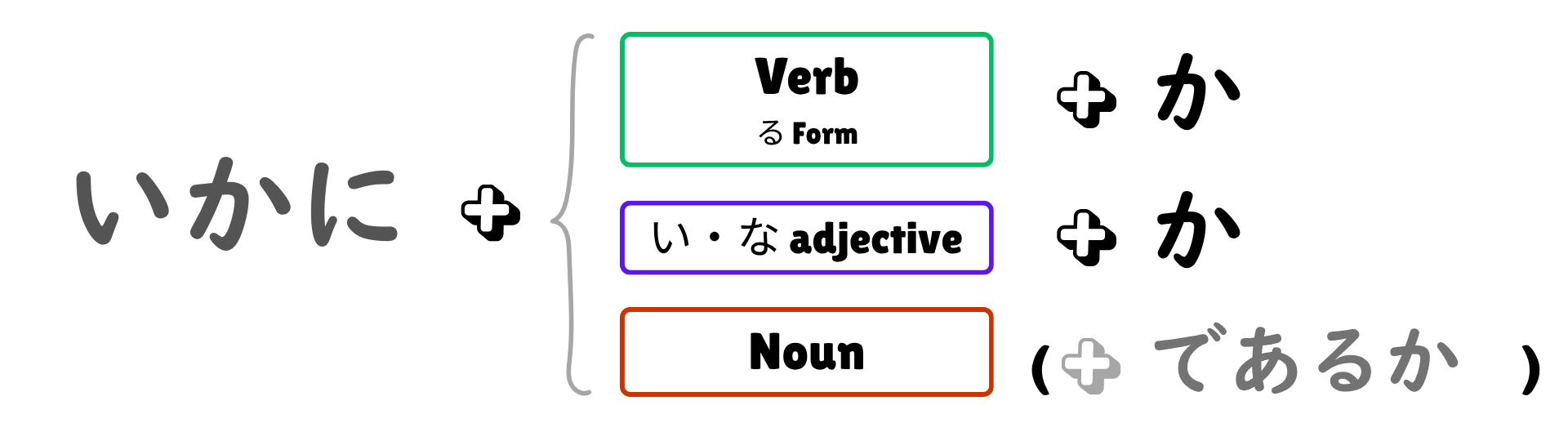
In Japanese, it’s often used in sentences like “いかに〜か” or “いかに〜であるか” to show deep feeling, emphasis, or surprise.
Let’s explore how to use this beautiful and expressive phrase to convey depth and emotion in your Japanese!


どれほど (dore hodo) vs いかに(ikani)
Both mean “how much” or “to what extent,” but their tone and nuance differ slightly.
どれほど(dore hodo) is emotional and often used in spoken or written language to express strong feelings, like gratitude, sadness, or admiration.
どれほど感謝しているか、言葉では言い表せません。
どれほど かんしゃ している か、ことば では いいあらわせません。
dore hodo kansha shiteiru ka, kotoba de wa iiarawasemasen.
I can’t express in words how grateful I am.
いかに(ikani) sounds more formal, intellectual, or reflective. It’s often used in writing, speeches, or news reports when emphasizing the depth or seriousness of something.
彼がいかに努力したか、誰もが知っている。
かれ が いかに どりょく した か、だれ も が しっている。
kare ga ikani doryoku shita ka, dare mo ga shitteiru.
Everyone knows how hard he worked.

教育がいかに人の人生を変えるか、彼は身をもって知った。
きょういく が いかに ひと の じんせい を かえる か、かれ は み を もって しった。
kyouiku ga ikani hito no jinsei wo kaeru ka, kare wa mi wo motte shitta.
He learned firsthand how education can change a person’s life.
彼がいかに努力したか分かります。
かれがいかにどりょくしたかわかります。
kare ga ikani doryoku shita ka wakarimasu.
I understand how hard he worked.
親の言葉がいかに力を持つか、子どもを見ればわかる。
おや の ことば が いかに ちから を もつ か、こども を みれば わかる。
oya no kotoba ga ikani chikara wo motsu ka, kodomo wo mireba wakaru.
You can see how powerful parents’ words can be by looking at their children.
彼女の表情を見れば、いかに幸せかがわかる。
かのじょ の ひょうじょう を みれば、いかに しあわせ か が わかる。
kanojo no hyoujou wo mireba, ikani shiawase ka ga wakaru.
You can tell how happy she is just by looking at her expression.
あの行動を見れば、彼がいかに誠実な人か、すぐにわかる。
あの こうどう を みれば、かれ が いかに せいじつ な ひと か、すぐ に わかる。
ano koudou wo mireba, kare ga ikani seijitsu na hito ka, sugu ni wakaru.
From his actions, you can immediately tell how sincere he is.
彼がいかに忙しいか想像できます。
かれがいかにいそがしいかそうぞうできます。
kare ga ikani isogashii ka souzou dekimasu.
We can imagine how busy he is.
このテストの結果がいかに重要であるか、皆わかっていた。
この てすと の けっか が いかに じゅうよう で ある か、みな わかっていた。
kono tesuto no kekka ga ikani juuyou de aru ka, mina wakatteita.
Everyone knew how important the results of this test were.

- Grammar Point: いかに (ika ni)
- JLPT Level: N1
- Meaning: How, in what way, how much
- Quick Explanation: いかに is used to emphasize how much, how deeply, or in what way something is true.
It often appears in written or formal contexts to show admiration, surprise, or reflection about a degree, method, or situation.
So that’s how we use いかに!
It’s a powerful word that lets you express how deeply you feel or understand something, perfect for thoughtful or emotional reflections.
いかに苦しくても、夢をあきらめない心の強さがほしいですね!
いかに くるしく て も、ゆめ を あきらめない こころ の つよさ が ほしい です ね!
ikani kurushiku te mo, yume wo akiramenai kokoro no tsuyosa ga hoshii desu ne!
No matter how hard it gets, we all want the strength to never give up on our dreams!
Now it’s your turn! try making your own sentences with いかに and see how expressive your Japanese can become!
Your Sensei,
Hikari 👩🏻🏫
Get Hikari's JLPT Mock Exams & Preparation Lessons!
Whether you are studying to pass the JLPT or looking for a challenge in your learning journey, these courses are perfect for you!
Join my ニュースレター Newsletter 📩
You can expect an email from me once a week about Japanese culture.
Don't worry, your information will not be shared.
We hate SPAM. We will never sell your information, for any reason.