JLPT N1 - Grammar 🌟 ではあるまいか de ha arumai ka
Have you ever been reading a serious Japanese editorial or watching a dramatic mystery anime and thought, “Wait… is that a question, or a statement?”
You might hear a sharp eyed detective or a stern prosecutor end their theory with
ではあるまいか (de ha arumai ka) while pointing at the evidence.
It sounds intellectual and dramatic, doesn’t it.
This expression is used to say things like “Isn’t it the case that…?” or “I wonder if it’s not…” in a formal, reflective, and rhetorical way.
Imagine standing at a crime scene, holding a torn letter, and thinking…
“Could it be that the culprit’s true goal was not money, but revenge…?”
That moment where a logical hypothesis meets strong conviction is exactly where ではあるまいか shines.
You probably would not use this while chatting with friends over coffee, but it is a powerful tool for essays, academic writing, novels, or when you want to sound thoughtful and analytical.
Let’s learn how to use this sophisticated N1 expression!

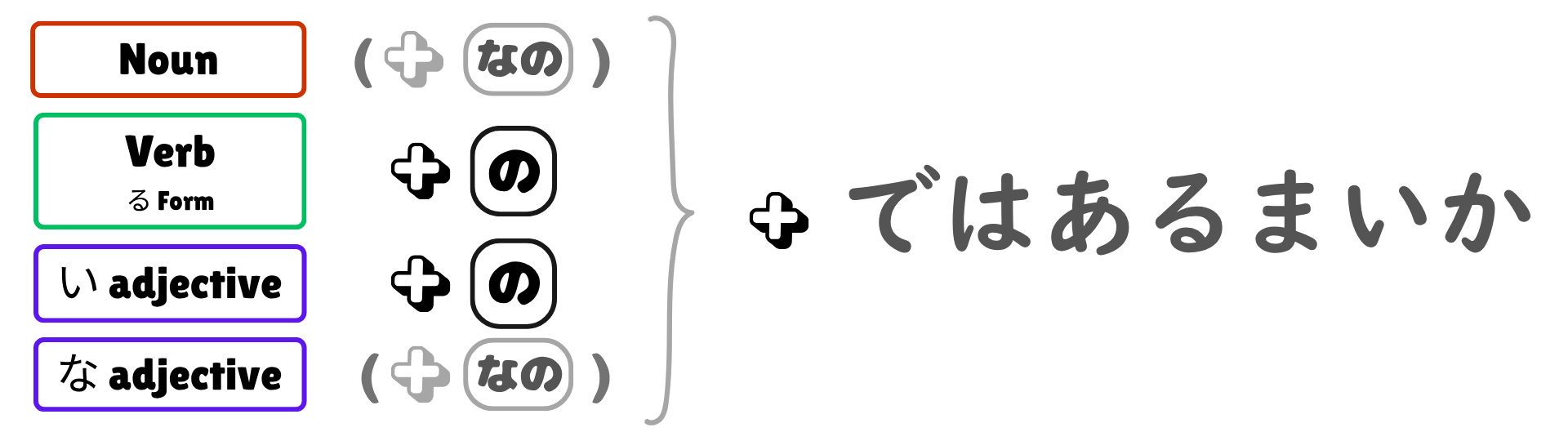

じゃないか (ja nai ka) vs ではないか (deha nai ka) vs ではあるまいか (deha arumai ka)
All three expressions can be translated as “Isn’t it the case that…?” but the tone, formality, and usage are very different.
じゃないか (ja nai ka)
じゃないか is casual and emotional.
It is often used in spoken Japanese to show strong feelings such as surprise, frustration, or persuasion.
It can sound blunt or even aggressive depending on the tone, so be careful when using it.
もう時間がないじゃないか。
もう じかん が ない じゃないか。
mou jikan ga nai ja nai ka.
We do not have time, do we. (spoken with emotion)
ではないか (deha nai ka)
ではないか is more neutral and controlled.
It is used to point something out or express a logical thought in conversation or writing.
空が暗いから、雨が降るのではないか。
そら が くらい から、あめ が ふる の ではない か。
sora ha kurai kara, ame ga furu no de ha nai ka.
The sky is dark, so isn’t it going to rain.
ではあるまいか (deha arumai ka)
ではあるまいか is formal, rhetorical, and intellectual.
It is mainly used in essays, novels, speeches, or academic writing.
It suggests a thoughtful hypothesis rather than a casual question.
このままでは、環境破壊は取り返しのつかないことになるのではあるまいか。
このまま では、かんきょう はかい は とりかえし の つかない こと に なる の ではあるまいか。
kono mama de ha, kankyou hakai ha torikaeshi no tsukanai koto ni naru no de ha arumai ka.
If things continue like this, I wonder if environmental destruction will not become irreversible.
💡 Quick Tip:
Casual and emotional - じゃないか (ja nai ka)
Neutral and logical - ではないか (deha nai ka)
Formal and rhetorical - ではあるまいか (deha arumai ka)

このままでは、同じ過ちを繰り返すのではあるまいか。
このまま では、おなじ あやまち を くりかえす の ではあるまいか。
kono mama de ha, onaji ayamachi wo kurikaesu no de ha arumai ka.
Isn’t it likely that we will repeat the same mistake if things continue like this?
これこそが、我々が長年探し求めていた答えではあるまいか。
これ こそ が、われわれ が ながねん さがしもとめて いた こたえ ではあるまいか。
kore koso ga, wareware ga naganen sagashimotomete ita kotae de ha arumai ka.
Isn’t this the very answer we have been searching for all these years?
今回の失敗の元凶は、我々の準備不足なのではあるまいか。
こんかい の しっぱい の がんきょう は、われわれ の じゅんび ぶそく な の ではあるまいか。
konkai no shippai no gankyō ha, wareware no junbi busoku na no de ha arumai ka.
I wonder if the real cause of this failure isn’t our lack of preparation.
現時点で結論を急ぐのは、少々危ういのではあるまいか。
げんじてん で けつろん を いそぐ の は、しょうしょう あやうい の ではあるまいか。
genjiten de ketsuron wo isogu no ha, shoushou ayaui no de ha arumai ka.
Isn’t it a bit risky to rush to a conclusion at this stage?
彼らの主張は、あまりに一方的ではあるまいか。
かれら の しゅちょう は、あまり に いっぽうてき ではあるまいか。
karera no shuchou ha, amari ni ippouteki de ha arumai ka.
Isn’t their argument far too one-sided?
平和な日常こそが、最も幸せなのではあるまいか。
へいわ な にちじょう こそ が、もっとも しあわせ な の ではあるまいか。
heiwa na nichijou koso ga, mottomo shiawase na no de ha arumai ka.
Isn’t a peaceful everyday life the greatest happiness of all?

- Grammar Point: ではあるまいか (deha arumai ka)
- JLPT Level: N1
- Meaning: Isn’t it, I wonder if it’s not…
- Quick Explanation: Use ではあるまいか to express a strong suspicion or formal opinion in a rhetorical and intellectual way. It is mainly used in writing or formal speeches, not casual conversation.
So that’s how we use ではあるまいか.
It is perfect when you want to sound analytical, reflective, and a little dramatic.
You will not hear it very often in everyday conversation, but it frequently appears in academic writing, speeches, novels, and even anime or movie dialogue.
日々のあなたのその努力こそが、JLPT合格への近道ではあるまいか。
ひび の あなた の その どりょく こそ が、JLPT ごうかく への ちかみち では あるまいか。
hibi no anata no sono doryoku koso ga, JLPT goukaku e no chikamichi de wa arumai ka.
Isn’t your daily effort itself the shortcut to passing the JLPT?
Now it’s your turn.
Try forming a serious observation or a deep question using ではあるまいか.
Have fun sounding thoughtful and a little dramatic!
Your Sensei,
Hikari 👩🏻🏫✨
Get Hikari's JLPT Mock Exams & Preparation Lessons!
Whether you are studying to pass the JLPT or looking for a challenge in your learning journey, these courses are perfect for you!
Join my ニュースレター Newsletter 📩
You can expect an email from me once a week about Japanese culture.
Don't worry, your information will not be shared.
We hate SPAM. We will never sell your information, for any reason.