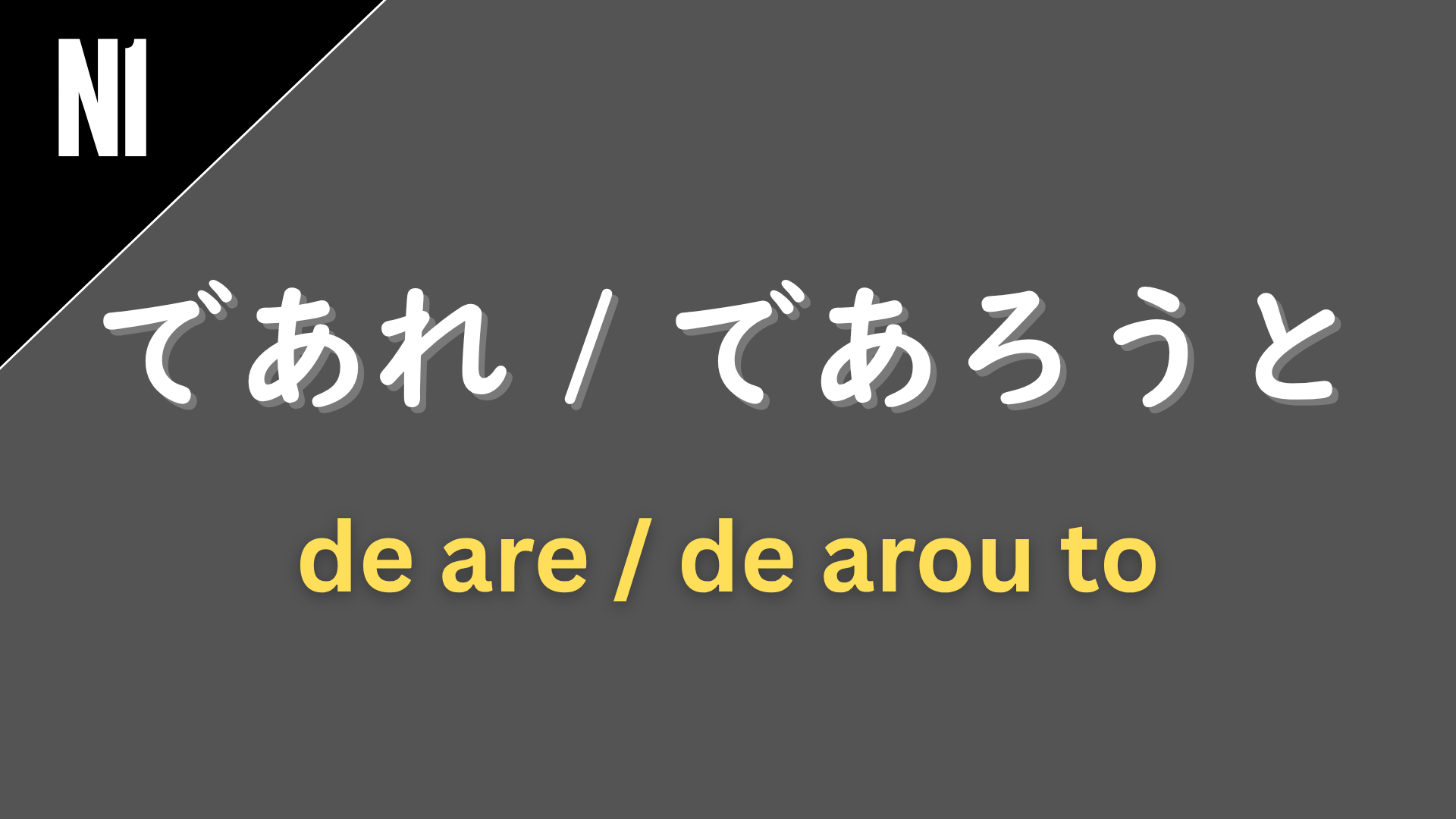
JLPT N1 - Grammar 🌟 であれ / であろうと de are / de arou to
Have you ever felt this kind of determination?
“No matter what happens I won’t change my decision.”
“No matter who says what , this is something I must do.”
Maybe it’s about values. Maybe it’s about rules. Or maybe it’s about a promise you made to yourself.
In moments like these, you’re not negotiating. You’re not adjusting.
You’re saying: the condition doesn’t matter , the conclusion stays the same.
Japanese has a powerful way to express this kind of resolve. It sounds calm, firm, and almost unshakable.
That’s where であれ / であろうと (de are / de arou to) comes in!
These expressions mean “even if,” “whoever it may be,” or “whatever the case is,” with the clear message that the result will not change.
You’ll often see them in writing, speeches, rules, and strong statements , not casual conversation, but moments where principles matter.
Let’s take a closer look at how であれ and であろうと are used to express conviction, logic, and an unwavering stance in Japanese.


When であれ (de are) and であろうと (de arou to) are interchangeable
In many cases, であれ and であろうと can be used interchangeably without changing the core meaning. When you are stating a rule, principle, or judgment that applies without exception, both sound natural.
理由が何であれ、暴力は許されない。
りゆう が なに で あれ、ぼうりょく は ゆるされない。
riyuu ga nani de are, bouryoku ha yurusarenai.
No matter what the reason is, violence is unacceptable.
理由が何であろうと、暴力は許されない。
りゆう が なに で あろう と、ぼうりょく は ゆるされない。
riyuu ga nani de arou to, bouryoku ha yurusarenai.
No matter what the reason may be, violence is unacceptable.
In both sentences, the message is the same: the condition does not affect the conclusion.
When the nuance changes: であれ (de are) vs であろうと (de arou to)
Although the meaning is similar, the tone can change depending on which form you choose.
であれ sounds more logical, neutral, and matter-of-fact.
It is often used when listing conditions or stating rules in an objective way.
大人であれ子供であれ、料金は同じです。
おとな で あれ こども で あれ、りょうきん は おなじ です。
otona de are kodomo de are, ryoukin ha onaji desu.
Whether you’re an adult or a child, the price is the same.
Here, であれ fits naturally because the sentence is about a rule, not emotion.
であろうと, on the other hand, sounds stronger and more emotional.
It is often used to express determination, resolve, or a firm personal stance.
たとえ周囲が反対であろうと、私は自分の道を進む。
たとえ しゅうい が はんたい で あろう と、わたし は じぶん の みち を すすむ。
tatoe shuui ga hantai de arou to, watashi ha jibun no michi wo susumu.
Even if everyone around me is against it, I will follow my own path.
Using であれ here would sound more distant and less emotional.
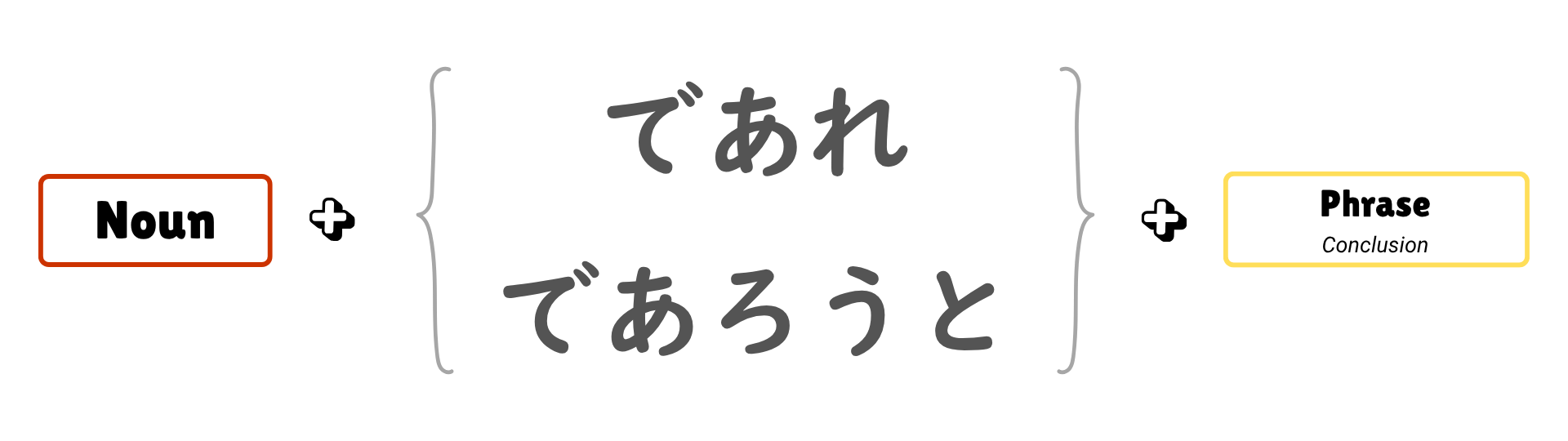
Common pattern: “[ Noun ] + であれ + [ Noun ] + であれ”
When you list multiple conditions to mean “no matter which,” であれ is the standard choice.
晴天であれ雨天であれ、試合は行われる。
せいてん で あれ うてん で あれ、しあい は おこなわれる。
seiten de are uten de are, shiai ha okonawareru.
Whether it’s sunny or rainy, the game will be held.
Using であろうと here is not wrong, but it sounds heavier and less natural in fixed, parallel expressions.
でも (demo) vs であれ (de are) / であろうと (de arou to)
Both でも and であれ / であろうと express the idea of “even if,” but the level of formality and strength are very different.
でも (demo) - Even if (casual, spoken)
でも is casual and conversational. It’s commonly used in everyday speech and expresses a simple condition without strong emphasis or authority. It’s suitable when you just want to say “even if” in a natural, spoken way.
理由が何でも、遅刻はダメです。
りゆう が なに でも、ちこく は だめ です。
riyuu ga nani demo, chikoku ha dame desu.
No matter the reason, being late is not okay.
Use 〜でも in daily conversation or informal situations.
であれ / であろうと (de are / de arou to) - Even if, whoever, whatever (formal, strong)
であれ / であろうと are formal, written-style expressions.
They are used to make strong, principled statements where the conclusion does not change, no matter the condition. You’ll often see them in rules, policies, speeches, and serious written statements rather than casual conversation.
理由が何であれ、遅刻は許されない。
りゆう が なに で あれ、ちこく は ゆるされない。
riyuu ga nani de are, chikoku ha yurusarenai.
No matter what the reason is, lateness is not tolerated.
Use であれ / であろうと when you want to sound firm, authoritative, or principled.

いかに多忙であろうと、家族への電話は欠かさない。
いかに たぼう で あろう と、かぞく へ の でんわ は かかさない。
ikani tabou de arou to, kazoku he no denwa ha kakasanai.
No matter how busy I may be, I never skip calling my family.
それが嘘であれ真実であれ、今となってはもうどうでもいい。
それ が うそ で あれ しんじつ で あれ、いま と なって は もう どうでも いい。
sore ga uso de are shinjitsu de are, ima to natte ha mou dou demo ii.
Whether it’s a lie or the truth, it doesn’t matter anymore now.
わずかな可能性であろうと、最後まで夢を諦めたくない。
わずかな かのうせい で あろう と、さいご まで ゆめ を あきらめたく ない。
wazukana kanousei de arou to, saigo made yume wo akirametakunai.
Even if there’s only a slim chance, I don’t want to give up on my dream until the end.
善意であれ悪意であれ、結果として迷惑をかけた事実は変わらない。
ぜんい で あれ あくい で あれ、けっか として めいわく を かけた じじつ は かわらない。
zeni de are akui de are, kekka to shite meiwaku wo kaketa jijitsu ha kawaranai.
Whether it was done with good or bad intentions, the fact that trouble was caused does not change.
結果がどうであれ、最後までやり遂げるつもりだ。
けっか が どう で あれ、さいご まで やりとげる つもり だ。
kekka ga dou de are, saigo made yaritogeru tsumori da.
No matter the outcome, I intend to see it through to the end.
親友であろうと、最低限の礼儀は必要だ。
しんゆう で あろう と、さいていげん の れいぎ は ひつよう だ。
shinyuu de arou to, saiteigen no reigi ha hitsuyou da.
Even if someone is a close friend, a minimum level of manners is necessary.

- Grammar Point: であれ / であろうと (de are / de arou to)
- JLPT Level: N1
- Meaning: Even if, whoever, whatever, no matter what
- Quick Explanation: であれ and であろうと are used to express a strong idea that the result or conclusion does not change, no matter the condition.
They are formal, written-style expressions often used in rules, principles, speeches, and serious statements rather than casual conversation.
So that’s how we use であれ / であろうと!
These expressions may sound formal, but they’re incredibly useful when you want to express values, rules, or determination clearly and firmly.
テストの点数がどうであれ、あなたがこれまで積み上げてきた努力は決して消えないよ!
てすと の てんすう が どう で あれ、あなた が これまで つみあげて きた どりょく は けっして きえない よ!
tesuto no tensuu ga dou de are, anata ga kore made tsumiagete kita doryoku ha kesshite kienai yo!
No matter what your test score is, the effort you’ve built up so far will never disappear!
Now, it’s your turn!
Think of a situation where the condition doesn’t matter, and try expressing it with であれ or であろうと.
Your Japanese will sound stronger, more confident, and much more advanced , just like real N1-level Japanese.
Your Sensei,
Hikari 👩🏻🏫✨
Get Hikari's JLPT Mock Exams & Preparation Lessons!
Whether you are studying to pass the JLPT or looking for a challenge in your learning journey, these courses are perfect for you!
Join my ニュースレター Newsletter 📩
You can expect an email from me once a week about Japanese culture.
Don't worry, your information will not be shared.
We hate SPAM. We will never sell your information, for any reason.